
Stem Cell Therapy in Delhi
- Home
- Stem Cell Therapy in Delhi
Regenerative Hair Loss Treatments in Delhi
Hair loss is rarely just about hair. It changes how you see yourself in photographs, how confident you feel walking into a meeting, how you style yourself in the morning. The good news is that you don’t have to wait until you’re ready for a transplant — a whole category of regenerative, non-surgical treatments can slow down hair loss, thicken what you have, and bring weak follicles back to life.
At Sarayu Clinics in Greater Kailash, regenerative hair treatments are planned and supervised by facial plastic and maxillofacial surgeon Dr. Adarsh Tripathi. The approach is evidence-led: we use what’s proven — like PRP, GFC, exosomes and microneedling — combined into a plan that’s tailored to your scalp, the stage of your hair loss and your goals. No quick fixes, no overpromises.
Regenerative hair treatments use your own platelets, growth factors or stem-cell-derived signalling particles (exosomes) to wake up dormant hair follicles, slow shedding and improve density — without surgery. Most people need 3–6 sessions, a few weeks apart, with results visible from around month three. PRP and GFC are well-established; exosomes are newer and more advanced; actual ‘stem cell therapy’ for hair is not approved in India for routine clinical use and remains research-stage (see below).
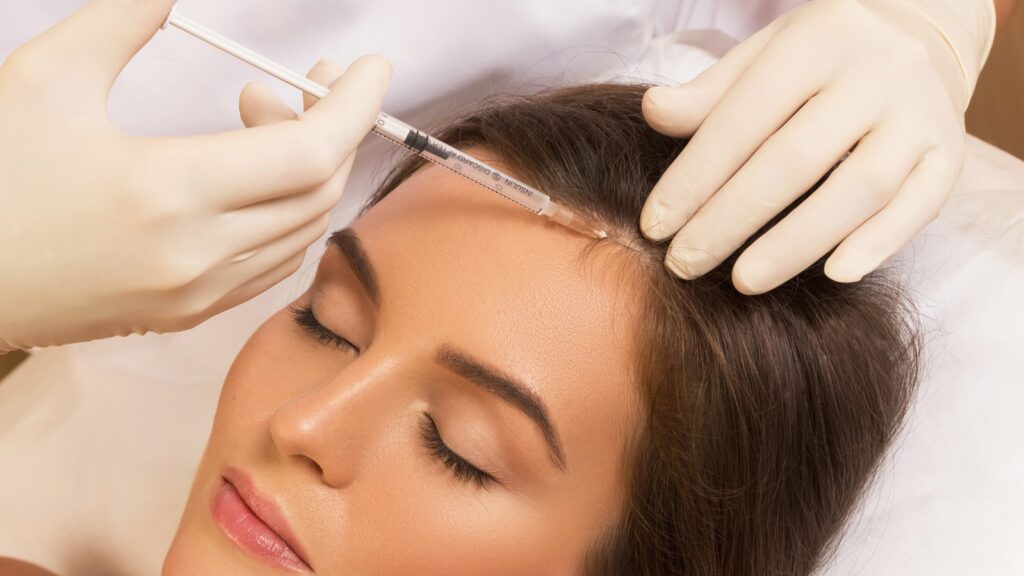
Stem Cell Therapy for Hair Regrowth in Delhi: The Honest Answer
If you’ve searched for “stem cell therapy for hair regrowth in Delhi,” you’ve almost certainly found clinics advertising it. Here’s the part most of them won’t tell you:
In India, stem cell therapy in routine clinical practice is regulated by the Indian Council of Medical Research (ICMR) and the Central Drugs Standard Control Organisation (CDSCO). Following a Supreme Court judgment in January 2026 and a National Medical Commission advisory in March 2026, stem cell therapy can be offered as a routine clinical service only for a defined list of approved indications — mostly serious haematological conditions like leukaemia and thalassaemia. Hair loss is not on that list. Mesenchymal stem cell therapy — the kind typically marketed for hair regrowth — is not currently approved for any routine clinical indication in India. Any use outside an approved clinical trial is considered experimental.
So what are clinics actually offering when they say “stem cell hair therapy”? Almost always one of three things:
- PRP (platelet-rich plasma) — made from your own blood; not stem cells.
- GFC (growth factor concentrate) — also from your own blood; not stem cells.
- Exosomes — tiny signalling particles released by stem cells. The exosomes themselves aren’t cells; they’re messengers. This is the closest thing to “stem-cell-based” hair therapy currently available, and it’s used in many leading Delhi clinics.
Our position at Sarayu Clinics is straightforward: we offer the regenerative treatments that are legal, well-studied and effective — PRP, GFC, exosomes, microneedling, mesotherapy and combination protocols. We don’t market actual stem cell injections for hair as a routine clinical service because, in India today, they aren’t approved for it. That honesty is the difference, and it’s also why this page is more useful to you than the average marketing page.
Benefits of Regenerative Hair Treatments
- Slows down shedding — calms the inflammation and hormonal stress around miniaturising follicles.
- Wakes up dormant follicles — growth-signalling proteins push thinning hairs into a stronger growth phase.
- Thicker, denser-looking hair — each strand becomes more pigmented and visibly fuller.
- Healthier scalp — better blood supply and reduced inflammation create a stronger base for hair to grow.
- Non-surgical — no incisions, no stitches, very little downtime.
- Works alongside medication — multiplies the effect of minoxidil and other prescribed therapies.
- Bridges to (or supports) a transplant — strengthens the surrounding hair if you go on to have a transplant later.
Areas We Treat
Regenerative therapy can be used wherever follicles are still alive but weakening:
- Crown (vertex) thinning
- Receding frontal hairline and temples
- Mid-scalp / parting widening
- Diffuse thinning across the scalp (common in women)
- Patchy hair loss (alopecia areata, under specialist supervision)
Beard and eyebrow thinning
- Strengthening the area around an existing or planned hair transplant.
Types of Hair Loss We Treat
Different hair loss patterns need different protocols. We identify which one you have during your consultation:
- Male pattern hair loss (androgenetic alopecia) — the most common type, driven by DHT sensitivity and genetics.
- Female pattern hair loss — typically a widening parting and diffuse thinning over the crown.
- Telogen effluvium — sudden, diffuse shedding triggered by stress, illness, post-COVID, post-pregnancy, crash diets or thyroid issues.
- Alopecia areata — coin-shaped patchy loss with an autoimmune basis, managed alongside dermatological care.
- Traction alopecia — from tight hairstyles, extensions or wigs.
- Post-transplant strengthening — to protect the native hair around grafts.
- Early-stage hair thinning — when treated early, regenerative therapy delivers the best returns.
Regenerative Hair Treatment Options at Sarayu Clinics
There isn’t one “best” treatment for everyone. The right plan usually combines two or three of these:
1. PRP (Platelet-Rich Plasma) hair treatment
The most studied regenerative hair therapy. A small sample of your blood is processed to concentrate platelets, then injected gently into the scalp. The platelets release growth factors that re-energise weakening follicles. It’s safe, autologous (uses your own cells) and the most evidence-backed of the regenerative options for androgenetic alopecia. Read more on our PRP hair treatment page.
2. GFC (Growth Factor Concentrate)
A refined evolution of PRP: the blood is processed in a way that isolates the growth factors and removes red and white blood cells. The result is a cleaner, more concentrated growth-factor preparation that some patients tolerate better than PRP, with less post-session redness. Good for early-stage thinning.
3. Exosome therapy
Exosomes are nanoscale messengers released by stem cells — they’re the “instructions” cells send each other. In hair therapy, purified exosomes are delivered into the scalp to signal follicles to behave like younger, healthier ones, reduce inflammation, and improve density. They are not stem cells themselves, which is a regulatory and safety distinction worth knowing. Exosomes are typically offered to patients who haven’t responded well to PRP or GFC, or who want a more advanced regenerative option. Quality matters enormously here — the brand and processing of the exosome product determines the result.
4. Scalp microneedling (with serums)
Microneedling on the scalp creates tiny micro-channels that both stimulate the scalp and help topicals (such as minoxidil or growth-factor serums) penetrate where they need to. Pairs well with PRP/GFC/exosomes in a layered protocol. Often delivered with Dermapen 4.
5. Mesotherapy for hair
Micro-injections of a tailored cocktail of vitamins, peptides, minerals and growth-boosting agents directly into the scalp. Used to support overall scalp health and nutrient delivery alongside the main regenerative protocol. See our mesotherapy treatment page for more.
6. Medical & supportive therapy
Regenerative treatments work best with proper medical care: prescription topicals such as minoxidil, oral medications where appropriate (finasteride/dutasteride for men, alternatives for women), low-level laser therapy and nutritional correction (iron, ferritin, vitamin D, thyroid). We screen for and treat the underlying drivers, not just the symptoms.
7. Hair transplant (when appropriate)
If hair loss is advanced and the follicles in the thinning area are no longer recoverable, surgical hair transplant remains the gold-standard solution. We’ll be honest about when regenerative therapy is enough and when a transplant is the better long-term option — and how the two can complement each other.
How a good plan is built ?
We don’t prescribe by menu. After examining your scalp, reviewing your blood work (ferritin, vitamin D, thyroid, hormones where relevant) and understanding how long the loss has been going on, we usually combine one regenerative therapy (PRP, GFC or exosomes) with microneedling, mesotherapy and the right medical care. The combination is where the real result comes from — not any single ‘miracle’ injection.
What Happens During a Session: Step by Step ?
- Consultation & scalp analysis. We examine your scalp (often with dermoscopy), grade your hair loss, and review your medical history, medications and recent stressors.
- Where appropriate, blood tests check for treatable causes — iron, ferritin, vitamin D, thyroid, hormonal markers.
- Plan & honest expectations. We agree which regenerative therapy fits your stage of hair loss, how many sessions you’ll likely need and what realistic improvement looks like.
- Scalp is cleansed; for PRP/GFC, a small blood sample is drawn and processed in-clinic; for exosomes, the prepared vial is opened on the day.
- Topical anaesthetic or a cool air device keeps the scalp comfortable.
- The treatment. Microinjections (or microneedling-assisted delivery) are placed across the treatment area. A session usually takes 30–60 minutes.
- Aftercare & review. Clear instructions for the next 48 hours, and a follow-up plan to track progress.
Downtime & Aftercare
Regenerative hair treatments are walk-in, walk-out. Most people return to work the same day.
Do:
- Keep the scalp dry for the first 24 hours after a session
- Resume gentle shampooing after 24 hours unless told otherwise
- Sleep on a clean pillowcase the first night
- Follow your prescribed home routine (topicals, supplements) consistently
Avoid for 48–72 hours:
- Hair colouring, chemical treatments, heat styling and tight hairstyles
- Direct sun, sauna, steam, swimming pools
- Heavy, sweaty workouts
- Touching, scratching or massaging the scalp aggressively
Mild redness, a feeling of fullness in the scalp, or small pinpoint marks for a day are normal and settle on their own.
Are You a Good Candidate?
Regenerative hair treatments work best when there are still living follicles to work with. You’re likely a good candidate if you have:
- Early to moderate male or female pattern hair loss
- Diffuse thinning, a widening parting, or noticeable scalp at the crown
- Stress- or post-illness-related shedding (telogen effluvium)
- Existing transplant grafts you want to protect
- Realistic expectations — thicker, fuller hair, not transplant-level density on a bald scalp
It may not be suitable if you have:
- Completely bald areas where follicles are no longer recoverable (a transplant is a better option)
- Active scalp infection or severe inflammatory scalp disease
- Bleeding/clotting disorders or are on strong blood thinners
- Certain cancers or immunosuppression — specialist clearance needed
- Pregnancy or breastfeeding (some treatments are deferred)
Regenerative Hair Treatment Cost in Delhi
Costs are per session, and the type of treatment is the biggest factor. As a general guide for Delhi:
Treatment | Typical cost per session (INR)* |
Consultation & scalp analysis | Often free or nominal — confirmed when you book |
PRP hair treatment | ₹5,000 – ₹12,000 |
GFC hair treatment | ₹7,000 – ₹15,000 |
Scalp microneedling (with serums) | ₹4,000 – ₹10,000 |
Mesotherapy for hair | ₹6,000 – ₹12,000 |
Exosome hair therapy | ₹15,000 – ₹45,000 (brand-dependent) |
Combination protocol (over several months) | Quoted as a plan after assessment |
Results Timeline: When Will You See a Difference?
Hair grows slowly, so regenerative treatments work gradually — and that is actually a good thing. Real follicle change can’t be rushed.
Timeframe | What usually happens |
Week 1–2 | Scalp feels healthier; some people notice slightly less shedding. |
Month 1–2 | Shedding clearly reduces; the scalp tends to feel calmer. |
Month 3–4 | Visible improvement in density and thickness as new growth cycles in. |
Month 6 | Most noticeable result — fuller-looking hair; transition to maintenance. |
Ongoing | Maintenance sessions (typically every 3–6 months) protect the result. |
Most people need 3–6 initial sessions, 3–4 weeks apart, then maintenance two to four times a year. Because hair loss is a chronic, progressive process, results need to be supported — a single course rarely holds forever without follow-up.
Comparing Hair Loss Treatments at a Glance
How the main options sit side by side. Most plans combine two or three of these.
Treatment | Best for | Evidence | Downtime |
PRP | Early-mid pattern hair loss | Strong; widely studied | None / minimal |
GFC | Early thinning, sensitive scalps | Growing; refined PRP | None / minimal |
Exosomes | Non-responders to PRP/GFC | Emerging; promising | None / minimal |
Microneedling + topicals | Pairs with above | Strong combined data | 1–2 days |
Minoxidil / finasteride | Long-term medical control | Gold-standard meds | None |
Hair transplant | Advanced / fixed bald areas | Definitive surgical fix | Several days |
“Stem cell” injections | Not approved in India for hair | Research-stage only | n/a |
Why Choose Sarayu Clinics for Regenerative Hair Treatments in Delhi ?
Hair loss is a long game, and you want a team that’s honest about the timeline as well as the science. Treatment at Sarayu Clinics is led by facial plastic and maxillofacial surgeon Dr. Adarsh Tripathi, whose work spans regenerative medicine and aesthetic surgery, alongside co-founder Dr. Nidhi Bhatia.
- Evidence-led, not hype-led. We use what’s proven and we’re honest about what isn’t.
- Full regenerative toolkit. PRP, GFC, exosomes, microneedling and mesotherapy — so you get the right tool, not the only one in stock.
- Surgeon-led plans. And if you do reach the point where a transplant is the better answer, you’re already with the right specialist.
- Personalised, with blood-work review. We screen for and treat treatable causes — not just the symptom.
- Transparent pricing. Clear plans, no upselling, no unrealistic promises.
Learn more about our clinic and team.
Frequently Asked Questions
Q1.Is stem cell therapy for hair regrowth available in Delhi?
Stem cell therapy as a routine clinical service for hair regrowth is not currently approved in India. Following a Supreme Court judgment in January 2026 and an NMC advisory in March 2026, stem cell therapy is restricted to a defined list of approved indications, mainly haematological. Most “stem cell” hair treatments advertised in Delhi are actually PRP, GFC or exosomes — all real, useful treatments, but technically not stem cell injections. Sarayu offers all three honestly labelled.
Q2.What’s the difference between PRP, GFC and exosomes?
PRP and GFC are both made from your own blood — PRP is a concentrate of platelets, while GFC is a refined preparation focused on growth factors with the cells removed. Exosomes are nanoscale signalling particles produced by stem cells (the exosomes themselves are not cells) and are usually used when PRP or GFC haven’t given enough improvement, or for more advanced regeneration.
Q3.How many sessions will I need?
Most plans involve 3–6 initial sessions, 3–4 weeks apart, followed by maintenance every 3–6 months. The exact number depends on your hair loss stage, the treatments chosen and how your scalp responds.
Q4.When will I start seeing results?
Shedding usually reduces in the first month or two. Visible thickening and density improvements typically appear from month three onwards, with the best result around month six. Hair grows slowly — patience is part of the protocol.
Q5.Is the treatment painful?
Most people find it very manageable. Topical numbing or a chilled-air device is used, and most describe it as small pricks rather than pain. Sessions are quick.
Q6.Are exosomes the same as stem cell therapy?
No. Exosomes are messengers released by stem cells — they carry signalling proteins and genetic material, but they aren’t living cells. That distinction matters scientifically, safety-wise and from a regulatory standpoint.
Q7.Is regenerative hair treatment safe?
PRP and GFC are autologous (your own blood), so the risk of reaction is very low. Exosomes are well-tolerated when sourced from a quality, regulated manufacturer. The most common short-term effects are mild redness, a feeling of fullness and tiny injection marks for a day.
Q8.Will my hair fall out again if I stop treatment?
Hair loss is usually a long-term, progressive condition driven by genetics and hormones. Treatment slows it down and improves what you have, but the underlying tendency remains, so maintenance sessions and supportive medical care are important to hold results.
Q9.How much does a full course cost in Delhi?
Per session, PRP/GFC typically range from ₹5,000–₹15,000, exosomes from ₹15,000–₹45,000 depending on brand, with microneedling and mesotherapy adding to a layered plan. Your total cost is confirmed in an itemised plan after consultation.
Q10.Can regenerative treatments replace a hair transplant?
Sometimes — if you start early enough and your follicles are still alive, regenerative treatments can dramatically improve density without surgery. If hair loss is advanced and follicles are gone, a transplant is the better answer, and regenerative therapy then becomes a way to protect and enhance the result.
How to Reach Us:
Phone: +91 9289111081 , +91 9289111082
Email: sarayuinquiries@gmail.com
Sarayu Clinics website: www.sarayuclinics.com
Facebook: https://www.facebook.com/sarayuclinic
Instagram: https://www.instagram.com/sarayuclinics/
Dr. Adarsh Tripathi’s profile: https://dradarshtripathi.com/
Online Booking: Visit our website https://sarayuclinics.com/contact-us/ to schedule appointments conveniently.
What conditions can be treated with stem cell therapy?
Stem cell therapy can be effective for a range of conditions, including neurological disorders (like Parkinson’s and multiple sclerosis), orthopedic injuries, heart disease, diabetes, and certain autoimmune diseases. It is also used for tissue regeneration and healing.
How is stem cell therapy performed?
The procedure typically involves extracting stem cells from the patient’s own body, usually from bone marrow or adipose (fat) tissue. The extracted cells are then processed and injected into the affected area to promote healing and regeneration.
Is stem cell therapy safe?
Stem cell therapy is generally considered safe when performed by qualified professionals like Dr. Tripathi. However, as with any medical procedure, there are potential risks and complications, which will be discussed during the consultation.
What is the recovery time after stem cell therapy?
Recovery time varies depending on the condition being treated and the individual patient. Most patients can resume normal activities shortly after the procedure, but some may experience mild discomfort or swelling at the injection site.
What is Stem Cell Therapy, and how does it aid in hair restoration?
Stem Cell Therapy involves utilizing the body’s own regenerative cells to stimulate hair follicle growth and rejuvenate damaged scalp tissues. By introducing these cells into the scalp, the therapy promotes natural hair growth and enhances hair density.
What does a typical Stem Cell Therapy session entail at Sarayu Clinics?
During a session, stem cells are extracted from a donor area, processed, and then injected into the scalp’s affected regions. The procedure is minimally invasive, with most patients experiencing little to no discomfort. Sessions typically last between 60 to 90 minutes.
What makes Sarayu Clinics' stem cell therapy stand out in Delhi?
At Sarayu Clinics, we combine cutting-edge regenerative medicine with personalized care. Our team, led by renowned experts, utilizes advanced techniques to harness the body’s natural healing abilities, ensuring optimal outcomes for our patients.