
MNRF Treatment in Delhi: Microneedling Radiofrequency for Acne Scars & Skin Tightening
- Home
- MNRF Treatment in Delhi: Microneedling Radiofrequency for Acne Scars & Skin Tightening
MNRF Treatment in Delhi: Microneedling Radiofrequency for Acne Scars & Skin Tightening
If you have ever spent money on serums, creams, or face washes trying to get rid of acne scars, you already know the frustrating truth: topical products cannot reach the layer of skin where scars actually live. Acne scars — the pitted, indented, or uneven marks left behind by inflammatory acne — sit inside the dermis, below the surface. No amount of surface-level treatment gets there.
MNRF (Microneedling Radiofrequency) is different. It works from the inside out, using two established medical technologies simultaneously — precision microneedles and controlled radiofrequency energy — to physically remodel the scar tissue beneath your skin and rebuild the collagen framework that acne destroyed.
The result: smoother skin, refined pores, tighter texture, and a visible reduction in scars — without surgery, without aggressive peeling, and with downtime that most patients manage in a long weekend.
Benefits of MNRF Treatment in Delhi
Addresses the Root Cause of Acne Scars — Not Just the Surface
MNRF delivers radiofrequency energy directly into the dermis — the deeper skin layer where scar tissue forms. This stimulates fibroblast activity, breaks down disorganised collagen in the scar, and triggers the synthesis of new, organised collagen. Over a series of sessions, the depressed, pitted surface of acne scars gradually lifts and smooths as the underlying tissue remodels.
This is why MNRF consistently outperforms surface-level treatments for moderate to deep acne scars. A clinical study comparing MNRF to fractional CO2 laser — published in the Indian Journal of Clinical and Experimental Dermatology — found that MNRF produced slightly greater improvement in atrophic acne scar grades, with less risk of pigmentation side effects.
Safe for Indian and Darker Skin Tones — A Genuine Advantage
This benefit is especially relevant in Delhi. Many energy-based treatments — ablative CO2 lasers in particular — carry a significant risk of post-inflammatory hyperpigmentation (PIH) on Fitzpatrick skin types IV through VI, which is the range that includes most South Asian skin tones.
MNRF avoids this problem by design. The radiofrequency energy is delivered through insulated needles below the skin surface, which means the epidermis — where pigment cells live — is not significantly damaged. The treatment bypasses the skin’s outer layer entirely, making it one of the most suitable advanced skin treatments for darker Indian skin.
Treats Multiple Concerns in a Single Session
MNRF is genuinely multi-functional. A single treatment protocol addresses: acne scars, enlarged pores, fine lines and wrinkles, mild to moderate skin laxity, stretch marks, and uneven texture. Few other non-surgical treatments do this comprehensively in one session.
Clinically Progressive Results That Build Over Time
Because MNRF works by stimulating the body’s own collagen production, results are not instant — they are progressive. This is actually a quality marker, not a limitation. Natural collagen remodelling produces gradual, organic-looking improvement that does not look ‘done’. Most patients see meaningful change by session 2 or 3 and continue to improve for up to 6 months after the final session.
Minimal Downtime Compared to Equivalent Alternatives
Treatments that work at the same depth as MNRF — ablative fractional CO2 lasers, for example — typically require 5 to 10 days of downtime, with significant peeling and redness. MNRF achieves comparable collagen stimulation with 24 to 72 hours of manageable redness. For most working professionals in Delhi, this means managing recovery over a weekend.
Long-Lasting Collagen Stimulation
The collagen remodelling triggered by MNRF continues for 3 to 6 months after each session. After completing a full course, many patients choose a single annual maintenance session to sustain their results. The treatment does not stop skin ageing, but it rebuilds a better structural baseline that lasts.
Body Areas Treatable with MNRF
MNRF is not limited to the face. The technology can be applied safely across multiple body areas wherever there is skin laxity, scarring, or textural concern:
Body Area | What MNRF Addresses There |
Face (full or zone-specific) | Acne scars, enlarged pores, fine lines, skin tightening, uneven texture — the most common treatment area |
Neck and jawline | Skin laxity, horizontal neck lines, loss of jawline definition — often combined with face treatment |
Décolletage (chest) | Fine lines, sun damage, crepey skin texture, mild laxity |
Abdomen | Stretch marks, post-pregnancy skin laxity, uneven texture after significant weight loss |
Thighs and hips | Stretch marks, cellulite-related textural improvement, mild skin laxity |
Arms (upper) | Crepey skin texture, mild laxity — particularly underarm area |
Back and shoulders | Back acne scars, enlarged pores, textural concerns from body acne |
The same device and technology is used across all body areas, with depth and energy parameters adjusted based on skin thickness and the specific concern being treated. A full body session is typically divided into multiple focused zones rather than attempted in a single pass.
Skin Conditions MNRF Can Effectively Treat
Acne Scars — The Primary Indication
MNRF is most clinically established for atrophic acne scars — the indented, pitted marks left by cystic or inflammatory acne. There are three main types:
- Rolling scars: broad, wavy depressions with sloping edges — respond well to MNRF
- Boxcar scars: wider depressions with sharp, defined edges — respond well to MNRF, sometimes combined with subcision
- Ice pick scars: narrow, deep channels — MNRF helps but may need additional techniques like TCA CROSS for best results
Post-inflammatory hyperpigmentation (the flat brown or reddish marks after acne — not the same as true scars) also improves with MNRF, partly through the resurfacing effect and partly through the anti-inflammatory response triggered during treatment.
Enlarged Pores
Large pores are partly a structural issue — the surrounding skin has lost collagen support, causing pores to appear more prominent. MNRF’s collagen-stimulating effect tightens the tissue around pores, reducing their visible diameter over a course of treatments. This is one of the most consistently appreciated results patients report.
Fine Lines and Early Wrinkles
MNRF addresses fine lines — particularly perioral lines (around the mouth), forehead lines, and periorbital lines (crow’s feet) — through progressive collagen stimulation. It is more effective for early-stage lines than for deep, established wrinkles, which may benefit from combination with Botox or dermal fillers.
Mild to Moderate Skin Laxity
Skin that has begun to loosen — around the jawline, on the neck, or on the abdomen after weight changes — responds to MNRF because the radiofrequency heat causes immediate collagen fibre contraction (a tightening effect) alongside longer-term new collagen synthesis. This dual action is why MNRF is more effective for skin tightening than standard microneedling alone.
Stretch Marks (Striae)
Stretch marks are essentially a form of dermal scarring — rapid skin stretching causes the collagen and elastin framework to rupture and reform in a disorganised way. MNRF’s deep energy delivery promotes remodelling of this disorganised tissue, improving the texture, colour, and surface appearance of stretch marks, particularly on the abdomen and thighs. Results are better on newer, reddish-pink stretch marks than on older, white or silvery ones.
Uneven Skin Texture and Tone
Beyond specific scars, many patients with a history of acne have generally rough, uneven skin that feels bumpy and does not respond to skincare. MNRF improves overall texture through cellular turnover stimulation and collagen improvement — many patients describe their skin feeling ‘smoother’ after even the first session.
What MNRF Is Not Ideal For ?
- Active acne breakouts: treat active acne first before beginning MNRF sessions
- Very deep or severe scarring: MNRF can help, but combination approaches (subcision, dermal fillers, CO2 laser) may be more effective
- Active skin infections, eczema, or psoriasis in the treatment area
- Keloid-prone patients: assess carefully, as RF energy may stimulate tissue in unpredictable ways in keloid formers
The MNRF Treatment Procedure at Sarayu Clinics: Step by Step
Understanding the process in detail helps you prepare mentally and practically. Here is exactly what happens across the treatment journey:
Step 1: Consultation and Skin Assessment
Your first appointment is a full skin consultation, not a treatment. Dr. Tripathi will assess your skin tone (Fitzpatrick type), scar type and depth, pore condition, and areas of laxity. Photographs are taken under standardised lighting for before-and-after comparison. Your suitability for MNRF is confirmed, and a treatment plan is created specifying the number of sessions, depth settings, and intervals.
This step also includes reviewing your medication history. Patients on isotretinoin (Accutane) must complete their course and wait at least 6 months before any needling procedure. Blood-thinning medications and certain supplements are paused before treatment.
Step 2: Pre-Treatment Preparation (Same Day)
On the day of treatment, the skin is thoroughly cleansed to remove any makeup, sunscreen, or oils. A topical anaesthetic cream (numbing cream) is applied to the treatment area and left in place for 30 to 60 minutes — this is what makes the procedure comfortable rather than painful. During this waiting period, the practitioner configures the MNRF device settings specific to your skin and treatment plan.
Step 3: The MNRF Procedure
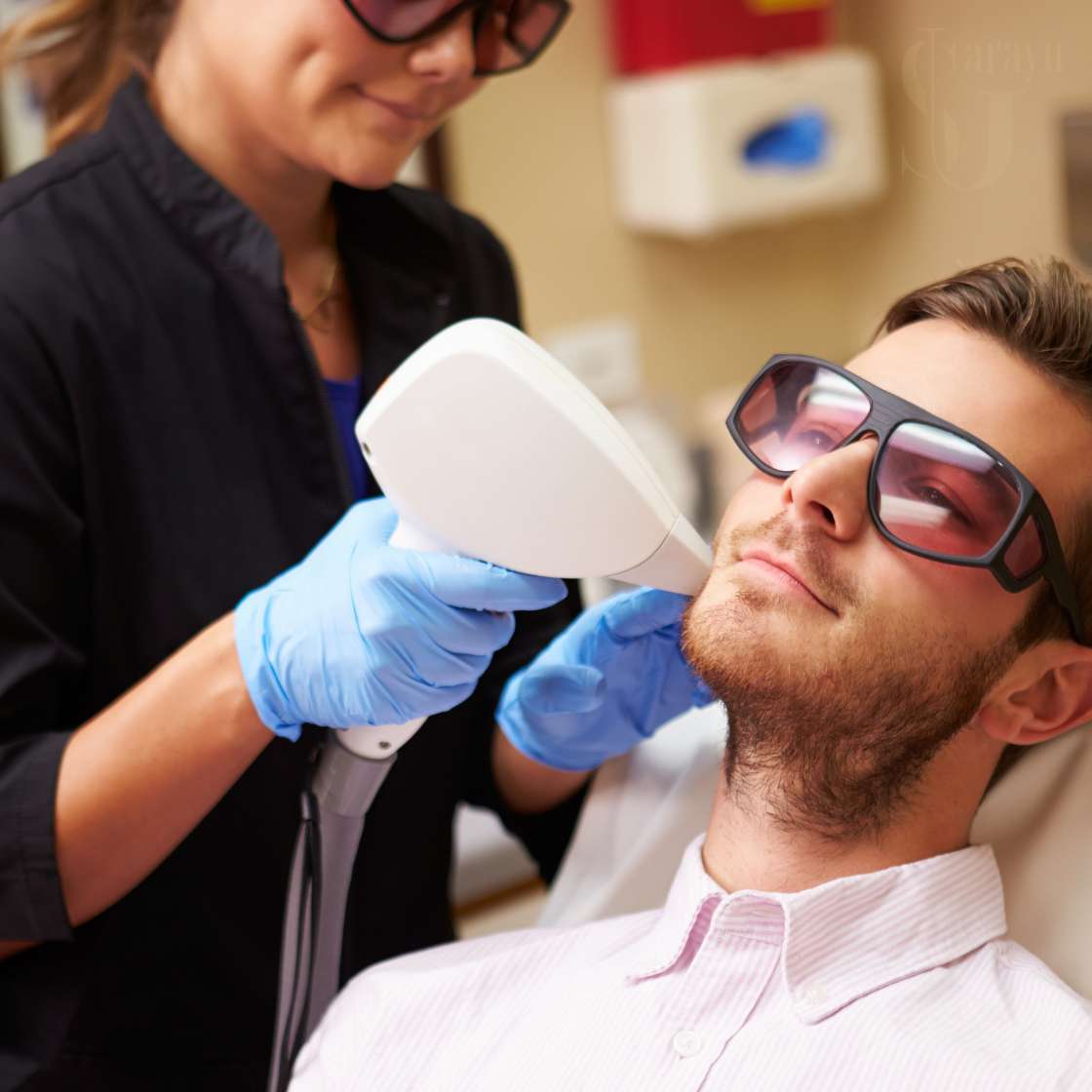
Once the numbing cream is removed and the area is cleaned and prepared, the MNRF handpiece is applied to the skin systematically across the treatment zones. The device’s insulated microneedles penetrate to a precisely controlled depth (typically 0.5 mm to 3.5 mm depending on the area and concern), and at the point of full penetration, a brief pulse of radiofrequency energy is delivered.
What you feel: a mild pressure sensation during needle insertion and a brief warming sensation during the RF pulse. With adequate numbing, most patients describe the procedure as mildly uncomfortable rather than painful. Sensitive areas around the nose and forehead may feel more intense.
The procedure is performed in overlapping passes across the full treatment area. A full-face session takes approximately 30 to 45 minutes after the numbing period. Body areas (abdomen, thighs) may take 45 to 60 minutes.
Step 4: Immediate Post-Procedure Care
Immediately after the treatment, the skin will appear red — similar to a moderate sunburn. Mild swelling is normal, particularly around the eyes and cheeks. A soothing serum or mask is applied to calm the skin. Post-treatment instructions are given before you leave the clinic.
Step 5: Healing and the Collagen Rebuilding Phase
The redness typically resolves within 24 to 72 hours. Some patients experience mild peeling or dryness in the days following treatment — this is normal and reflects the skin’s healing and renewal response. The collagen remodelling phase begins in the days after treatment and continues for 3 to 6 months. This is when the real results build progressively.
Step 6: Subsequent Sessions
Sessions are spaced 4 to 6 weeks apart to allow full collagen maturation between treatments. Most patients require 3 to 6 sessions for their primary concern:
- Mild acne scars or pore refinement: 3 sessions
- Moderate acne scars or skin laxity: 4 to 5 sessions
- Deep or complex scarring: 5 to 6 sessions, sometimes combined with subcision or fillers
- Stretch marks: 4 to 6 sessions depending on age and depth of marks
Downtime and Recovery: What to Realistically ExpectDowntime and Recovery: What to Realistically Expect
MNRF’s recovery profile is one of its strongest practical advantages. Here is an honest, day-by-day guide:
Recovery Phase | What to Expect |
Day of treatment | Redness and warmth immediately after — similar to moderate sunburn. Mild swelling around eyes or cheeks. Skin feels warm and sensitive. |
Day 1 (next morning) | Redness persists, though often reduced. Slight tightness and sensitivity. Most patients prefer to stay home. Makeup is not recommended. |
Day 2–3 | Redness continues to fade. Some patients experience mild dryness or very fine flaking — not dramatic peeling. This is normal skin renewal. |
Day 4–7 | Skin returns to near-normal appearance. Mild pinkness may linger in sensitive patients. Most people are comfortable returning to work and social activities. |
Week 2 onwards | Skin looks and feels normal. Some patients notice an early improvement in texture. Collagen building continues beneath the surface. |
Month 1–3 | Progressive visible improvement in scar appearance, pore size, and skin texture as collagen remodelling matures. |
Month 3–6 | Full results of each session visible. Improvement continues even after the session course is complete. |
Aftercare Instructions — These Are Not Optional
What you do in the days after MNRF significantly affects your results. Following these instructions is not just about comfort — it directly influences how well the collagen remodels:
- Apply SPF 50 every morning without exception — sun exposure during healing can cause post-inflammatory hyperpigmentation on darker skin
- Use only gentle, fragrance-free moisturiser for the first 5 to 7 days — nothing active (no vitamin C, retinol, AHAs, or BHAs)
- Avoid makeup for at least 24 hours, ideally 48 hours
- No swimming, saunas, steam rooms, or heavy exercise (excessive sweating) for 5 to 7 days
- Do not pick at any flaking or dryness — let it shed naturally
- Keep the skin well hydrated with plain water internally and moisturiser externally
- Sleep on a clean pillowcase for the first week
MNRF Treatment Cost in Delhi at Sarayu Clinics (2025–26)
Cost is one of the most searched questions about MNRF in Delhi. Here is an honest, research-based answer:
MNRF Treatment | Approximate Cost Range (Delhi, 2025–26) |
Single spot / small area | ₹4,000 – ₹8,000 |
Full face (per session) | ₹10,000 – ₹25,000 |
Face and neck (per session) | ₹15,000 – ₹35,000 |
Body area (abdomen / thighs — per session) | ₹12,000 – ₹30,000 |
Full course (3 sessions, face) | ₹25,000 – ₹65,000 |
Full course (4–6 sessions, face) | ₹40,000 – ₹1,20,000 |
For comparison: equivalent RF microneedling | ₹60,000 – ₹1,50,000 per session |
Prices shown are for guidance only. Your final treatment cost will be confirmed during the initial consultation, based on your individual needs, concerns, and personalised treatment plan.
Pricing across Delhi clinics for MNRF ranges from ₹4,000 to ₹25,000 per session depending on the clinic, device quality, and the area treated. The lower end of this range typically reflects partial-face treatment or clinics using older generation devices. Full-face MNRF with a current-generation system in a medically supervised setting typically starts from ₹10,000 per session.
What Affects the Price at Sarayu Clinics ?
- Treatment area: face only vs face and neck vs full body area
- Number of sessions in the course — package pricing is typically available
- Device and parameters: depth and energy settings affect consumable costs
- Whether MNRF is combined with adjunct treatments (PRP, skin boosters)
What Is Included in the Cost at Sarayu Clinics ?
- Pre-treatment consultation and skin assessment
- Topical anaesthesia and all consumables used during the session
- Post-treatment soothing application
- Written aftercare instructions and post-treatment support
Follow-up review at appropriate intervals
MNRF Results Timeline: When Will You See a Difference?
This is possibly the most important section to read before starting MNRF. Managing expectations accurately is what leads to satisfaction — and what most clinic pages get wrong by being too vague.
The honest progression
- After Session 1 (Week 1–4): Many patients notice their skin feels smoother to the touch within a week or two. Pores may appear slightly tighter. Do not expect dramatic scar improvement yet — the collagen remodelling has just begun.
- After Session 2 (Week 5–8): More visible improvement in texture and pore size. Early reduction in the depth of shallower scars. Skin tone begins to even out. This is often when patients start to feel genuinely encouraged.
- After Session 3 (Week 9–12): For patients with mild to moderate concerns, this is where the majority of their improvement shows. Scars appear shallower, pores are visibly refined, and overall skin quality has improved noticeably.
- Month 3–6 post-final session: The collagen remodelling continues for 3 to 6 months after the last session. The skin continues to improve even without further treatment during this period.
- Month 6 onwards: Stable results. Most patients maintain meaningful improvement for 12 to 18 months before considering a maintenance session.
What Affects Results ?
- Scar type and depth: rolling scars respond faster than deep ice-pick scars
- Skin type and individual healing rate — faster healers often see earlier improvement
- Consistency of aftercare — sun protection and gentle skincare directly affect outcomes
- Session spacing — allowing the full 4 to 6 weeks between sessions for collagen maturation
- Age — younger patients tend to produce collagen more readily, though MNRF is effective across age groups
MNRF vs Other Treatments: Which Is Right for You?
The most common question patients ask before choosing MNRF is: ‘How does this compare to laser, or a chemical peel, or just regular microneedling?’ Here is an evidence-based, honest comparison:
Treatment | How It Works | Best For | Key Limitation |
MNRF (RF Microneedling) | Microneedles + radiofrequency energy delivered into dermis | Acne scars (rolling, boxcar), enlarged pores, laxity, stretch marks — especially on darker Indian skin | Does not address surface pigmentation as directly as lasers; ice-pick scars need combination |
Standard Microneedling (CIT) | Microneedles only — no RF energy | Mild scars, general texture improvement, surface glow | Weaker collagen response than MNRF; limited skin tightening effect |
Fractional CO2 Laser | Ablative laser vaporises micro-columns of skin tissue | Deep acne scars, significant sun damage, wrinkles — powerful remodelling | 5 to 10 days downtime; higher risk of PIH on darker skin types; not ideal for Indian skin without careful protocols |
Non-Ablative Fractional Laser (1540/1550nm) | Heat delivered below surface without removing tissue | Mild to moderate scarring, maintenance, patients avoiding downtime | Less effective than MNRF or CO2 for deeper scars; multiple sessions needed |
Chemical Peel (TCA / Glycolic) | Acid solution removes outer skin layers | Surface pigmentation, mild scars, acne-prone skin, uneven tone | Does not reach the dermal depth that MNRF achieves; not effective for structural scars; peeling period required |
Ultherapy / HIFU | Focused ultrasound energy for deep tissue tightening | Skin laxity (particularly face and neck lifting) | Not designed for scar treatment; does not address pores or texture; higher cost per session |
Dermal Fillers | Volume restoration beneath depressed scars or hollows | Rolling scars (as a complement to MNRF), volume loss | Temporary effect (9–18 months); does not treat the underlying scar — only masks it; best used alongside, not instead of, MNRF |
PRP (Platelet-Rich Plasma) | Growth factors from patient’s own blood | Excellent complement to MNRF — delivered immediately after needling for enhanced healing | Limited effect when used alone; most effective as an add-on to MNRF, not a standalone scar treatment |
Frequently Asked Questions About MNRF Treatment in Delhi
Is MNRF treatment painful?
The short answer is no — not with proper preparation. Numbing cream is applied 30 to 60 minutes before the procedure, which makes the treatment very manageable. Most patients describe what they feel as mild pressure and a brief warmth during the RF pulse, rather than pain. Sensitive areas like around the nose may feel more intense, but this is brief. Without numbing cream, the procedure would be uncomfortable — which is why properly supervised clinics always apply it.
How many MNRF sessions do I need?
Most patients require 3 to 6 sessions, spaced 4 to 6 weeks apart. The number depends on what you are treating: mild pore refinement or early texture concerns may show satisfying results in 3 sessions, while moderate to deep acne scars typically benefit from 4 to 6 sessions. Your treatment plan is discussed at your consultation with Dr. Tripathi, including a realistic session count for your specific concern.
Is MNRF safe for Indian skin?
Yes — and this is one of MNRF’s most significant advantages in the Indian context. Because the radiofrequency energy is delivered through insulated needles below the skin surface, the outer epidermal layer (where melanin-producing cells live) is not significantly disrupted. This dramatically reduces the risk of post-inflammatory hyperpigmentation that ablative laser treatments carry on darker Fitzpatrick skin types. MNRF is considered one of the safest advanced skin treatments for South Asian and darker skin tones.
What is the difference between MNRF and regular microneedling?
Standard microneedling uses needles to create micro-injuries in the skin, which triggers a wound-healing and collagen-production response. MNRF adds radiofrequency energy delivered at the point of needle penetration into the deeper dermis. This dual action produces a significantly stronger collagen remodelling response, more effective skin tightening, and better results for moderate to deep acne scars. Think of MNRF as an enhanced, medically upgraded version of standard microneedling.
Can MNRF completely remove acne scars?
MNRF significantly reduces the visibility of acne scars — but ‘reduce’ and ‘remove’ are different things, and it is important to be honest about this. For rolling and boxcar scars, most patients see 40 to 70% improvement over a full course of sessions, with some continuing to improve for months after the final session. Deep ice-pick scars respond partially to MNRF and may benefit from additional techniques. No single treatment completely eliminates all types of acne scarring — but MNRF is one of the most effective available options, particularly for Indian skin.
Can MNRF be combined with other treatments?
Yes, and combination approaches often produce better results. Common combinations include: MNRF with PRP (platelet-rich plasma) — PRP is applied immediately after needling, using the micro-channels as delivery pathways for growth factors; MNRF with subcision for deep rolling scars; MNRF followed by chemical peel for pigmentation; MNRF with dermal fillers for volume-depleted scars. Dr. Tripathi will advise whether a combination approach is appropriate for your scar type during your consultation.
How long do MNRF results last?
Results from a full course of MNRF are long-lasting. The collagen that is built during the treatment process is your own, real collagen — it does not disappear after a few months. Most patients maintain visible improvement for 12 to 18 months after completing their course. A single annual maintenance session helps sustain the results. Factors that extend the lifespan of results include consistent sun protection, stable weight, and a basic skincare routine.
What is the MNRF treatment cost in Delhi at Sarayu Clinics?
A full-face MNRF session in Delhi typically ranges from ₹10,000 to ₹25,000 per session, depending on the area treated and device used. Most patients need 3 to 6 sessions, making the full course cost ₹25,000 to ₹1,20,000 for facial treatment. An exact, itemised quote for your specific treatment plan is provided at your consultation at Sarayu Clinics, before you commit to anything. Package pricing for multiple sessions is available.
Is there any downtime after MNRF?
Redness — similar in appearance to a moderate sunburn — is expected immediately after and for 24 to 72 hours following treatment. Mild swelling is common on day one. Most patients are comfortable returning to work within 2 to 3 days. Heavy exercise, swimming, and saunas should be avoided for 5 to 7 days. Makeup should be avoided for 24 to 48 hours. This is considerably less downtime than equivalent treatments like fractional CO2 laser.
Can I get MNRF if I currently have active acne?
Active, inflamed acne should be treated and resolved before beginning MNRF sessions. Performing MNRF over active breakouts risks spreading bacteria and can worsen inflammation. Once the active acne is under control — which the team at Sarayu Clinics can help manage — MNRF is an appropriate next step to address the scarring that remains.
Dr. Adarsh Tripathi and Sarayu Clinics, Greater Kailash
MNRF is a technique-sensitive procedure. The final outcome depends heavily on the operator’s experience with device parameters — the depth of needle penetration, the radiofrequency energy level, the number of passes, and the spacing of treatment zones. Incorrect settings can result in burns, PIH, or uneven outcomes. This is not a procedure where the device does the work automatically — calibration and technique matter.
Dr. Adarsh Tripathi — Specialist in Facial Aesthetics and Reconstructive Procedures
Dr. Tripathi brings specialist-level understanding of facial anatomy and skin physiology to every MNRF session. His training in facial plastic surgery means he approaches skin treatments with the same anatomical precision he applies in surgical procedures — understanding how different tissue depths, skin thicknesses, and scar types respond to RF energy.
At Sarayu Clinics, MNRF is not administered by a technician following a standard protocol. Dr. Tripathi’s team adjusts parameters for each patient’s specific skin type, scar morphology, and treatment area — which is what differentiates genuinely skilled delivery of this procedure from generic application.
What to Expect at Sarayu Clinics ?
- A full skin assessment and scar grading before any treatment is planned
- Medical-grade MNRF device — not a salon or home-use device
- Proper topical anaesthesia protocol for patient comfort
- Post-treatment soothing and immediate aftercare on-site
- Written aftercare instructions and contact for post-treatment questions
- Transparent session planning with realistic expected outcomes — no over-promising
Location and Access
Sarayu Clinics is located in Greater Kailash, South Delhi — one of the most accessible parts of the city. Patients travel from Lajpat Nagar, Hauz Khas, Malviya Nagar, Kalkaji, Faridabad, Noida, and Gurgaon for treatments. Weekend and weekday appointments are available.
Book Your MNRF Consultation at Sarayu Clinics
If you have been living with acne scars, enlarged pores, or skin that no longer feels like your own — MNRF is one of the most clinically sound non-surgical options available in Delhi today. It works on the level where the problem actually exists, it is safe for Indian skin, and the results build naturally over time in a way that does not look like you have had a treatment.
The right place to start is a consultation with Dr. Adarsh Tripathi at Sarayu Clinics. In that 30 to 45-minute appointment, you will have your skin properly assessed, your scar type identified, and a realistic treatment plan explained — including exactly how many sessions are likely, what improvement to expect, and what the cost will be.
How to Reach Us:
Phone: +91 9289111081 , +91 9289111082
Email: sarayuinquiries@gmail.com
Sarayu Clinics website: www.sarayuclinics.com
Facebook: https://www.facebook.com/sarayuclinic
Instagram: https://www.instagram.com/sarayuclinics/
Dr. Adarsh Tripathi’s profile: https://dradarshtripathi.com/
Online Booking: Visit our website https://sarayuclinics.com/contact-us/ to schedule appointments conveniently.
What is MNRF Laser Treatment and how does it work?
MNRF (Microneedling Radiofrequency) Laser Treatment is an advanced, minimally invasive cosmetic procedure that combines microneedling with radiofrequency energy to rejuvenate the skin. At Sarayu Clinics, a leading cosmetic surgery clinic in Delhi, this treatment is performed under the expert supervision of Dr. Adarsh Tripathi. The procedure involves using fine, sterile microneedles to create controlled micro-injuries in the skin while simultaneously delivering radiofrequency heat into the deeper dermal layers. This dual mechanism stimulates collagen and elastin production, leading to improved skin texture, firmness, and elasticity.
MNRF Laser Treatment in Delhi is widely used for acne scars, fine lines, wrinkles, pigmentation, and skin tightening. The controlled thermal effect promotes long-term skin remodeling, making it an effective option for individuals seeking non-surgical facial rejuvenation with visible, gradual improvements.
What are the benefits of MNRF Laser Treatment at Sarayu Clinics in Delhi?
MNRF Laser Treatment at Sarayu Clinics offers multiple dermatological and aesthetic benefits, making it a preferred solution in Delhi’s cosmetic treatment landscape. The procedure helps reduce acne scars, fine lines, wrinkles, enlarged pores, and uneven skin tone while improving overall skin texture and firmness. It also promotes collagen regeneration, which contributes to long-term skin rejuvenation. Under the guidance of Dr. Adarsh Tripathi, each treatment is tailored to individual skin concerns, ensuring targeted and effective outcomes. As a reputed cosmetic surgery clinic in Delhi, Sarayu Clinics uses advanced MNRF technology and strict clinical protocols to ensure safety and consistency. Additionally, the treatment involves minimal downtime, making it suitable for working professionals seeking noticeable results without significant disruption to daily routines.
Is MNRF Laser Treatment suitable for all skin types?
MNRF Laser Treatment is generally considered safe for a wide range of skin types, including Indian skin tones, because it targets deeper layers of the skin without causing excessive surface damage. At Sarayu Clinics in Delhi, Dr. Adarsh Tripathi conducts a detailed skin assessment before recommending the procedure to ensure optimal suitability and safety.The treatment is particularly beneficial for individuals dealing with acne scars, skin laxity, enlarged pores, and early signs of aging. However, patients with active infections, severe skin conditions, or certain medical concerns may require alternative treatments. As a trusted cosmetic surgery clinic in Delhi, Sarayu Clinics emphasizes personalized treatment planning to achieve the best outcomes. MNRF’s ability to deliver controlled energy into the dermis makes it a versatile option for diverse skin concerns when performed by experienced professionals.
What can I expect during the recovery process after MNRF Laser Treatment?
Recovery after MNRF Laser Treatment is typically quick and manageable. Most patients experience mild redness, swelling, or a warm sensation immediately after the procedure, which usually subsides within 24 to 48 hours. At Sarayu Clinics in Delhi, patients are provided with detailed aftercare instructions by Dr. Adarsh Tripathi to ensure optimal healing and results. These include avoiding direct sun exposure, using gentle skincare products, and applying sunscreen regularly. Some individuals may notice slight dryness or minor flaking as the skin renews itself. As a professional cosmetic surgery clinic in Delhi, Sarayu Clinics ensures that patients are well-informed about post-treatment care, allowing them to resume normal activities with minimal downtime while maintaining long-lasting skin improvements.
How does Dr. Adarsh Tripathi ensure patient safety during MNRF Laser Treatment?
Patient safety is a core priority at Sarayu Clinics, a reputed cosmetic surgery clinic in Delhi. Dr. Adarsh Tripathi follows a structured protocol that includes detailed consultation, skin analysis, and customized treatment planning before performing MNRF Laser Treatment. The procedure is carried out using advanced, clinically approved devices with precise control over needle depth and radiofrequency energy delivery.Strict hygiene standards and sterile equipment are maintained throughout the process to minimize risks. Additionally, patients receive clear pre- and post-treatment instructions to enhance safety and effectiveness. Clinical evidence suggests that when performed correctly, MNRF offers significant improvements with minimal adverse effects, reinforcing the importance of choosing an experienced practitioner. This meticulous approach positions Sarayu Clinics as a reliable destination for MNRF Laser Treatment in Delhi.
Are there any side effects of MNRF Laser Treatment?
MNRF Laser Treatment is generally safe when performed by qualified professionals, but mild and temporary side effects may occur. These can include redness, swelling, slight discomfort, or skin sensitivity immediately after the procedure. Such effects are typically short-lived and resolve within a few days.In rare cases, improper technique or untrained providers may increase the risk of complications such as burns, scarring, or pigmentation changes, which highlights the importance of choosing a trusted cosmetic surgery clinic in Delhi.At Sarayu Clinics, Dr. Adarsh Tripathi minimizes these risks through careful patient selection, advanced technology, and strict adherence to clinical protocols. Patients are also guided on aftercare practices to ensure smooth recovery and optimal results, making the procedure both safe and effective for skin rejuvenation.