
Advanced Melasma Treatment in Delhi with Personalized Care
- Home
- Advanced Melasma Treatment in Delhi with Personalized Care
Advanced Melasma Treatment in Delhi with Personalized Care
If you’ve noticed stubborn brown or grey-brown patches creeping across your cheeks, forehead or upper lip, you’re dealing with one of the most common — and most misunderstood — skin concerns in India. Melasma doesn’t hurt and it isn’t dangerous, but it is persistent, it tends to come back, and the wrong treatment can make it worse. That last point matters more than most people realise.
At Sarayu Clinics in Greater Kailash, melasma is treated the way the evidence says it should be: gently, gradually and under proper medical supervision. Treatment is led by facial plastic and maxillofacial surgeon Dr. Adarsh Tripathi, whose team tailors every plan to your skin type, the depth of your pigment and your triggers — rather than reaching for the most aggressive laser in the room. The goal is honest: melasma is controlled and faded, not “burned off” in a single sitting.
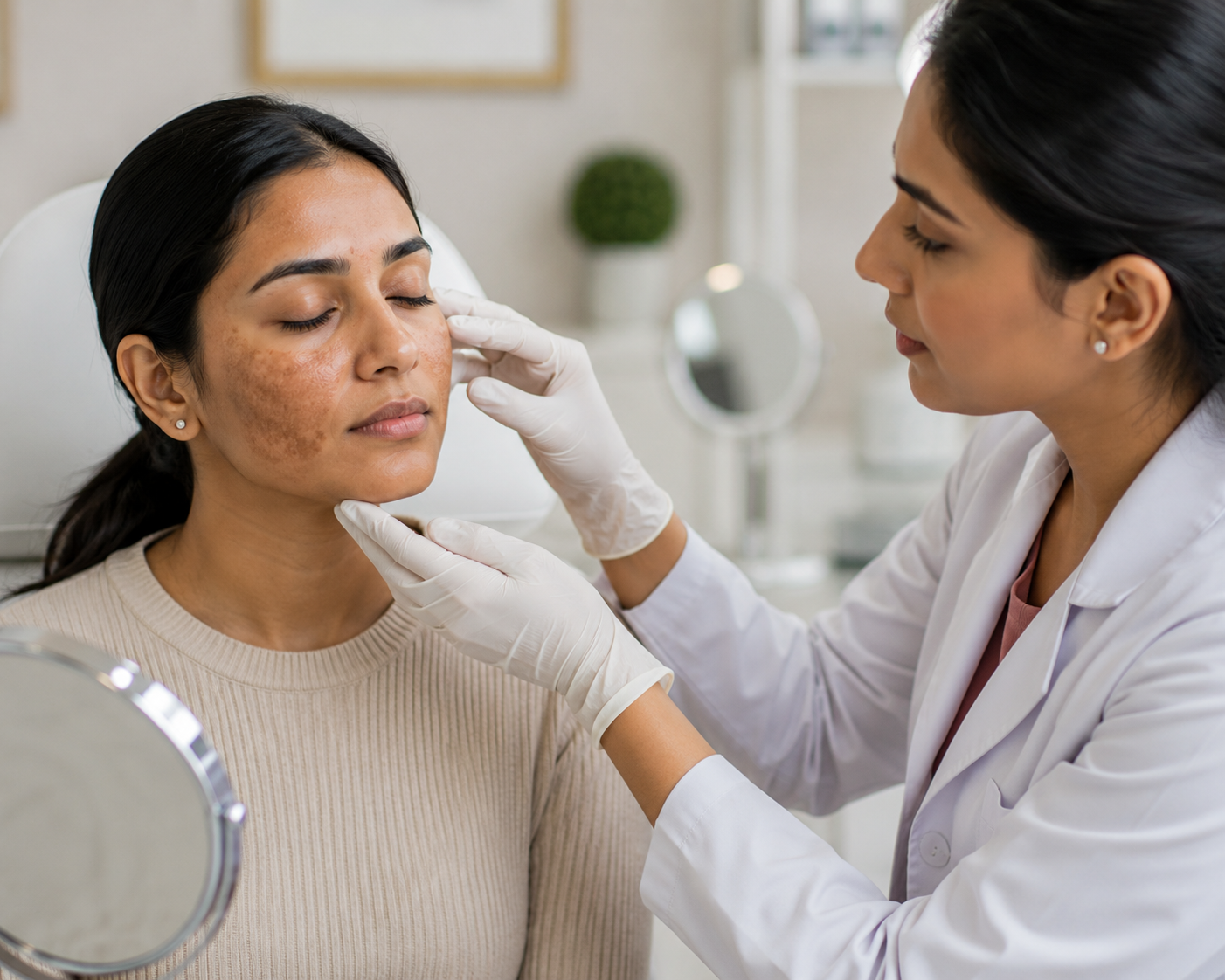
What Is Melasma?
Melasma is a chronic pigmentation disorder in which patches of skin become darker than the surrounding area. It happens when melanocytes — the cells that make pigment — become overactive and deposit extra melanin, usually in a symmetrical pattern across the face. It’s far more common in women, and especially common in medium-to-deep Indian skin tones.
Knowing which type of melasma you have changes the treatment plan, which is why a proper diagnosis comes first:
- Epidermal melasma — pigment sits in the upper layer of skin. Patches look well-defined and brown. This type responds best and fastest to treatment.
- Dermal melasma — pigment sits deeper, giving a bluish-grey tone with blurrier edges. It’s slower and harder to shift and needs gentler, patient handling.
- Mixed melasma — a combination of both, which is the most common presentation. It needs a layered plan that works on the surface and the deeper pigment together.
A clinician can get a strong sense of the depth using a Wood’s lamp examination during your consultation — a simple, painless check that guides how cautious the treatment needs to be.
Why Melasma Is So Common in Delhi ?
Melasma is triggered by a mix of factors, and life in Delhi happens to stack several of them on top of each other:
- Sun exposure — ultraviolet light is the single biggest driver. Long, bright summers and UV reflected off roads and buildings keep pigment cells switched on.
- Air pollution — Delhi’s particulate pollution generates skin stress that can aggravate pigmentation and make patches harder to settle.
- Hormones — pregnancy, oral contraceptives and hormone therapy commonly set melasma off. This is why it’s sometimes called the “mask of pregnancy.”
- Genetics — if melasma runs in your family, you’re more likely to develop it.
- Heat and visible light — even kitchen heat, screens and indoor light can contribute, which is why sunscreen alone isn’t always enough.
Because these triggers don’t disappear after treatment, melasma is best thought of as a condition you manage long-term — like keeping a garden, not like fixing a broken bone.
Benefits of Professional Melasma Treatment
Seeing a qualified clinician rather than self-treating with random creams gives you:
- A more even skin tone — visibly lighter patches and a brighter, more uniform complexion.
- A plan matched to your skin — settings and products chosen for Indian skin, which lowers the risk of things going wrong.
- Lower risk of rebound — supervised treatment avoids the aggressive approaches that can darken melasma further.
- Healthier skin overall — many melasma treatments also improve texture, pores and dullness as a bonus.
- Renewed confidence — for most people the biggest gain is simply not thinking about their patches every time they look in the mirror.
- Maintenance that actually holds — a proper plan keeps results steady instead of fading within weeks.
Areas of the Face We Treat
Melasma follows recognisable patterns. We commonly treat:
- The cheeks (the most common site, often called the malar pattern)
- The forehead
- The upper lip and the area around the mouth
- The bridge and sides of the nose
- The chin and jawline
- The sides of the face and, less commonly, the forearms and neck
Types of Melasma & Related Pigmentation We Treat
Not every dark patch is melasma, and telling them apart matters because they respond to different treatments. During your consultation we identify and treat:
- Epidermal, dermal and mixed melasma
- Hormonal / pregnancy-related melasma (chloasma)
- Post-inflammatory hyperpigmentation (PIH) — dark marks left by acne, injuries or previous procedures
- Sun-induced pigmentation, sun spots and uneven tone
- Stubborn pigmentation that hasn’t responded to creams elsewhere
For broader skin-brightening goals beyond melasma, we also offer depigmentation and whitening treatment in Delhi, which can be combined into a melasma plan where appropriate.
Melasma Treatment Options at Sarayu Clinics
There is no single “best” treatment for everyone — the right answer depends on your melasma type, your skin and your triggers. Modern, evidence-based care for Indian skin starts gentle and builds up. In practice the most reliable results come from combining a few of the options below rather than relying on any one of them.
1. Sun protection — the non-negotiable foundation
No melasma treatment works without daily, broad-spectrum sunscreen. A tinted SPF 30–50 that also blocks visible light, reapplied through the day, is the single most important thing you can do. We’ll recommend one suited to your skin during your visit.
2. Prescription topicals
Medical-grade creams are the usual first line of treatment. Depending on your skin we may use ingredients such as hydroquinone (for short, supervised courses), retinoids, azelaic acid, kojic acid, niacinamide, vitamin C and cysteamine. These are prescribed and monitored — not bought off a shelf — because used wrongly they can irritate skin and worsen pigment.
3. Tranexamic acid
Tranexamic acid (oral, topical or as a mesotherapy micro-injection) has become one of the most useful additions to melasma care in recent years and is well supported by clinical studies. It calms the signalling that drives pigment production and pairs especially well with laser toning. It’s prescribed only after we’ve checked it’s safe for you.
4. Chemical peels
Gentle, controlled peels (glycolic, salicylic, mandelic or lactic acid) exfoliate pigmented surface cells and speed up the fading of epidermal melasma. Our carbon peel treatment is a popular, low-downtime option that also brightens and refines the skin.
5. Microneedling (with brightening serums)
Microneedling — including Dermapen 4 and skin microneedling — creates tiny channels that help brightening agents such as tranexamic acid penetrate, while stimulating skin renewal. It’s a gentle, skin-friendly option for melasma in darker skin.
6. Laser toning (used carefully)
For resistant or deeper melasma, low-fluence Q-switched Nd:YAG laser toning — delivered with our Hollywood Spectra laser — can gently break down deep pigment. The key word is gently. Indian skin (Fitzpatrick IV–V) is prone to rebound darkening if lasers are used too aggressively, so laser is used as a second-line tool, at conservative settings, usually after topicals have prepared the skin — and never as a stand-alone “quick fix.”
7. Supporting treatments
Depending on your goals we may add MNRF / fractional radiofrequency, glutathione IV therapy, a medical facial or HydraFacial to support overall skin health and maintain results between sessions.
What to Expect: Your Treatment Journey Step by Step ?
- Consultation & skin analysis. We review your history, triggers, medications and previous treatments, and examine your skin — often with a Wood’s lamp — to identify your melasma type.
- Diagnosis & honest goal-setting. We explain what’s realistic, over what timeline, and what maintenance will involve.
- A patch test (when needed). For lasers or stronger peels, a small test area helps confirm your skin will respond safely.
- Your personalised plan. Usually a combination — sun protection plus topicals, with peels, microneedling, tranexamic acid or laser toning layered in as appropriate.
- The treatment sessions. In-clinic sessions are quick (often 20–45 minutes), with numbing or cooling for comfort. Most are walk-in, walk-out.
- Review & maintenance. We track progress, adjust the plan, and move you onto a maintenance routine to hold your results and limit recurrence.
Downtime & Aftercare
Most melasma treatments are non-surgical and low-downtime — you can usually return to your day the same day. What to expect:
- Topicals: no downtime; mild dryness or tingling early on.
- Chemical peels: mild redness and light flaking for a few days; heightened sun sensitivity for about a week.
- Microneedling: redness for 24–48 hours, similar to mild sunburn.
- Laser toning: slight redness or warmth that settles quickly; conservative settings mean minimal downtime.
Aftercare is where results are won or lost:
- Wear broad-spectrum sunscreen daily and reapply — every single day, indoors and out.
- Avoid direct sun, saunas and intense workouts for the first 24–48 hours after in-clinic treatments.
- Stick to a gentle cleanser and moisturiser; pause active ingredients unless advised.
- Don’t pick or scrub flaking skin.
- Follow your prescribed home routine consistently — it does most of the long-term work.
Melasma Treatment Cost in Delhi
Melasma is treated as a course rather than a one-off, so it’s most useful to think in terms of per-session cost plus the number of sessions you’re likely to need. As a general guide for Delhi:
Treatment | Typical cost per session (INR)* |
Consultation & skin analysis | ₹2,500 – ₹5,000 |
Prescription topicals (home care) | Product cost; reviewed at follow-ups |
Chemical / carbon peel | ₹3,000 – ₹6,000 |
Microneedling (with serums) | ₹4,000 – ₹8,000 |
Laser toning (Q-switched Nd:YAG) | ₹5,000 – ₹12,000 |
Tranexamic acid / glutathione adjuncts | Varies — quoted at consultation |
Full course (typical, over several months) | ₹20,000 – ₹80,000 depending on severity & plan |
*Indicative ranges only. Your actual cost depends on your melasma type and depth, the number of sessions needed, and the combination of treatments chosen. We give you a clear, itemised plan after your consultation — with no hidden charges.
What changes the price: the depth of pigment (dermal melasma takes longer), how many sessions you need, the technologies used, and how well home care keeps results stable.
Prices shown are for guidance only. Your final treatment cost will be confirmed during the initial consultation, based on your individual needs, concerns, and personalised treatment plan.
Results Timeline: When Will You See a Difference?
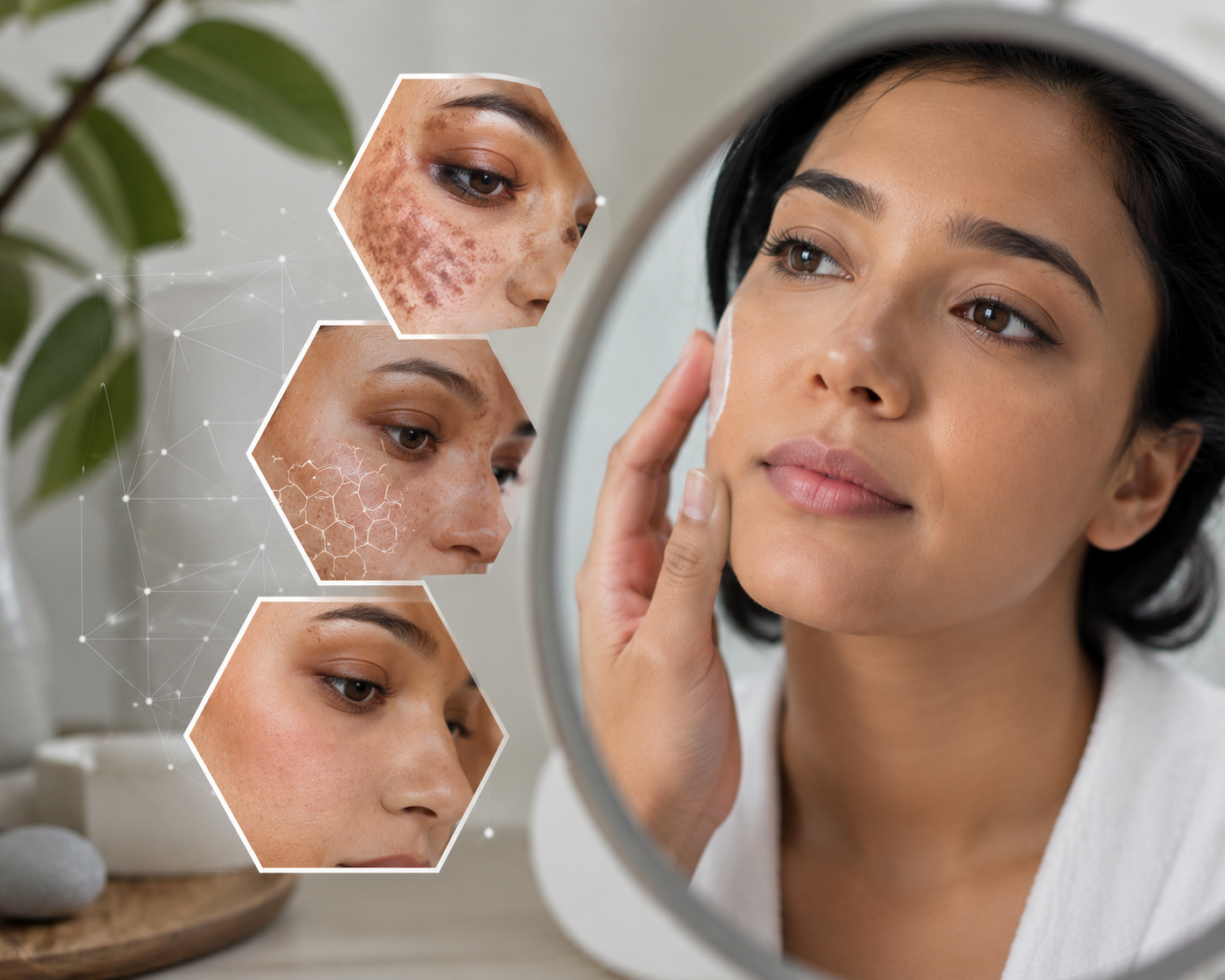
Melasma fades gradually — slow and steady is exactly what you want, because fast and harsh is what causes rebound. A realistic timeline:
Timeframe | What usually happens |
Weeks 1–2 | Skin starts to feel brighter and smoother; patches may look slightly softer. |
Weeks 4–6 | Noticeable lightening begins as treatment and topicals take effect. |
Months 2–3 | Most visible improvement — patches are clearly lighter and tone more even. |
Months 3–6+ | Best results, then a shift to maintenance to hold them and prevent flare-ups. |
Most people need 4–8 sessions spaced a few weeks apart, plus ongoing sun protection and home care. Because the underlying tendency stays, occasional maintenance sessions keep melasma from creeping back.
Comparing Melasma Treatments at a Glance
A quick side-by-side to help you understand where each option fits. Your plan will usually combine two or more of these.
Treatment | Best for | Downtime | How it helps |
Topicals | First-line, all types | None | Slows pigment production; foundation of every plan |
Tranexamic acid | Hormonal & stubborn melasma | None | Calms the pathway that drives pigment; boosts other treatments |
Chemical / carbon peel | Epidermal melasma, dullness | Low (a few days) | Exfoliates surface pigment, brightens |
Microneedling | Indian skin, mixed melasma | Low (1–2 days) | Delivers serums deeper; renews skin gently |
Laser toning (low-fluence) | Resistant / dermal melasma | Minimal | Breaks down deep pigment — second-line, used cautiously |
Why Choose Sarayu Clinics for Melasma Treatment in Delhi ?
Melasma is unforgiving of shortcuts, so who treats it matters. Treatment at Sarayu Clinics is led by Dr. Adarsh Tripathi, a facial plastic and maxillofacial surgeon known for his work in pigmentation, scarring and complex skin concerns, alongside co-founder and celebrity facial aesthetician Dr. Nidhi Bhatia, who has introduced advanced pigment-laser technology in India.
What sets the approach apart:
- Expertise with Indian skin. Plans are built around the realities of Fitzpatrick IV–V skin, where caution prevents rebound pigmentation.
- Evidence-led, not gimmick-led. We follow the medical consensus — gentle combinations first, lasers second — rather than chasing the most dramatic device.
- Advanced technology. From Hollywood Spectra laser toning to medical-grade peels and microneedling, all under one roof in Greater Kailash.
- Personalised plans. No two melasma cases are the same; neither are our treatment plans.
- Transparent pricing & honest expectations. Clear plans, realistic timelines, and no over-promising.
You can learn more about our clinic and team or come and see the space for yourself.
Frequently Asked Questions :
Can melasma be permanently cured?
Not exactly. Melasma is a chronic, relapsing condition, so the honest goal is to control and significantly fade it, then keep it that way with maintenance and sun protection. With a good plan, most people see large, lasting improvements — but the underlying tendency to pigment stays, which is why ongoing care matters.
How many sessions will I need?
Most people need around 4–8 in-clinic sessions, usually a few weeks apart, combined with daily home care. Deeper (dermal) melasma takes longer than surface (epidermal) melasma. You’ll get a personalised estimate after your consultation.
Is laser treatment safe for Indian skin?
Yes — when it’s the right laser at the right (conservative) settings, used by an experienced clinician. Indian skin is prone to rebound darkening if lasers are used aggressively, which is why we treat laser as a second-line tool, often after topicals, and never as a stand-alone quick fix.
How soon will I see results?
Skin often looks brighter within 1–2 weeks, with clearer lightening of patches over 4–6 weeks and the most visible improvement by 2–3 months. Melasma fades gradually — and that slow pace is exactly what keeps it from rebounding.
Does melasma come back after treatment?
It can, because sun, hormones and pollution keep triggering it. Daily sunscreen and occasional maintenance sessions are the best way to keep it from returning.
What is the cost of melasma treatment in Delhi?
Per session, treatments in Delhi typically range from about ₹3,000 for peels to ₹12,000 for laser toning, with a full course often falling between ₹20,000 and ₹80,000 depending on severity. Your exact cost is confirmed in a personalised plan after consultation.
Are the treatments painful?
Most are comfortable. Peels cause mild tingling, microneedling and laser toning feel like light prickling or warmth, and numbing or cooling is used where helpful. There’s little to no downtime for most options.
Can I treat melasma during pregnancy?
Many active treatments and medications aren’t recommended during pregnancy or breastfeeding. The safest approach then is strict sun protection and pregnancy-safe skincare, with active treatment started afterwards. Always tell us if you’re pregnant, planning to be, or breastfeeding.
How to Reach Us:
Phone: +91 9289111081 , +91 9289111082
Email: sarayuinquiries@gmail.com
Sarayu Clinics website: www.sarayuclinics.com
Facebook: https://www.facebook.com/sarayuclinic
Instagram: https://www.instagram.com/sarayuclinics/
Dr. Adarsh Tripathi’s profile: https://dradarshtripathi.com/
Online Booking: Visit our website https://sarayuclinics.com/contact-us/ to schedule appointments conveniently.
How long does it take to see results from melasma treatment?
Results vary by individual and treatment type; however, many patients notice improvements within a few weeks after starting their regimen.
Are there any side effects associated with melasma treatments?
Common side effects may include redness, swelling, or peeling in treated areas. These typically resolve quickly.
Can melasma come back after treatment?
Yes, melasma can recur due to hormonal changes or sun exposure; ongoing maintenance treatments and sun protection are crucial.
Is laser therapy safe for all skin types?
Many modern laser treatments are safe for various skin types; however, a consultation is necessary to determine the best approach for your specific needs.
What is the best melasma treatment price in Delhi?
The best melasma treatment price in Delhi depends on the type of procedure recommended, such as chemical peels, laser therapy, or topical treatments. A personalized consultation at Sarayu Clinics will help determine the most suitable treatment and exact cost.
How many sessions are needed for effective melasma treatment?
Most patients require 3 to 6 sessions spaced 4 weeks apart for optimal results. The exact number of sessions depends on the severity of the melasma and the chosen treatment modality. A personalized consultation will provide a more accurate treatment plan.
How can I schedule a consultation for melasma treatment?
To explore the best melasma treatment options for your needs, you can schedule a consultation with Dr. Adarsh Tripathi at Sarayu Clinics. During the consultation, a personalized treatment plan will be developed to address your concerns effectively. You can contact the clinic directly to book an appointment and receive expert guidance tailored to your specific requirements.