
BEST HAIR TRANSPLANT IN DELHI
- Home
- BEST HAIR TRANSPLANT IN DELHI
Best Hair Transplant in Delhi – What You Actually Need to Know ?
Hair loss does not just change how you look. It changes how you feel walking into a room, how often you avoid mirrors, and — sometimes — how much headspace you give to something that nobody else around you seems to notice. If that sounds familiar, you are in the right place.
Sarayu Clinics in Greater Kailash-1, New Delhi, is one of India’s most recognised centres for hair restoration surgery. Founded by Dr. Adarsh Tripathi — a Facial Plastic and Maxillofacial Surgeon and pioneer of 4K UHD Microscopic FUT+FUE hair transplant technology in India — and Dr. Nidhi Bhatia, the clinic has treated thousands of patients, including well-known faces from the entertainment world.
This page covers everything: every hair transplant technique available, how to choose the right one, what to realistically expect from the procedure and recovery, and how the costs break down. We have also done the competitive research, so you get information that goes beyond the basics — the same depth that patients from the UK, UAE, USA, and Canada fly to Delhi for.
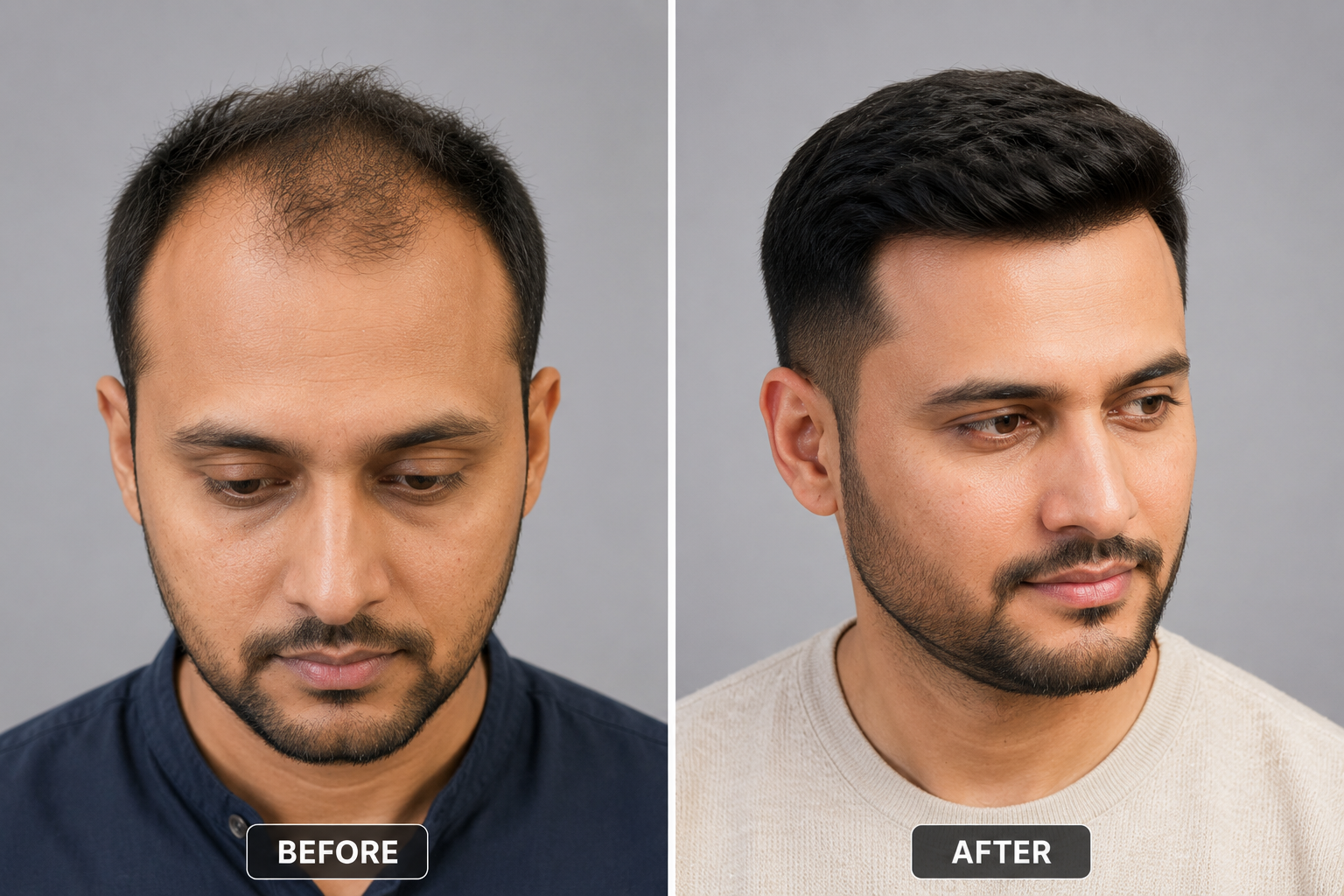
Why Hair Loss Happens – Understanding the Root Cause ?
Hair loss is rarely a single-cause problem. Most patients arrive thinking they have ‘male pattern baldness’ — and many do — but the picture is frequently more complex. Understanding why your hair is thinning determines which treatment will work and how durable that result will be.
Cause of Hair Loss | Clinical Name | Best Treatment Approach |
Genetic (hereditary) | Androgenetic Alopecia (AGA) | Hair transplant (FUE/FUT/DHI) — permanent solution |
Hormonal (DHT sensitivity) | AGA triggered by dihydrotestosterone | Transplant + finasteride or minoxidil for stabilisation |
Autoimmune | Alopecia Areata / Totalis | Medical management first; transplant in stable cases only |
Stress / Illness | Telogen Effluvium | Usually reversible; PRP + GFC while awaiting natural recovery |
Nutritional Deficiency | Iron, B12, Vitamin D deficiency alopecia | Address root cause + Mesotherapy / PRP for acceleration |
Scarring / Trauma | Cicatricial Alopecia, burn/trauma scars | BHT or targeted FUE into scarred areas |
Over-processed hair | Traction alopecia, chemical damage | FUE after stabilisation of hair loss |
Age-related thinning (women) | Female Pattern Hair Loss (FPHL) | Female hair transplant + PRP + GFC programme |
The key principle: you cannot transplant your way out of active, progressive hair loss. The most important step at Sarayu Clinics is ensuring your hair loss is stable before surgery — otherwise you will lose native hair around transplanted grafts, and the result will look patchy over time. Dr. Tripathi assesses this at every consultation.
Benefits of Hair Transplant Surgery – What It Actually Gives You
There is a lot of marketing noise around hair transplants. Here is what is genuinely true about the benefits — and what to be realistic about:
Benefit | Clinical Reality |
Permanent Results | Transplanted follicles are taken from the permanent zone (DHT-resistant). They continue growing for life — not temporarily. |
Completely Natural Looking | When placed by a skilled surgeon following the natural hair growth direction and angle, transplanted hair is indistinguishable from native hair. |
No Daily Maintenance Products | Unlike wigs, hairpieces, or topical medications, transplanted hair needs nothing special — wash, cut, and style it normally. |
Single Investment | Unlike ongoing medication costs, a transplant is a one-time cost for a lifetime result. For most patients, it is significantly more economical over 5–10 years. |
Restores Hairline Architecture | A well-planned hairline is one of the most defining features of facial aesthetics. A good transplant restores a frame for your face. |
Psychological Impact | Multiple clinical studies link hair restoration with measurable improvements in quality of life, confidence, and reduced social anxiety. |
Minimal Downtime | FUE patients return to desk work within 3–5 days. Social downtime (redness, scabs) is typically 10–14 days. |
Suitable for Multiple Areas | Not just the scalp — beard, eyebrows, moustache, body hair, and scar areas can all be restored. |
High Success Rate | At Sarayu Clinics, graft survival rates consistently exceed 95% with the 4K UHD microscopic technique and BIO-FUE graft preservation protocol. |
Areas Where Hair Can Be Transplanted
Hair transplantation is not limited to the scalp. Here is every area that can be addressed at Sarayu Clinics:
Area | What It Addresses & Technical Notes |
Scalp – Hairline | Receding or high hairline design and restoration — the most technically demanding part of hair transplantation; natural hairline design requires artistic precision and anatomical knowledge. |
Scalp – Crown / Vertex | Crown coverage requires a spiral growth pattern match. It needs the most grafts per cm² and is the last area to show full results — discussed honestly at consultation. |
Scalp – Temples | Temporal recession restoration creates the full, wide hairline frame. Requires very fine, single-hair grafts placed at a very acute angle. |
Scalp – Mid-Scalp | The connector between hairline and crown — often neglected in poorly planned transplants. Addressed as part of a complete scalp restoration plan. |
Beard & Moustache | Patchy beard, inability to grow a full beard, or beard restoration after scar/burn — grafts placed following the natural grain direction for each facial zone. Highly popular with younger men. |
Eyebrows | Over-plucked, naturally sparse, or alopecia-affected eyebrows. Each graft placed at a very acute angle (5–15°) following natural brow hair direction. Requires single-hair grafts exclusively. |
Moustache | Gap filling or full moustache creation for men who cannot grow one naturally or following trauma. Single-hair grafts only. |
Scar Areas (Scalp/Face) | FUE grafts can be transplanted into scarred tissue — from injuries, burns, previous surgery (including prior hair transplants with visible linear FUT scars). |
Body Hair Areas | Chest, pubic area, limbs — though body hair transplant (BHT) has lower graft survival rates than scalp-to-scalp and is used when donor scalp supply is limited. |
Eyelashes | Extremely specialised; requires single-hair grafts from nape area. Rare but performed in selective cases at Sarayu Clinics. |
Hair Loss Conditions Treated at Sarayu Clinics
- Androgenetic Alopecia (male pattern baldness) — Norwood Scale I through VII
- Female Pattern Hair Loss (FPHL / Ludwig Scale) — diffuse thinning in women
- Receding hairline / high hairline — regardless of overall hair density
- Alopecia Areata (in stable, non-active cases following medical evaluation)
- Traction alopecia from tight hairstyles, braids, extensions
- Scarring alopecia from burns, accidents, surgery, or previous procedures
- Eyebrow hair loss — hormonal, autoimmune, or over-plucking related
- Beard patchiness — naturally sparse or post-trauma
- Post-chemotherapy hair thinning (once regrowth is confirmed stable)
- Crown thinning — isolated vertex hair loss
- Hairline correction — asymmetry, cowlicks, naturally high placement
- Repair of previously performed hair transplant procedures — corrective restoration
- Hair loss from previous surgeries (e.g., post-facelift hairline distortion)
All Hair Transplant Techniques Available at Sarayu Clinics
This is the section most competitive pages skip over. Every technique below is different — not just a marketing rebrand. Understanding the differences helps you make the right choice for your hair type, donor supply, and desired result.
FUE – Follicular Unit Extraction (The Gold Standard)
FUE is the most widely performed hair transplant technique worldwide, and for good reason. Individual follicular units — each containing 1–4 hairs — are extracted one by one from the donor area (usually the back and sides of the scalp) using a micro-punch tool (typically 0.6–0.9 mm diameter). Each graft is then implanted into tiny recipient sites made in the thinning or bald area.
There is no linear incision, no linear scar, and no stitches. The tiny circular extraction sites heal as barely visible dots, allowing patients to wear their hair short without revealing that a procedure was done. FUE is also more comfortable post-operatively than FUT.
Why patients choose FUE:
- No linear scar at the donor site
- Faster recovery than FUT — most patients return to light work within 3–5 days
- Can be used to harvest from beard, chest, and body as supplementary donor sources
- Can treat FUT scars by transplanting grafts into the linear scar tissue
- Preferred by patients who keep their hair short
Learn More: FUE Hair Transplant in Delhi
FUT – Follicular Unit Transplantation (Maximum Graft Yield)
FUT (also called the strip method or FUHT — Follicular Unit Hair Transplantation) involves surgically removing a strip of scalp from the donor area. This strip is then dissected under a microscope into individual follicular unit grafts by a skilled team. The donor incision is closed with a fine suture, leaving a single linear scar that is hidden by surrounding hair.
FUT’s primary advantage over FUE is graft yield: a single session can produce 3,000–5,000+ grafts, making it the preferred technique for patients with advanced hair loss (Norwood V–VII) who need maximum coverage. The grafts extracted via FUT also have a slightly higher survival rate in some studies because the follicles experience less transection (damage during extraction).
When Dr. Tripathi recommends FUT over FUE:
- Patient needs 3,500+ grafts in a single session
- Donor area density is high — maximising yield from the safest extraction zone
- Patient is comfortable with a linear scar (hidden under hair at normal length)
- Budget is a primary consideration — FUT is generally less expensive per graft
The Sarayu Difference — 4K UHD Microscopic FUT:
Dr. Tripathi pioneered the use of 4K UHD microscopy in FUT graft preparation. Grafts are dissected under ultra-high-definition magnification, dramatically reducing transection rates and preserving the delicate perifollicular tissue that supports graft survival. This is one of the most significant technical advances in FUT surgery and is not available at most clinics.
Learn More : FUT Hair Transplant in Delhi | FUT vs FUE Comparison
BIO-FUE – The Biological Enhancement Protocol
BIO-FUE is not a separate surgical technique — it is FUE performed with a biological graft-enhancement protocol that significantly improves graft survival. Extracted grafts are stored and processed in a bio-enriched solution containing growth factors (often derived from the patient’s own PRP or GFC), antioxidants, and ATP (adenosine triphosphate) to maintain follicle viability during the out-of-body period.
The science behind it: a hair graft begins to suffer from oxidative stress and ischaemia (lack of blood supply) from the moment it is extracted. BIO-FUE minimises this damage, resulting in faster follicle re-vascularisation and a higher survival rate of transplanted grafts — particularly important in large sessions where grafts may be out of the body for several hours.
Who benefits most from BIO-FUE:
- Patients requiring large graft counts (3,000+) in a single session
- Those with coarser or curlier hair types where follicle fragility is higher
- Patients who have had previous procedures with suboptimal growth results
- Anyone who wants the maximum possible survival rate from their donor grafts
Learn More : BIO-FUE Hair Transplant in Delhi
DHI – Direct Hair Implantation (Choi Implanter Pen)
DHI (Direct Hair Implantation) uses a specialised implanter pen — the Choi pen — to simultaneously create the recipient site and implant the graft in a single motion. In standard FUE, recipient sites are made first (pre-made slits), and grafts are then placed. In DHI, these two steps merge, meaning the grafts spend less time outside the body.
The result is typically higher graft density per square centimetre, precise control over depth, angle, and direction of each implanted hair, and a slightly faster healing phase for the recipient area. DHI is particularly effective for hairline reconstruction where angle precision is paramount, and for adding density to existing hair without shaving the recipient area.
Advantages of DHI at Sarayu Clinics:
- No pre-made slits — reduced bleeding in recipient area
- Implanted hair can be placed among existing hair without shaving (unshaved DHI)
- Precise angle control — critical for hairlines and eyebrows
- Higher density achievable per session
- Slightly faster recipient area healing
Limitations (important to know):
- Slower to perform than standard FUE — typically fewer grafts per session compared to motorised FUE
- Requires a highly skilled team — multiple trained technicians working simultaneously
- Slightly higher cost than standard FUE due to technique complexity and consumables
Beard Hair Transplant
Beard transplantation has become one of the most requested procedures at Sarayu Clinics among men aged 22–40. A full, shaped beard is strongly associated with masculinity and social confidence — and for men who cannot grow one naturally, or who have patches from acne scars, burns, or simply genetics, a beard transplant delivers a permanent, genuinely life-changing result.
Grafts are harvested from the nape of the neck (which most closely matches beard hair texture) or from the scalp if more volume is needed. Each graft is placed individually following the precise direction and angle of natural beard growth in each facial zone — different in the chin, cheeks, upper lip, and sideburn areas.
- Typical graft count: 500–2,500 grafts depending on desired density and coverage area
- Recovery: light redness and scabbing for 7–10 days; results visible from 3 months
- Result: permanent beard that grows naturally and can be trimmed and shaped normally
Learn More : Beard Hair Transplant in Delhi
Eyebrow Hair Transplant
Eyebrows frame the face in a way that no other feature does — and their loss or thinning has a disproportionate impact on facial appearance and expression. Eyebrow transplantation at Sarayu Clinics uses single-hair grafts placed at a very acute angle (5–15°) following the precise direction of natural brow growth, which changes across different zones of the brow.
Because transplanted scalp hair retains its scalp growth characteristics (it will keep growing), patients will need to trim their eyebrows periodically — a small trade-off for natural-looking, permanent brows. The procedure is performed under local anaesthesia with minimal downtime.
- Typical graft count: 100–400 per brow depending on degree of thinning
- Most common causes: over-plucking, thyroid conditions, alopecia, burns, ageing
- Result is permanent; transplanted hair grows naturally and requires trimming every 3–4 weeks
Learn More : Eyebrow Hair Transplant in Delhi | Eyebrow Microneedling
Female Hair Transplant
Hair loss in women is significantly underdiagnosed and undertreated. Female Pattern Hair Loss (FPHL) follows the Ludwig pattern — diffuse thinning across the top and crown rather than the distinct bald patches seen in men. Women also experience traction alopecia (from tight hairstyles), post-pregnancy telogen effluvium, and hair loss from scalp conditions or hormonal changes.
Female hair transplantation at Sarayu Clinics addresses all of these. The key difference from male procedures is that women typically do not need to shave their head — the long-hair FUE technique extracts grafts by shaving only small individual sites, leaving surrounding hair long and concealing the procedure completely from day one. This makes the social recovery period essentially zero.
Female hair transplant considerations:
- Ideal candidates have stable hair loss with sufficient donor density at the back and sides
- Pre-procedure hormonal and nutritional evaluation is recommended
- Often combined with PRP, GFC, or mesotherapy for ongoing non-donor area treatment
- Results are permanent in the transplanted area
Learn More : Female Hair Transplant in Delhi
Combined FUT + FUE (Maximised Donor Yield)
For patients with advanced hair loss requiring 5,000–8,000+ grafts, combining FUT and FUE in either the same session or sequential sessions dramatically increases the available donor supply. A strip is taken (FUT), and additional grafts are extracted via FUE from the areas surrounding the strip, from the beard, or from the chest.
Dr. Tripathi is recognised as one of India’s leading practitioners of combined FUT+FUE under 4K UHD microscopy — a technique he has pioneered and refined over many years. For patients with Norwood VI or VII classification, this combination approach is often the only way to achieve meaningful coverage across the entire scalp.
Robotic & UHD-Assisted Hair Transplant
Sarayu Clinics uses 4K UHD microscopic imaging during FUT graft preparation and advanced motorised FUE extraction systems — providing the precision and consistency of technology-assisted extraction without the limitations of fixed robotic systems (which cannot match an experienced surgeon’s ability to assess real-time follicle angle and depth on curved scalp surfaces).
The practical difference for patients: lower transection rates (fewer damaged follicles), faster extraction with greater precision, and superior graft quality compared to manual punch techniques or low-resolution microscopic systems.
Body Hair Transplant (BHT)
When scalp donor hair is insufficient — which can happen in very advanced baldness or after previous procedures have depleted the donor zone — body hair (chest, beard, abdomen) can be used as an additional donor source. Body hair transplanted to the scalp can fill in gaps, add density, or restore areas where scalp hair cannot reach.
Important caveat: body hair has different characteristics from scalp hair — shorter growth cycle, different texture. It is used as a supplement to scalp hair, not as a primary graft source. The mix of scalp and body hair, when placed correctly by an experienced surgeon, blends naturally.
Scalp Advancement & Hairline Lowering Surgery
For patients with a naturally high hairline (not caused by hair loss) or those who want to significantly lower their hairline, surgical scalp advancement is an option. The scalp is released from its attachments and advanced forward, physically lowering the hairline by 1–3 cm in a single procedure. This is combined with hair transplantation for optimal results.
This is a specialised procedure performed by Dr. Tripathi, whose dual training in facial plastic and maxillofacial surgery makes him uniquely qualified for scalp and hairline surgical interventions.
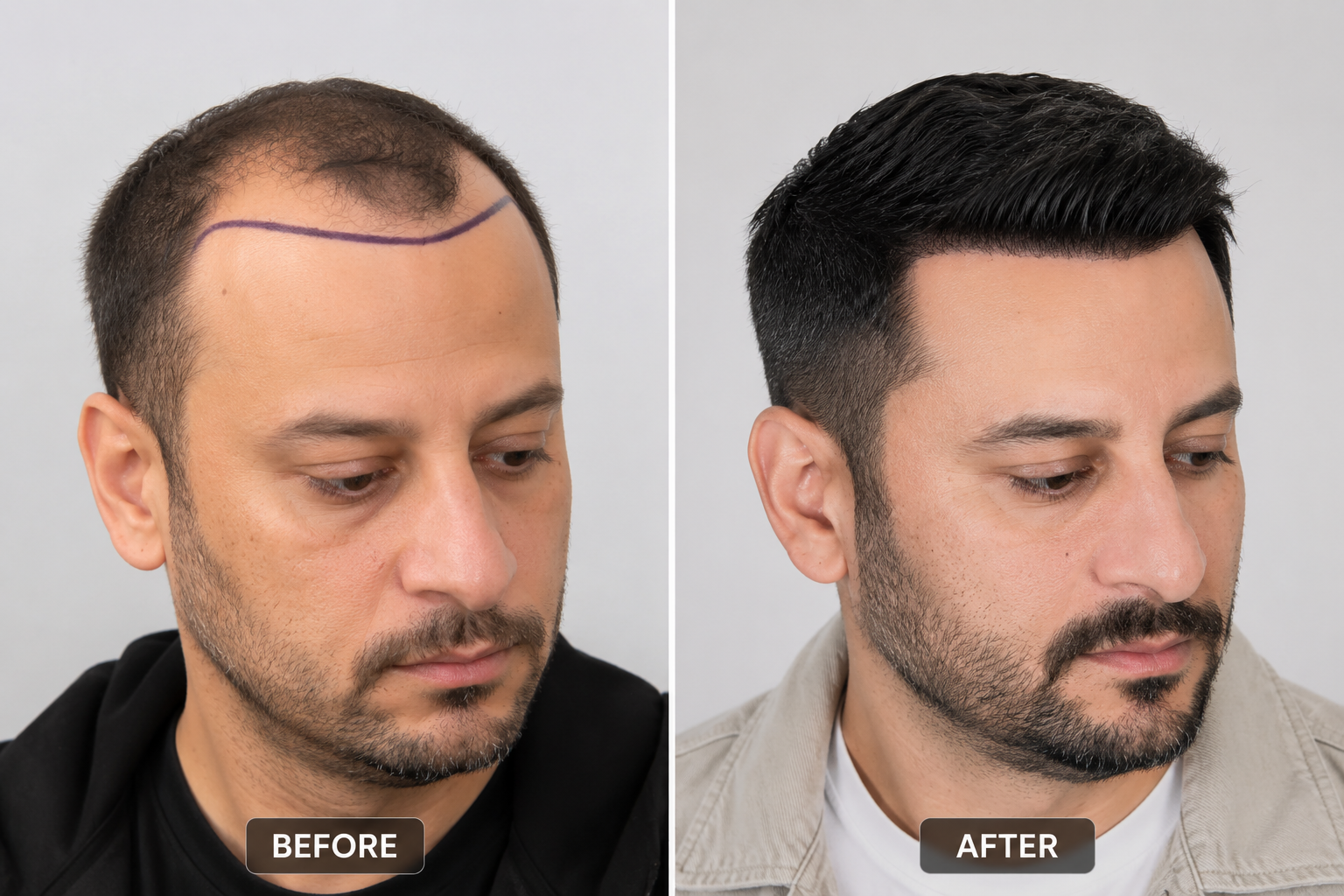
Non-Surgical Hair Restoration Treatments at Sarayu Clinics
Not every patient needs or is ready for a transplant. Sarayu Clinics offers a comprehensive non-surgical hair treatment programme for patients with early-stage hair loss, those wishing to slow progression, and those maintaining transplant results:
PRP – Platelet-Rich Plasma for Hair
A small blood sample is processed to concentrate growth factors in the plasma. This PRP is injected into the scalp to stimulate miniaturised follicles, slow hair loss progression, and improve hair shaft thickness. Three sessions spaced 4–6 weeks apart, followed by quarterly maintenance, shows the best clinical evidence. Widely used to maintain transplant results and manage early diffuse thinning.
Learn More : PRP Hair Treatment in Delhi
GFC – Growth Factor Concentrate Therapy
GFC is a more concentrated, refined evolution of PRP. The growth factor preparation process removes unwanted cells and concentrates the beneficial proteins to a higher level than achievable with standard PRP centrifugation. Clinical results show superior outcomes for hair density and miniaturisation reversal compared to standard PRP. Sarayu Clinics uses validated GFC preparation kits.
Mesotherapy for Hair Loss
Mesotherapy involves delivering a customised cocktail of vitamins, minerals, amino acids, and growth factors directly into the scalp at the level of the hair follicle via micro-injections. This bypasses the poor absorption of topical products and delivers active ingredients precisely where they are needed. It is particularly effective for nutritional deficiency-related hair loss and scalp circulation improvement.
Learn More : Mesotherapy for Hair in Delhi
Stem Cell Therapy for Hair
Stem cell therapy for hair uses concentrated stem cell extracts (often derived from adipose tissue or specialised culture preparations) to regenerate and reactivate dormant hair follicles. It is one of the most advanced non-surgical options currently available and shows particular promise for conditions like alopecia areata where follicles are dormant rather than absent.
Learn More : Stem Cell Therapy for Hair in Delhi
LLLT – Low-Level Laser Therapy
LLLT (also called cold laser or photobiomodulation) uses specific wavelengths of red light to stimulate cellular activity within hair follicles, improving blood circulation and follicle metabolism. It is often used as a maintenance treatment between sessions or combined with PRP/GFC for synergistic effect. FDA-cleared home devices are available; in-clinic LLLT is more powerful.
Scalp Micropigmentation (SMP)
SMP is not hair restoration — it is a medical tattooing technique that creates the appearance of a shaved head with even density, or adds visual density to existing thin hair by replicating the look of follicle dots. It is an excellent option for patients not suitable for transplant, those wishing to camouflage a FUT scar, or those with very advanced loss across all donor zones.
Medical Hair Loss Management (Finasteride / Minoxidil)
A hair transplant moves follicles, but it does not stop ongoing loss of native hair. At Sarayu Clinics, patients are assessed for suitability for medical maintenance therapy. Oral finasteride (for men) and topical or oral minoxidil work in different mechanisms to slow DHT-mediated hair loss. These are discussed at consultation based on individual health history.
Important: Transplant + Medical Management = Best Long-Term Outcome
A transplant alone moves permanent follicles — but native hair around them may continue to thin.
Combining a well-timed transplant with PRP/GFC sessions and medical stabilisation gives the best lifetime result.
Dr. Tripathi designs a complete, long-term hair plan at every consultation — not just a single procedure.
What Happens on the Day – Step by Step ?
No surprises. Here is exactly what to expect on the day of your procedure at Sarayu Clinics:
- PRE-PROCEDURE CONSULTATION & ASSESSMENT — Scalp density analysis using trichoscopy, graft count calculation, hairline design (done in natural light with you seated upright), medical history review, blood work review. The plan confirmed in writing.
- HAIRLINE DESIGN & MARKING — Dr. Tripathi draws the planned hairline with a surgical marker, considering facial proportions, age-appropriate projection, and your preference. You review and approve before anything starts.
- DONOR AREA PREPARATION — The donor area is trimmed (or fully shaved for FUE; the strip area only for FUT). Photographs are taken.
- LOCAL ANAESTHESIA — Tumescent local anaesthesia is administered to both donor and recipient areas. The initial injections are the most uncomfortable part — most patients describe it as mild stinging that passes in minutes. The rest of the procedure is comfortable.
- GRAFT EXTRACTION — FUE: individual follicular units extracted one by one using micro-punch under magnification. FUT: strip removed, incision closed, team begins microscopic graft dissection simultaneously. BIO-FUE: grafts transferred to growth-factor enriched preservation solution.
- GRAFT PREPARATION & QUALITY CHECK — Under 4K UHD microscopy, each graft is inspected, sorted by size (1, 2, 3, and 4-hair units), and counted. Damaged grafts are discarded. This step — often skipped at lower-quality clinics — directly determines the naturalness of the final result.
- RECIPIENT SITE CREATION — Dr. Tripathi personally creates the recipient incisions/implanter channels in the thinning area. Direction, angle (typically 30–45° for scalp hair), depth, and density are all controlled here — this is the most artistically critical step of the procedure.
- GRAFT IMPLANTATION — Grafts are placed into recipient sites by the specialised team. Single-hair grafts for the hairline. Multi-hair grafts behind for density. Sequential placement proceeds zone by zone.
- IMMEDIATE POST-PROCEDURE REVIEW — Dr. Tripathi reviews the placed grafts before dressings are applied. Donor area dressed. You rest for 30–60 minutes in the recovery area.
- DISCHARGE & AFTERCARE BRIEFING — Written instructions, a spray/washing solution, any medications, and emergency contact details provided. A follow-up appointment is scheduled.
Duration by Procedure Type
FUE (1,500–2,500 grafts): 6–8 hours | FUE (2,500–4,000 grafts): 8–12 hours (may be split over 2 days)
FUT (2,000–3,500 grafts): 6–8 hours | Combined FUT+FUE: 10–14 hours (2-day procedure)
Beard transplant: 4–7 hours | Eyebrow transplant: 2–4 hours
Downtime & Recovery – Day by Day
The honest answer to ‘how long does recovery take?’ is: it depends on which procedure you have and how you define ‘recovered.’ Here is a day-by-day breakdown for the most common procedure (FUE):
Timeline | What to Expect (FUE) |
Day 0 (procedure day) | Procedure completed. Mild swelling and tightness. Rest for the day. Sleep with head elevated. |
Days 1–3 | Swelling may migrate to forehead and around eyes — normal and temporary. Donor area comfortable. First gentle wash as instructed. |
Days 4–7 | Scabs form around each implanted graft — do not pick. Redness fading. Return to desk-based work possible for most patients. |
Days 7–14 | Scabs naturally begin falling off during gentle washing. Redness in recipient area resolving. Donor area essentially healed. |
Weeks 2–4 | Transplanted hair sheds — this is NORMAL and expected (shock loss phase). Do not panic. The follicle is alive; the shaft falls. |
Months 2–3 | Hair follicles in dormant (telogen) phase. Scalp looks similar to before transplant. Most discouraging phase. |
Months 3–5 | New hair shafts begin emerging — fine, soft initially. First signs of actual results. Hair growth accelerates from month 4. |
Months 6–9 | Significant visible improvement. Hair thickening. Most patients are very happy at this stage. |
Months 10–18 | Full result visible. Hair at full thickness. Final density assessment and any touch-up planning discussion. |
FUT vs FUE Recovery Difference:
- FUT: donor area tender for 10–14 days; suture removal at day 10–12; linear scar fades over 6–12 months
- FUE: donor area less uncomfortable; tiny dot scars fade to barely visible within 3–6 months
- Both: recipient area recovery timeline is identical
Key Aftercare Points
Day 1–3: Avoid touching or rubbing grafts. Sleep elevated. No alcohol, no smoking.
Day 4+: Gentle directed washing as instructed. Do not submerge in water.
Week 2+: Avoid direct sun on scalp; use SPF-protective headwear outdoors.
Month 1: No swimming, saunas, or steam rooms. No strenuous exercise.
Month 3+: Normal activities fully resumed. Use prescribed or recommended hair care products.
Hair Transplant Cost in Delhi – Transparent Breakdown for 2025–26
Cost is the most searched question about hair transplants in Delhi — and the most frustratingly vague one. Here is a genuinely transparent breakdown:
Procedure | Graft Range | Cost at Sarayu | Cost Range in Delhi (Market) |
FUE Hair Transplant | 1,000–2,500 grafts | From ₹60,000 | ₹40,000 – ₹1,20,000 |
FUE (Large Session) | 2,500–4,500 grafts | ₹90,000 – ₹1,50,000 | ₹80,000 – ₹2,00,000 |
FUT Hair Transplant | 2,000–4,000 grafts | ₹60,000 – ₹1,20,000 | ₹50,000 – ₹1,50,000 |
Combined FUT + FUE | 4,000–8,000+ grafts | ₹1,20,000 – ₹2,50,000 | ₹1,50,000 – ₹5,00,000 |
BIO-FUE (enhanced) | Varies | ₹80,000 – ₹1,80,000 | ₹90,000 – ₹2,00,000 |
DHI Hair Transplant | 1,000–2,500 grafts | ₹80,000 – ₹1,60,000 | ₹80,000 – ₹2,50,000 |
Beard Hair Transplant | 500–2,500 grafts | ₹40,000 – ₹1,20,000 | ₹40,000 – ₹1,50,000 |
Eyebrow Transplant | 200–800 grafts | ₹30,000 – ₹70,000 | ₹30,000 – ₹80,000 |
Female Hair Transplant | 1,000–3,000 grafts | ₹65,000 – ₹1,50,000 | ₹60,000 – ₹2,00,000 |
PRP (per session) | N/A | ₹8,000 – ₹18,000 | ₹6,000 – ₹25,000 |
GFC (per session) | N/A | ₹10,000 – ₹22,000 | ₹10,000 – ₹30,000 |
Mesotherapy (per session) | N/A | ₹5,000 – ₹12,000 | ₹4,000 – ₹15,000 |
Stem Cell Therapy | N/A | ₹20,000 – ₹50,000 | ₹20,000 – ₹70,000 |
Prices shown are for guidance only. Your final treatment cost will be confirmed during the initial consultation, based on your individual needs, concerns, and personalised treatment plan.
Results Timeline – What to Expect and When
Managing expectations correctly is one of the most important things a hair transplant surgeon can do. Results are real and lasting, but they are not instant. Here is the honest picture:
Timeline | What Is Happening | What You See |
Day 1–14 | Grafts vascularising (establishing blood supply) | Redness, scabs, early swelling |
Week 2–6 | Shock loss — transplanted shafts shed while follicles survive | Hair falling out — this is EXPECTED and normal |
Month 2–3 | Follicles in telogen (resting) phase | Minimal visible change — be patient |
Month 3–5 | Anagen phase begins — new hair shafts emerge | Fine new hairs visible; exciting phase begins |
Month 5–7 | Hair shafts thickening, maturing | Significant improvement — most patients thrilled |
Month 7–10 | Hair reaching natural length and texture | Near-final result visible |
Month 10–18 | Full maturation of transplanted hair | FINAL RESULT — permanent, full density |
Why does it take 12–18 months? Because hair grows at approximately 1 cm per month, and the follicles themselves need time to reactivate after transplantation. The 18-month mark is when the last follicles have fully matured and the result is complete. This timeline is the same regardless of which clinic or technique is used — any claim of ‘faster results’ should be treated sceptically.
FUE vs FUT vs DHI vs BIO-FUE – Which Is Right for You?
Here is the comparison matrix that cuts through the marketing. The right technique depends on your hair loss stage, donor supply, lifestyle, and goals — not on which is ‘newest’ or ‘most expensive.’
Factor | FUE | FUT | DHI | BIO-FUE |
Scarring | Tiny dot scars | Linear scar (hidden) | Tiny dot scars | Tiny dot scars |
Graft Yield | Medium-High | Highest | Medium | High + best survival |
Recovery | 7–10 days | 10–14 days | 7–10 days | 7–10 days |
Density Possible | Very High | Very High | Highest | Very High |
Head Shaving | Required | Partial only | Optional (unshaved) | Required |
Cost (relative) | Moderate | Lower | Higher | Moderate-High |
Best For | Most patients, all stages | Advanced loss, large area | Hairline, unshaved | Large sessions, max survival |
Sarayu USP | Motorised precision | 4K UHD microscopy | Multiple Choi pens | Growth factor protocol |
The honest answer to ‘which is best?’ is: all of these techniques work well when performed correctly. The surgeon’s skill, the team’s experience in graft handling, and the post-operative care protocol matter more than the technique name. A poorly performed DHI will deliver worse results than a well-performed FUT.
Are You a Good Candidate for Hair Transplant?
You are likely a good candidate if:
- Your hair loss has been stable for at least 12 months
- You have sufficient donor hair density at the back and sides of the scalp
- You are in good general health with no uncontrolled medical conditions
- You have realistic expectations about what the procedure can and cannot achieve
- You are aged 25+ (early-onset loss in very young patients requires careful timing discussion)
- You understand that the procedure addresses lost areas — it does not prevent future loss of native hair
You may NOT be an ideal candidate if:
- Hair loss is recent and actively progressing
- Donor density is very low (diffuse unpatterned alopecia)
- You have alopecia totalis or universalis (no donor hair available)
- Unrealistic expectations about density achievable or hairline placement
- Untreated active scalp conditions (psoriasis, seborrhoeic dermatitis in the donor area)
- Certain autoimmune conditions — evaluated case-by-case
The Consultation Determines Everything
You cannot accurately self-assess candidacy from a website.
The single most important thing you can do is attend a consultation with Dr. Tripathi.
He will assess your Norwood/Ludwig scale, donor density, scalp laxity (for FUT), scalp biopsy findings if needed, and medical history — then give you a frank, honest recommendation.
If you are not yet a candidate, he will tell you that — and tell you what needs to happen before you are.
Frequently Asked Questions – Hair Transplant in Delhi
Q1. Is a hair transplant permanent?
Yes — the transplanted follicles are taken from the permanent zone of the scalp (the back and sides), where follicles are genetically resistant to the DHT hormone that causes pattern hair loss. Once transplanted, they retain this resistance. The hair they produce grows for a lifetime. However, native (non-transplanted) hair around them may continue to thin with age, which is why a long-term maintenance plan is important.
Q2. Is a hair transplant painful?
The procedure is performed under local anaesthesia. The most uncomfortable moment is the initial anaesthetic injections — typically described as similar to dental injections, lasting 2–3 minutes. Once numb, patients usually read, listen to music, or sleep through the procedure. Post-operatively, discomfort is mild and managed with standard pain relief for 2–3 days.
Q3. How many grafts do I need?
This depends entirely on the area of hair loss, the density you want to achieve, and the density of your donor zone. As a rough guide: hairline restoration requires 1,000–2,000 grafts; mid-scalp coverage 1,500–2,500 grafts; crown 1,500–2,500 grafts; full scalp restoration 4,000–7,000+ grafts. Dr. Tripathi assesses this precisely at consultation using trichoscopic scalp analysis.
Q4. What is the success rate of hair transplant at Sarayu Clinics?
Graft survival rates at Sarayu Clinics consistently exceed 95% due to the BIO-FUE enhancement protocol, 4K UHD microscopic graft preparation, and strictly surgeon-led implantation. Patient satisfaction rate — assessed at 12 months post-procedure — is above 97% based on internal follow-up data. These figures are validated by the clinic’s published before-and-after outcomes.
Q5. At what age should I get a hair transplant?
Most specialists recommend waiting until at least 25–28 years of age, by which point the pattern of hair loss is more predictable. Getting a transplant too early — when hair loss is still progressing rapidly — risks creating an unnatural result as native hair continues to fall around the transplanted zone. That said, individual cases vary, and Dr. Tripathi may recommend proceeding earlier in specific circumstances where loss has clearly stabilised.
Q6. Can women get hair transplants?
Yes, and it is more common than most people realise. Female hair transplant success depends largely on identifying the correct cause of hair loss and confirming that the donor zone is stable. Long-hair FUE can be performed without shaving the head, making the procedure entirely discreet. Sarayu Clinics has a dedicated female hair restoration programme.
Q7. How long does the procedure take?
It varies by graft count and technique. A 1,500-graft FUE session is typically 5–7 hours. A 3,000-graft FUE session is 8–10 hours. Large combined FUT+FUE sessions of 5,000+ grafts are split over two consecutive days. You are comfortable throughout — reclining, with access to food, water, and entertainment.
Why Sarayu Clinics for Hair Transplant in Delhi?
Here is the honest answer to the most important question you should ask before choosing any hair transplant clinic:
Why Sarayu | What It Means for Your Result |
Surgeon-Led Procedures | At many clinics, technicians perform the critical implantation step. At Sarayu Clinics, Dr. Tripathi personally designs the hairline, creates all recipient sites, and supervises implantation. The surgeon’s artistic eye is present throughout. |
Pioneer of 4K UHD FUT+FUE in India | Dr. Adarsh Tripathi is the first surgeon in India to implement 4K UHD microscopic graft preparation for FUT procedures — directly improving graft survival and naturalness of results. |
BIO-FUE Graft Enhancement Protocol | Grafts preserved in growth-factor enriched solution, reducing oxidative damage during extraction-to-implantation period. Results in measurably higher graft survival than standard saline storage. |
Celebrity Patient Trust | Honey Singh, Technical Guruji, Sara Gurpal, and Mandy Takhar have all chosen Sarayu Clinics — people whose careers depend on looking natural and whose networks demand discretion. |
Dual Specialisation | Dr. Tripathi’s facial plastic and maxillofacial training means hairline design is informed by deep facial aesthetic knowledge — not just hair surgery knowledge. This changes how hairlines are designed and how results look. |
Dr. Nidhi Bhatia – Aesthetician Co-Lead | Co-founder Dr. Nidhi Bhatia leads the non-surgical programme with her background in facial aesthetics and international affiliations (SACDAM, Peelings Society). The clinic’s hair + skin combination approach is unique in Delhi. |
International Patients Programme | Dedicated support for patients travelling from UAE, UK, USA, Canada, and Australia — including virtual pre-consultations, airport coordination, and remote follow-up. |
Transparent Pricing, No Hidden Charges | Your written quote after consultation includes all costs. No add-ons, no surprise charges on the day. EMI options available. |
Two Locations, Delhi | Greater Kailash-1 (main clinic) and Rajendra Nagar — both easily accessible from all Delhi NCR areas and major airports. |
About Dr. Adarsh Tripathi: dradarshtripathi.com | Our Clinic Gallery | About Sarayu Clinics
All Hair Transplant & Hair Treatment Pages at Sarayu Clinics
Treatment | Best For | Page Link |
FUE Hair Transplant | Most patients — no linear scar | |
FUT Hair Transplant | Advanced loss, large graft count | |
BIO-FUE Hair Transplant | Maximum graft survival | |
Female Hair Transplant | Women with pattern or traction hair loss | |
Beard Hair Transplant | Patchy or absent beard | |
Eyebrow Hair Transplant | Sparse, over-plucked, or lost brows | |
Eyebrow Microneedling | Non-surgical brow enhancement | |
FUT vs FUE Comparison | Help choosing the right technique | |
PRP Hair Treatment | Non-surgical — early loss, maintenance | |
Mesotherapy for Hair | Nutritional delivery to follicles | |
Stem Cell Therapy | Advanced regenerative treatment |
How to Reach Us:
Phone: +91 9289111081 , +91 9289111082
Email: sarayuinquiries@gmail.com
Sarayu Clinics website: www.sarayuclinics.com
Facebook: https://www.facebook.com/sarayuclinic
Instagram: https://www.instagram.com/sarayuclinics/
Dr. Adarsh Tripathi’s profile: https://dradarshtripathi.com/
Online Booking: Visit our website https://sarayuclinics.com/contact-us/ to schedule appointments conveniently.
Why choose Sarayu Clinics in Delhi for a hair transplant?
Sarayu Clinic in Delhi offers world-class hair transplant results at 60–80% of the cost of equivalent quality procedures in the UK, USA, UAE, or Australia. Sarayu Clinics’ international patient programme includes airport pickup, accommodation assistance, and remote follow-up consultations for international patients. Sarayu Clinic in Delhi is the most searched destination for medical tourism for hair restoration among South Asian diaspora globally.
Can I dye or cut my transplanted hair?
Yes — transplanted hair behaves identically to native hair. It can be cut, coloured, styled, and treated like any other hair. The only timing consideration: avoid chemical treatments for the first 3–4 months while the scalp is healing. After that, normal hair care resumes completely.
What if I am not happy with my result?
At Sarayu Clinics, a 12-month post-procedure assessment is included. If growth is below expectations at that assessment, a complimentary touch-up session for eligible cases is available under the clinic’s patient satisfaction protocol. The clinic also specialises in corrective procedures for patients who have had unsatisfactory outcomes at other clinics — an increasingly common consultation category.
Will anyone know I had a hair transplant?
If performed correctly — with natural hairline design, correct angulation, appropriate density distribution — no. The ‘obvious transplant’ look comes from old plug-technique procedures (no longer used), poor hairline design (too geometric, too low, or too straight), or incorrect angulation of implanted grafts. Dr. Tripathi’s results are regularly featured in patient testimonials from people nobody can believe had a transplant.
Do I need to take time off work?
For desk-based work: 3–5 days off is sufficient for most FUE patients. For client-facing or public roles: 10–14 days allows the scabs to clear and redness to resolve. For physical labour or outdoor work: 2–3 weeks minimum. FUT patients typically need 1–2 days longer due to donor area suture considerations.