
Oculoplasty & Eyelid Surgery in Delhi
- Home
- Oculoplasty in Delhi: Eyelid Surgery & Eye Rejuvenation at Sarayu Clinics
What Is Oculoplasty — And Do You Actually Need It?
Your eyes communicate before you even speak. But drooping eyelids, under-eye bags, or sagging skin around the eyes can make you look tired, older, or even affect how clearly you see. That is where oculoplasty comes in.Oculoplasty (also called oculoplastic surgery) is a specialized field that sits at the crossroads of eye care and cosmetic surgery. It focuses on the eyelids, the tear ducts, the eye socket, and the surrounding facial structures — treating both medical conditions and aesthetic concerns.
If you have been Googling ‘eyelid surgery Delhi’ or wondering whether your droopy eyelids can be fixed without a major operation, this page is written to answer exactly that — clearly, honestly, and without jargon.
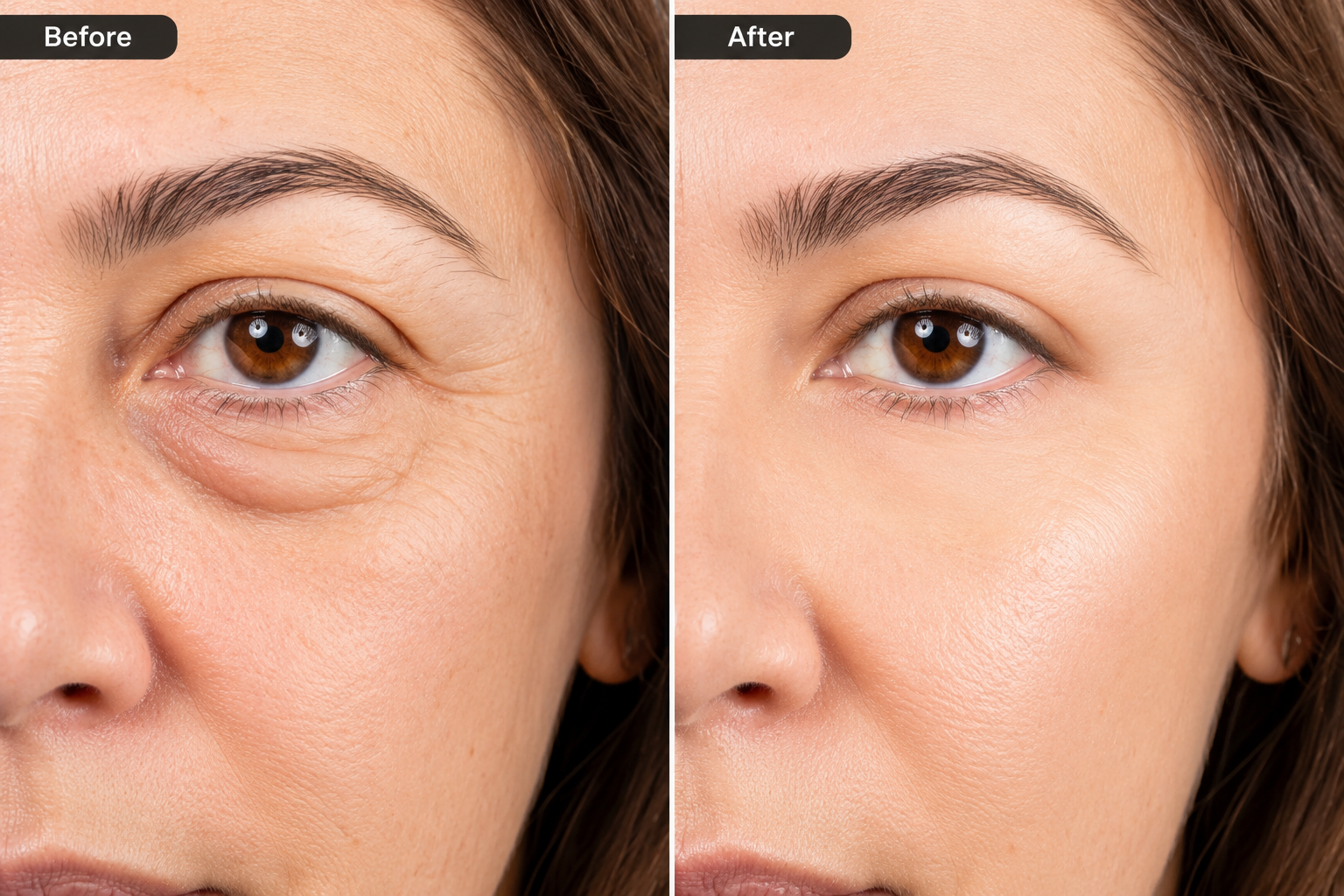
Understanding Oculoplasty: The Basics
Oculoplastic procedures are performed by surgeons who have trained specifically in both ophthalmology (eye medicine) and plastic surgery techniques. This dual expertise makes a real difference — because the area around your eyes is extremely delicate.
Conditions commonly treated through oculoplasty include:
- Ptosis — drooping of the upper eyelid that can partially block vision
- Dermatochalasis — excess skin hanging over the eyelid
- Under-eye bags and puffiness (blepharochalasis)
- Ectropion or entropion — eyelids turning outward or inward
- Blocked or damaged tear ducts
- Eye socket reconstruction after injury or tumour removal
- Cosmetic concerns — asymmetry, tired-looking eyes, deep hollows
Not every case needs surgery. Many patients are well-served by non-surgical options like dermal fillers or Botox. The right approach depends entirely on the individual.
Oculoplasty Procedures Offered in Delhi at Sarayu Clinics
1. Blepharoplasty (Eyelid Surgery)
Blepharoplasty is the most common oculoplastic procedure. It involves removing or repositioning excess skin, muscle, and fat from the upper or lower eyelids — or both.Upper blepharoplasty is often performed for functional reasons (when sagging skin covers the pupil and affects vision). Lower blepharoplasty is mostly cosmetic — reducing under-eye bags and smoothing the area below the eye.
Results are long-lasting: most patients see improvement that lasts 8–12 years.
2. Ptosis Repair
Ptosis is when the upper eyelid droops lower than it should. It can be present from birth or develop due to ageing, nerve damage, or muscle weakness. In some cases, it causes children to tilt their head back just to see properly.
Ptosis repair tightens the levator muscle that lifts the eyelid, restoring a natural, open-eyed appearance — and often improving vision too.
3. Canthoplasty & Canthopexy
These procedures reshape or tighten the outer corner of the eye (the canthus). They are used to correct a drooping outer corner, lift the eye shape, or address functional issues like ectropion.
4. Tear Duct Surgery (DCR — Dacryocystorhinostomy)
If your eyes water constantly or you experience recurring eye infections, a blocked tear duct might be the cause. DCR surgery creates a new drainage path so tears can flow normally. This is a straightforward procedure with a high success rate.
5. Non-Surgical Eye Rejuvenation
Not all concerns require going under the knife. At Sarayu Clinics, non-surgical options include:
- Dermal fillers — to restore volume in the under-eye hollow (tear trough) or brow area
- Anti-wrinkle injections (Botox) — to smooth crow’s feet and forehead lines
- Skin tightening treatments — to improve eyelid laxity without incisions
These treatments typically take 30–60 minutes and involve little to no downtime.
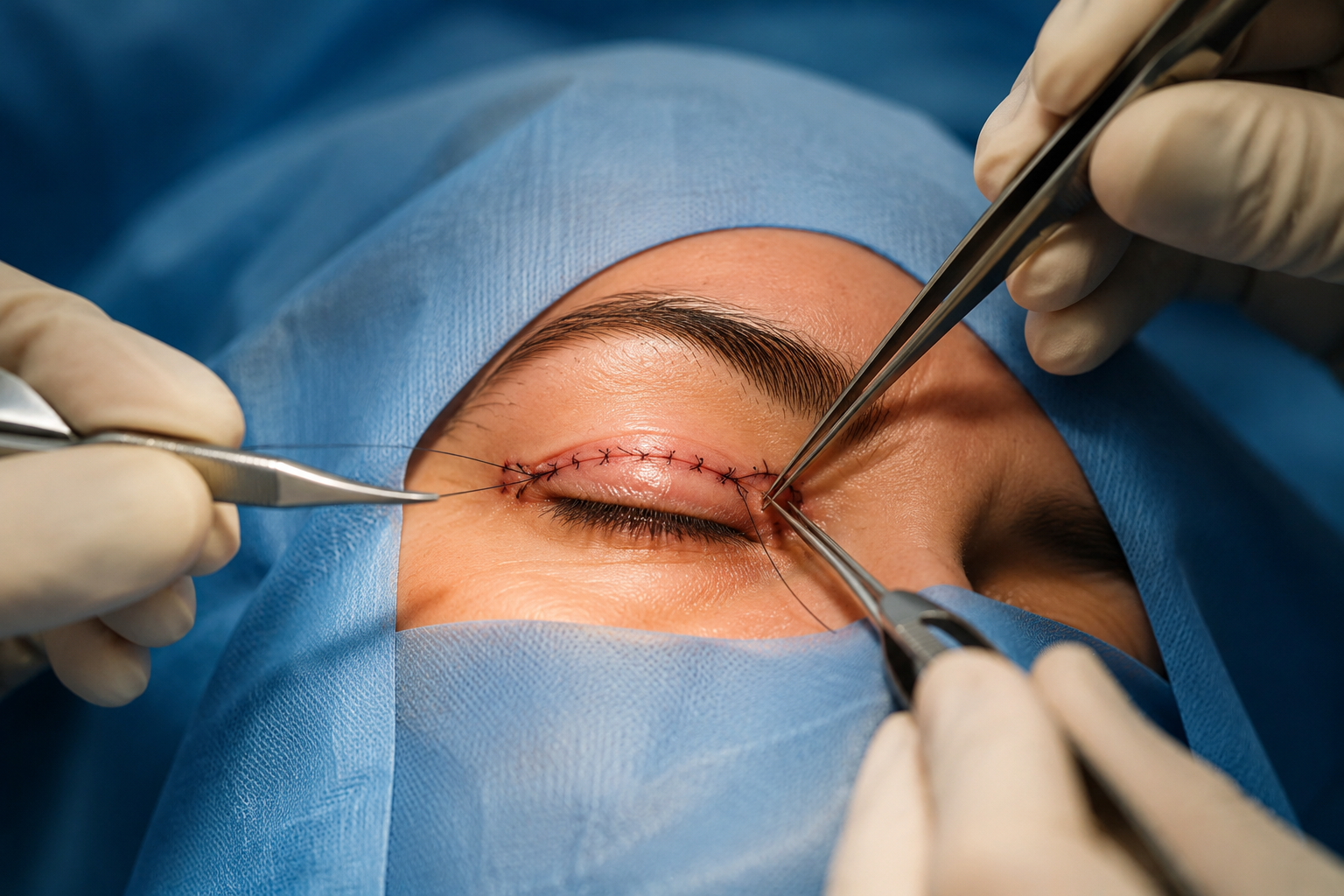
Surgical vs. Non-Surgical Oculoplasty: At a Glance
Feature | Details |
Surgical (e.g., Blepharoplasty) | Permanent results, addresses structural issues, 10–14 day recovery |
Non-Surgical (Fillers / Botox) | No downtime, results last 6–18 months, ideal for mild concerns |
Best candidate for surgery | Significant drooping, excess skin, vision obstruction, persistent bags |
Best candidate for non-surgical | Early signs of ageing, volume loss, fine lines, hesitant about surgery |
Anaesthesia | Local or general (surgery) vs. topical cream (non-surgical) |
Cost range | Varies based on procedure; consultation at Sarayu Clinics provides exact estimate |
Your final treatment cost will be confirmed during the initial consultation, based on your individual needs, concerns, and personalised treatment plan.
Why Patients Choose Sarayu Clinics for Oculoplasty in Delhi ?
There are many clinics in Delhi offering eye procedures. What sets Sarayu Clinics apart is not just the technology — it is the clinical thinking behind every treatment decision.
Expertise of Dr. Adarsh Tripathi
Dr. Adarsh Tripathi is a specialist in oculoplastic and reconstructive surgery with years of focused training and clinical experience. He approaches each patient’s case individually — not with a one-size-fits-all protocol, but with a personalised plan based on your anatomy, concerns, and goals.
His work is guided by a key principle: results should look natural. The eyes should look refreshed and rested, not operated on.
What the Clinic Offers ?
- Advanced surgical suite equipped for both routine and complex oculoplastic procedures
- Non-surgical treatments with medical-grade injectables
- Detailed pre-procedure facial analysis and digital imaging
- Transparent consultations — no pressure, no upselling
- Personalised post-operative care and follow-up
Patient-First Approach
Many patients who visit Sarayu Clinics have already consulted at other clinics and felt rushed or overwhelmed. The team here takes time to explain what is happening, what to realistically expect, and what recovery looks like — before you commit to anything.
Benefits of Oculoplasty — Beyond Looking Younger
People assume oculoplasty is purely cosmetic. In reality, many patients come in because of genuine functional problems that affect their daily life.
- Improved peripheral vision: when drooping eyelids obstruct the upper visual field
- Reduced eye strain and headaches: caused by constantly using your eyebrow muscles to lift heavy lids
- Relief from eye irritation: when inward-turned lashes rub against the eye
- Better tear drainage: following tear duct procedures
- Improved confidence and appearance: looking less tired, more approachable
- Facial symmetry: correcting asymmetric eyelids that affect overall balance
In cases where oculoplasty is done for medical reasons (like ptosis causing vision loss), the procedure may even be covered by insurance. It is worth checking with your provider.
Are You a Good Candidate for Oculoplasty?
You may be a suitable candidate if:
- Your upper eyelids droop and make your eyes look heavy or tired
- You have under-eye bags that persist despite rest and good skincare
- Your eyelid drooping is obstructing your vision
- You have recurring eye infections or constant tearing from a blocked duct
- You are bothered by the appearance of your eyes and want a lasting solution
- You are in generally good health, a non-smoker (or willing to stop before surgery), and have realistic expectations
Age is not a barrier — oculoplasty is performed on patients from their 20s through their 70s, depending on the condition.
A note on realistic expectations: Oculoplasty can make a meaningful difference to how your eyes look and function. But no surgery can stop ageing entirely. During your consultation, Dr. Tripathi will be honest about what is and is not achievable — because that is the only way to be truly satisfied with your results.
What to Expect: The Complete Oculoplasty Journey at Sarayu Clinics ?
Step 1: Initial Consultation
Your first appointment is a conversation, not a sales pitch. Dr. Tripathi will examine your eyelid structure, assess your vision if relevant, review your medical history, and discuss your concerns. Photographs are taken for planning purposes.
Come prepared with your questions. Patients often ask: ‘Will the scar be visible?’, ‘How long until I look normal?’, and ‘What happens if I am not happy with the result?’ All of these are valid — and answerable.
Step 2: Pre-Procedure Preparation
Depending on the procedure, you may be asked to:
- Stop blood-thinning medications (like aspirin) a week before surgery
- Avoid alcohol for 48 hours prior
- Arrange for someone to drive you home after the procedure
- Come in for pre-operative blood work if required
Step 3: The Procedure
Most oculoplastic procedures take between 45 minutes and 2 hours. They are performed under local anaesthesia (you are awake but the area is numb) or with mild sedation — general anaesthesia is used for more complex reconstructive cases.
The majority of patients go home the same day. You will leave with some dressing and post-operative instructions.
Step 4: Recovery
Here is what a typical recovery looks like after blepharoplasty:
- Days 1–3: Swelling and bruising is at its peak. Cold compresses help.
- Days 4–7: Most swelling subsides. Stitches are removed around day 5–7.
- Days 7–14: You can return to most normal activities. Avoid heavy exercise.
- Week 3 onwards: The area continues to settle. Final results are visible at 6–8 weeks.
Recovery from non-surgical treatments is much shorter — most people return to work the same day.
Step 5: Aftercare and Follow-Up
- Use prescribed antibiotic eye drops as directed
- Keep the area clean and avoid rubbing your eyes
- Wear sunglasses when going outdoors
- Sleep with your head slightly elevated for the first week
- Attend all follow-up appointments — typically at 1 week, 1 month, and 3 months
How to Reach Us:
Phone: +91 9289111081 , +91 9289111082
Email: sarayuinquiries@gmail.com
Sarayu Clinics website: www.sarayuclinics.com
Facebook: https://www.facebook.com/sarayuclinic
Instagram: https://www.instagram.com/sarayuclinics/
Dr. Adarsh Tripathi’s profile: https://dradarshtripathi.com/
Online Booking: Visit our website https://sarayuclinics.com/contact-us/ to schedule appointments conveniently.
Is oculoplasty painful?
The procedure itself is not painful — the area is properly anaesthetised before anything begins. You may feel some pressure or mild discomfort, but not pain. Post-operatively, most patients describe the sensation as tightness rather than sharp pain, which is well managed with mild oral painkillers.
How long do the results last?
Surgical results from blepharoplasty typically last 8–12 years. Ptosis repair is usually permanent. Non-surgical treatments like fillers last 9–18 months and Botox 4–6 months, depending on the product used and individual metabolism.
Will there be visible scarring?
Incisions are placed in natural eyelid creases or inside the eyelid, making scars nearly invisible once healed. The skin around the eyes heals very well, and most scars fade significantly within 3–6 months.
What is the difference between oculoplasty and regular cosmetic surgery?
Oculoplastic surgeons specifically train in eye anatomy and ophthalmology — they understand the function of the eyelid, tear system, and orbit, not just how to reshape tissue. This makes them uniquely qualified to operate in this area safely.
Can I wear contact lenses after surgery?
Most patients can resume contact lens wear after 2–3 weeks, once swelling has significantly reduced. Glasses can typically be worn from day one.
How much does oculoplasty cost in Delhi?
Costs vary depending on the specific procedure, whether one or both eyes are treated, and whether anaesthesia charges apply. Sarayu Clinics provides a clear, itemised quote following your consultation so there are no surprises.
Is the consultation free?
Please contact Sarayu Clinics directly to enquire about consultation fees. The first appointment typically involves a detailed clinical assessment and takes 30–45 minutes.