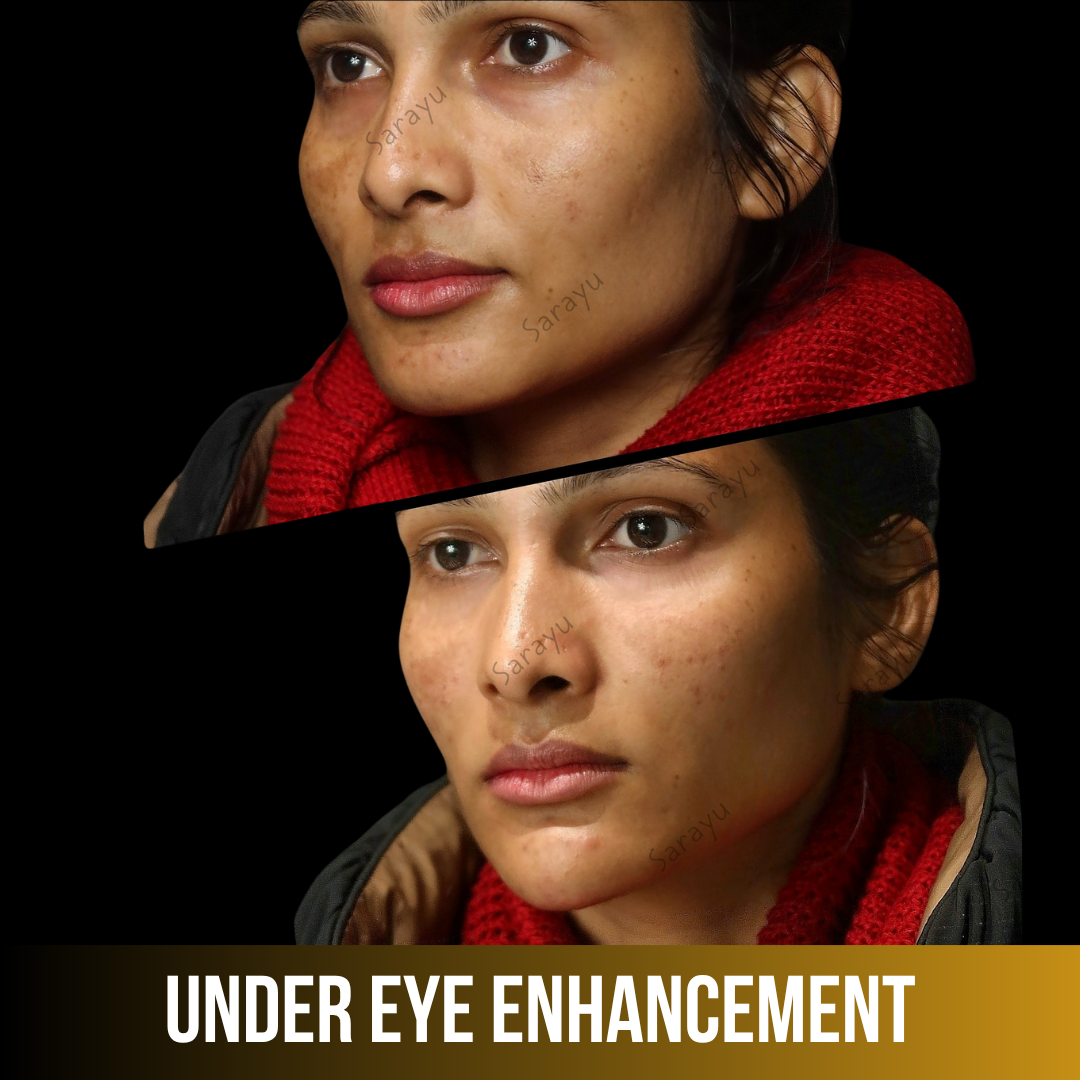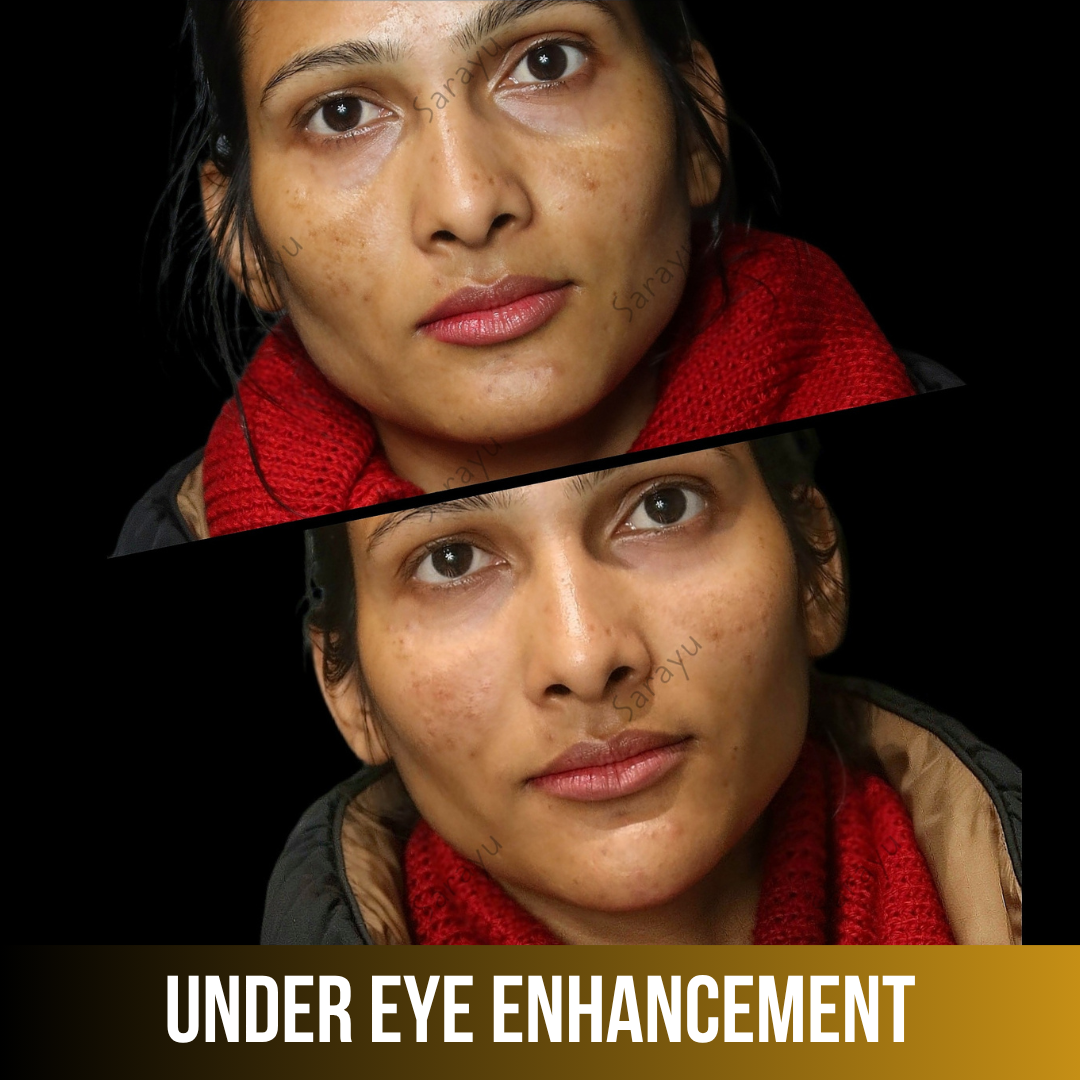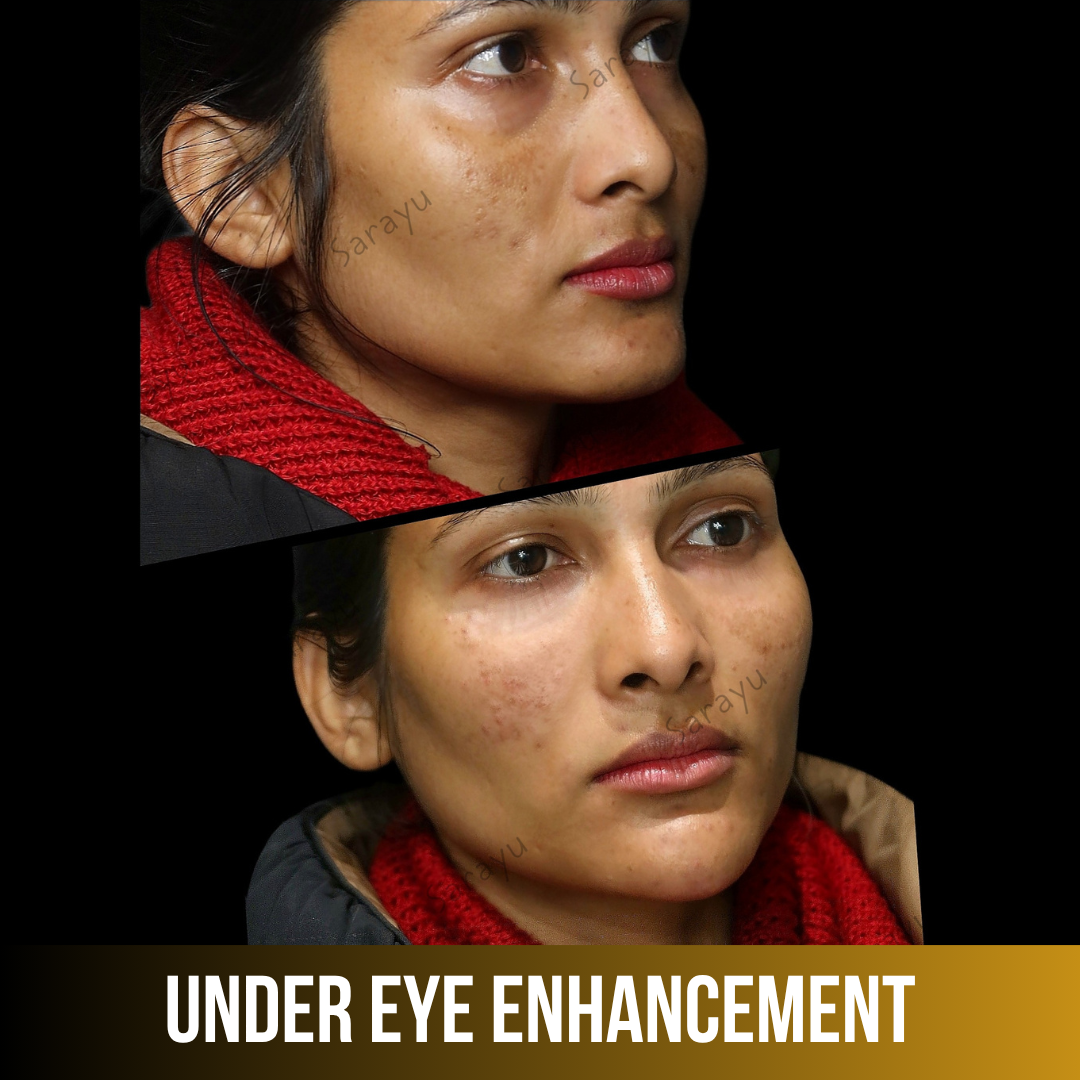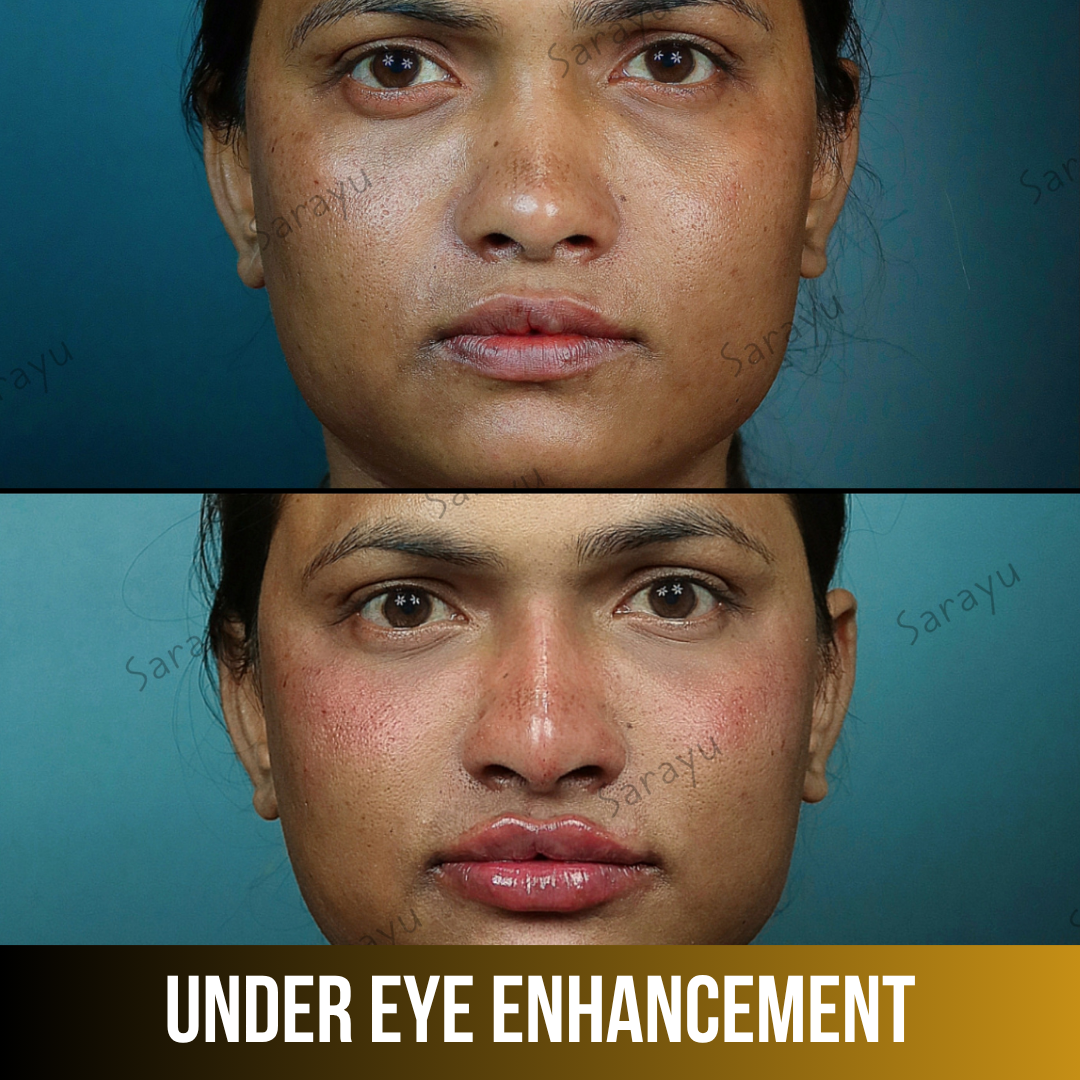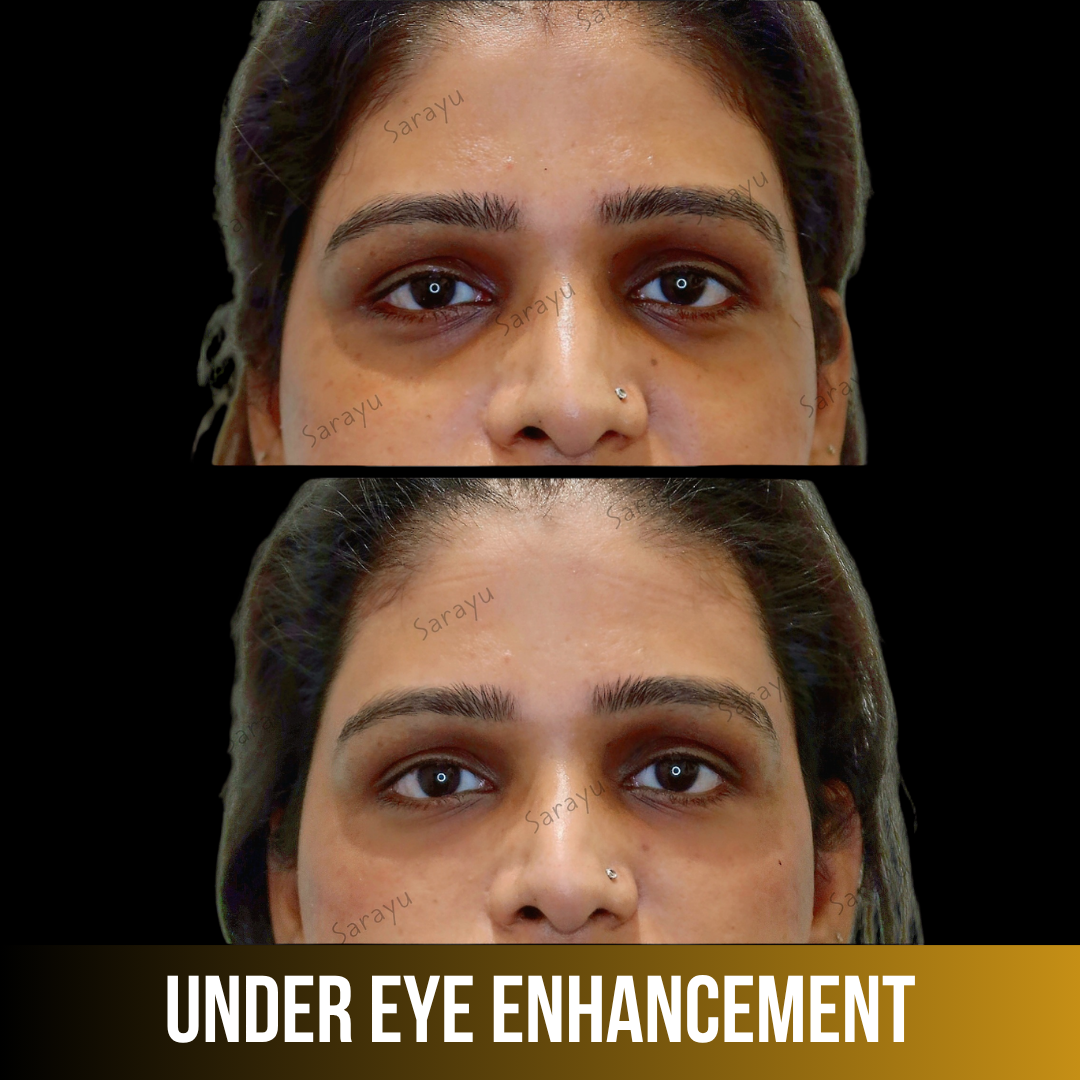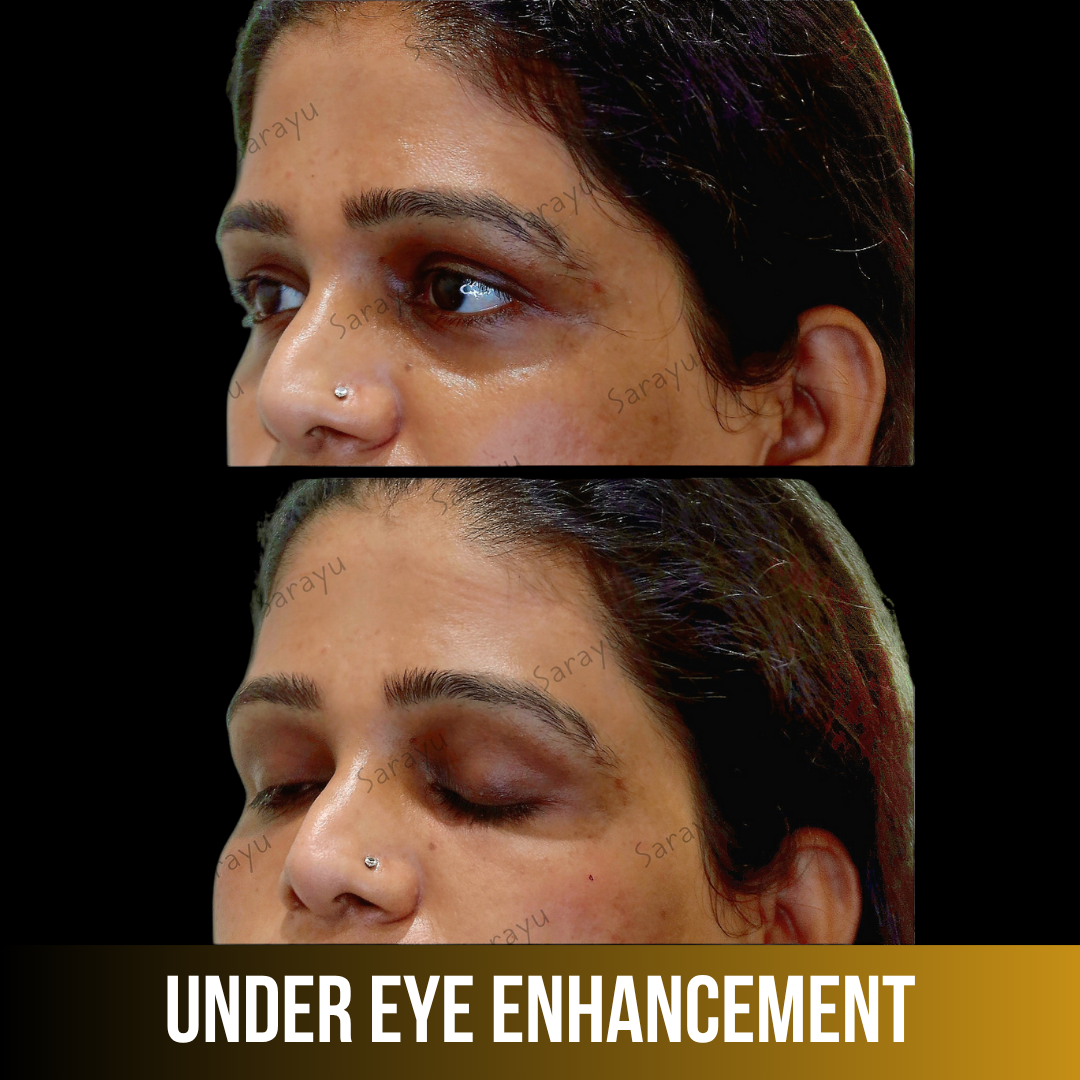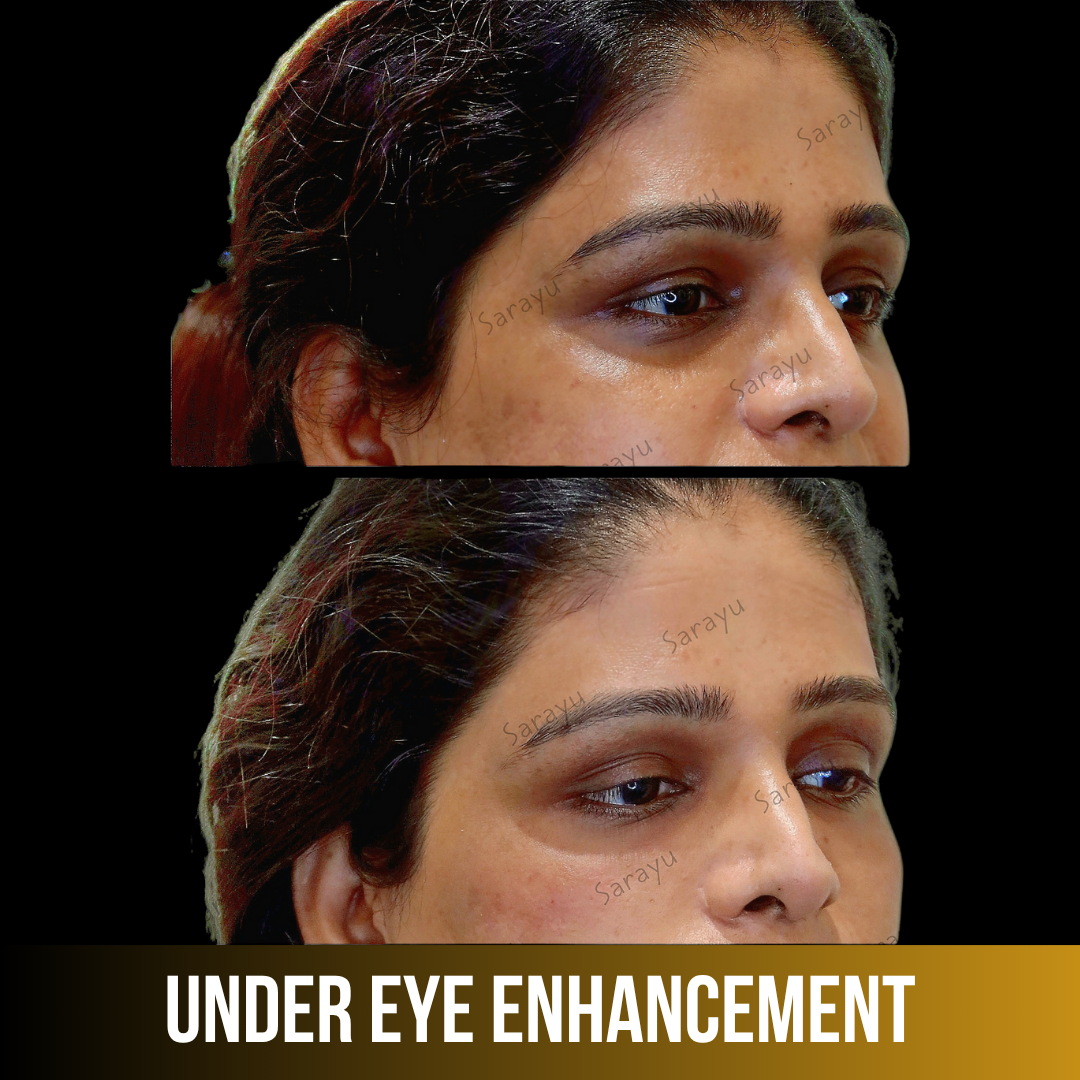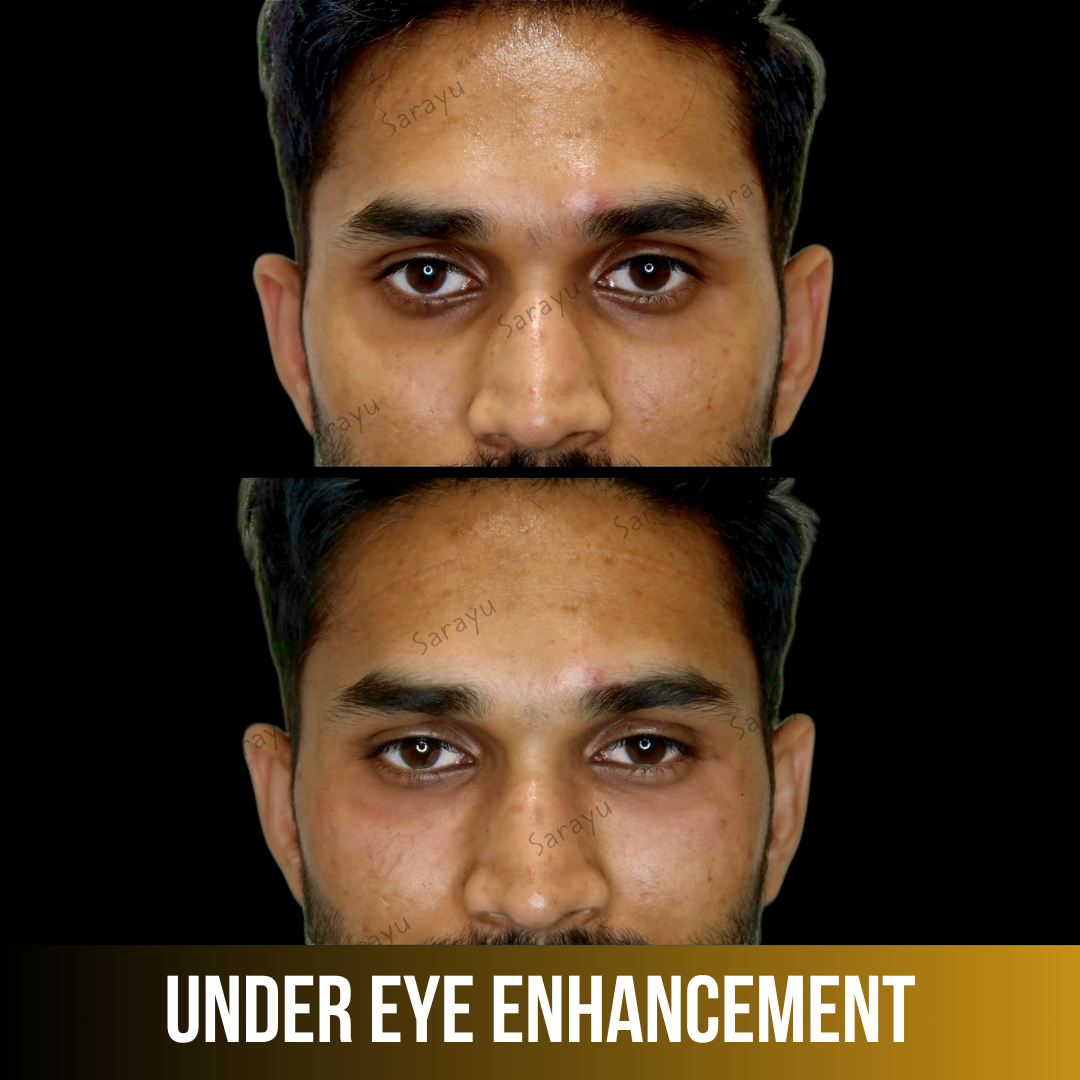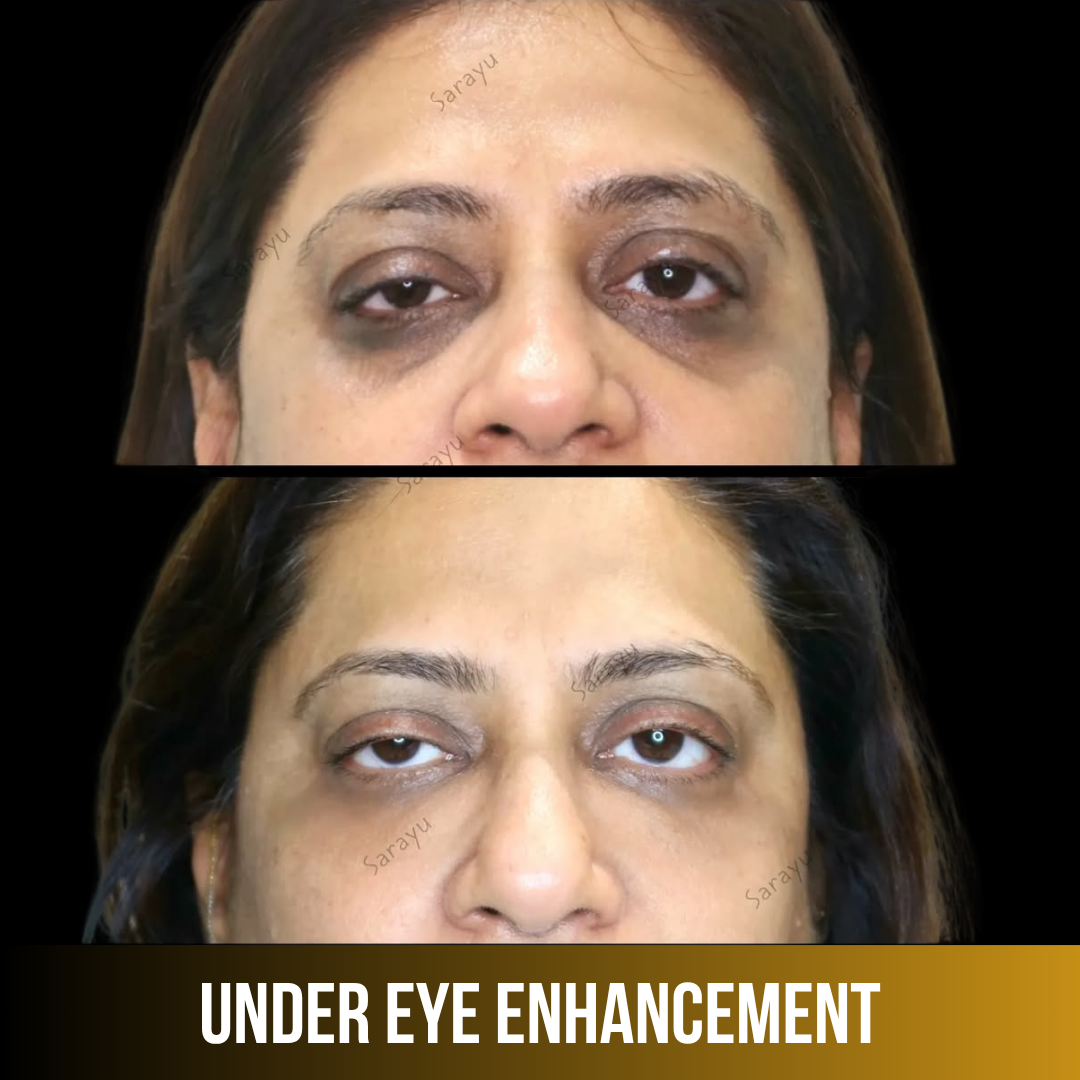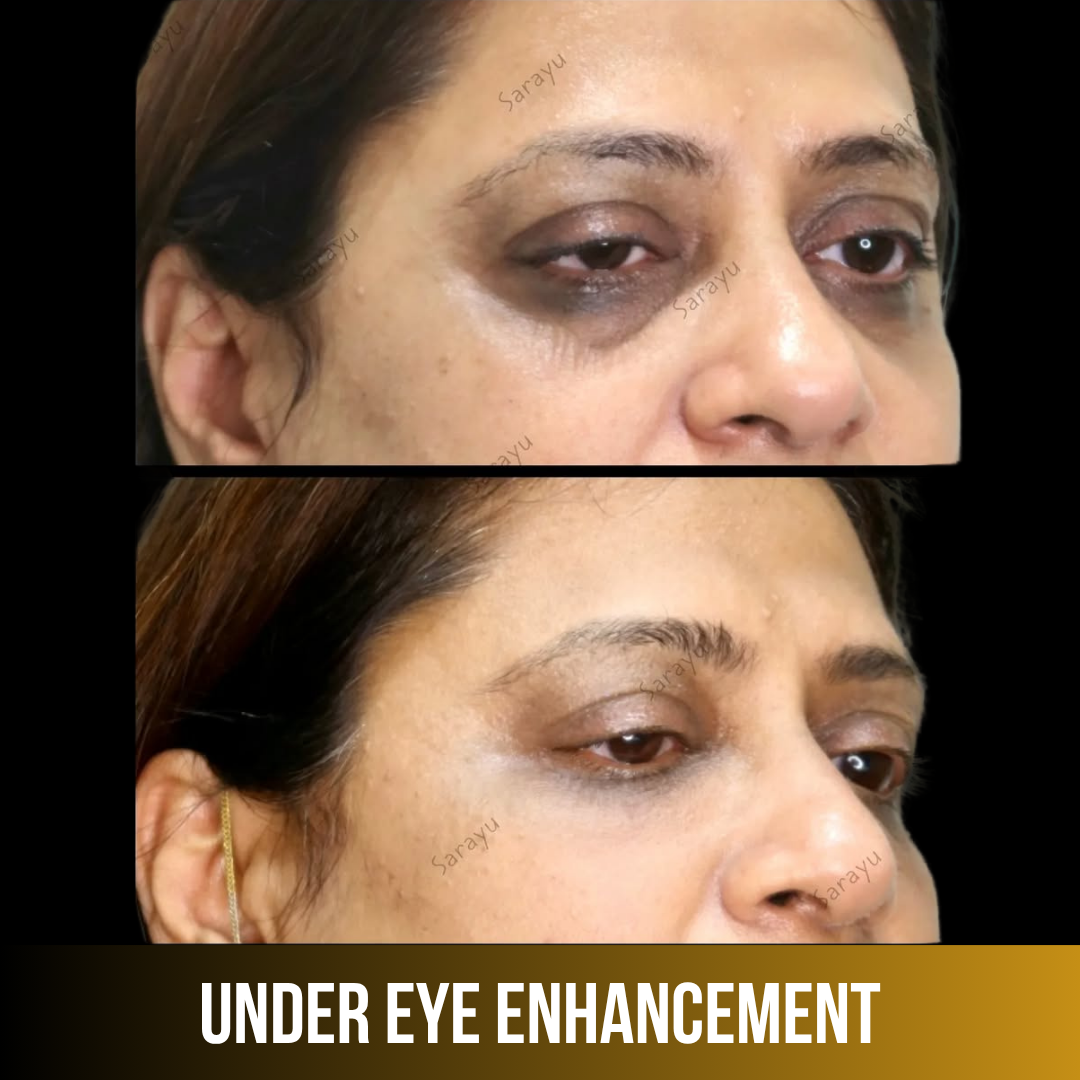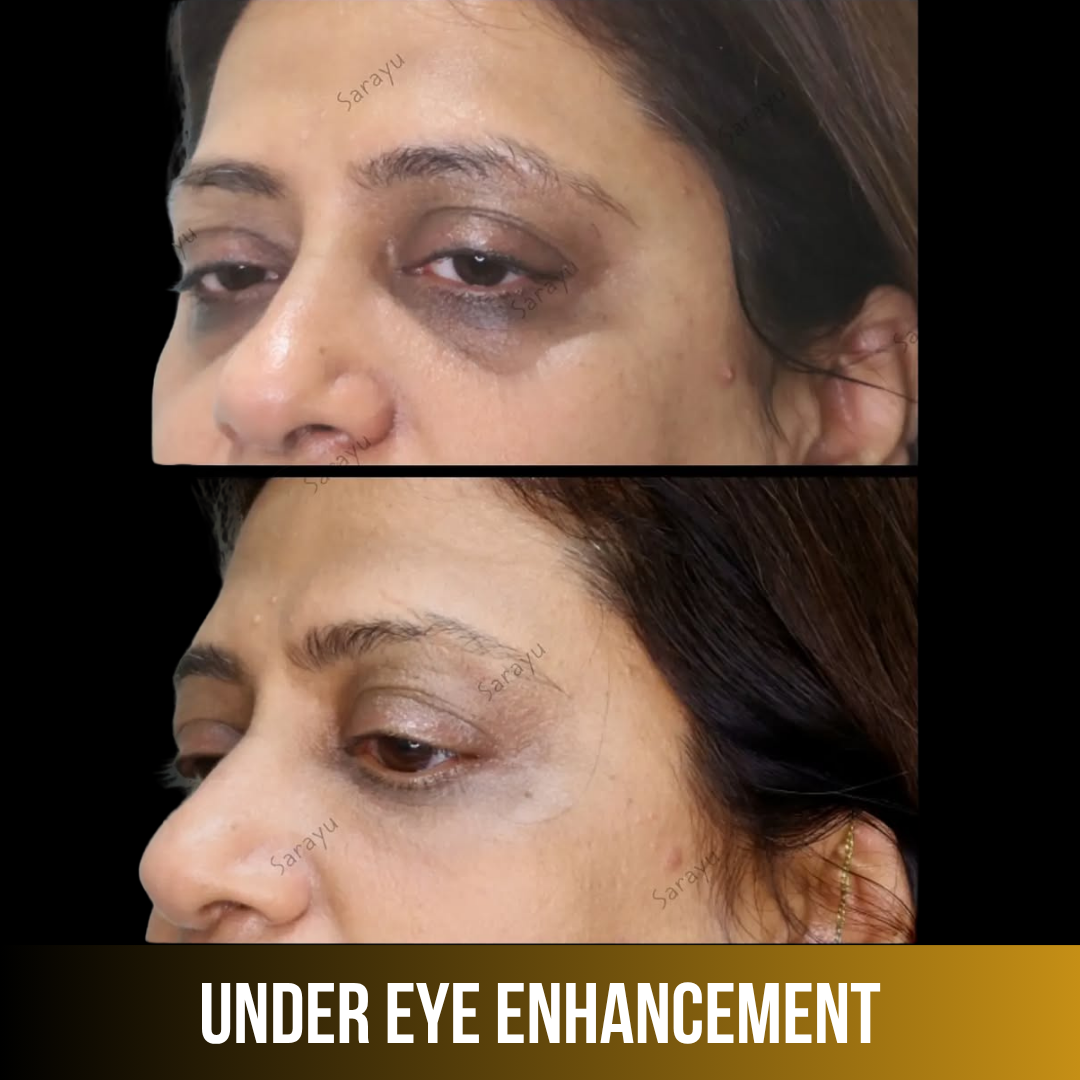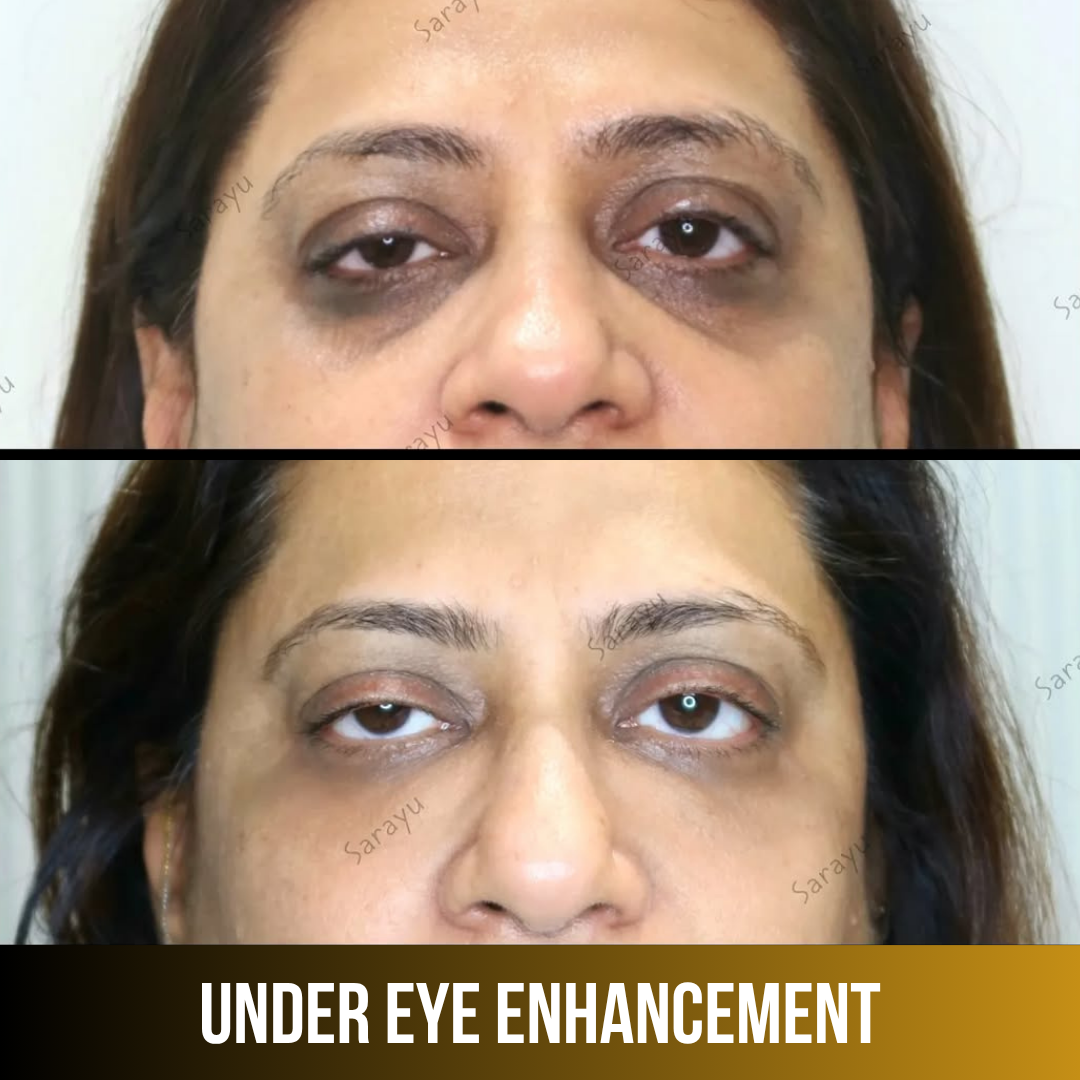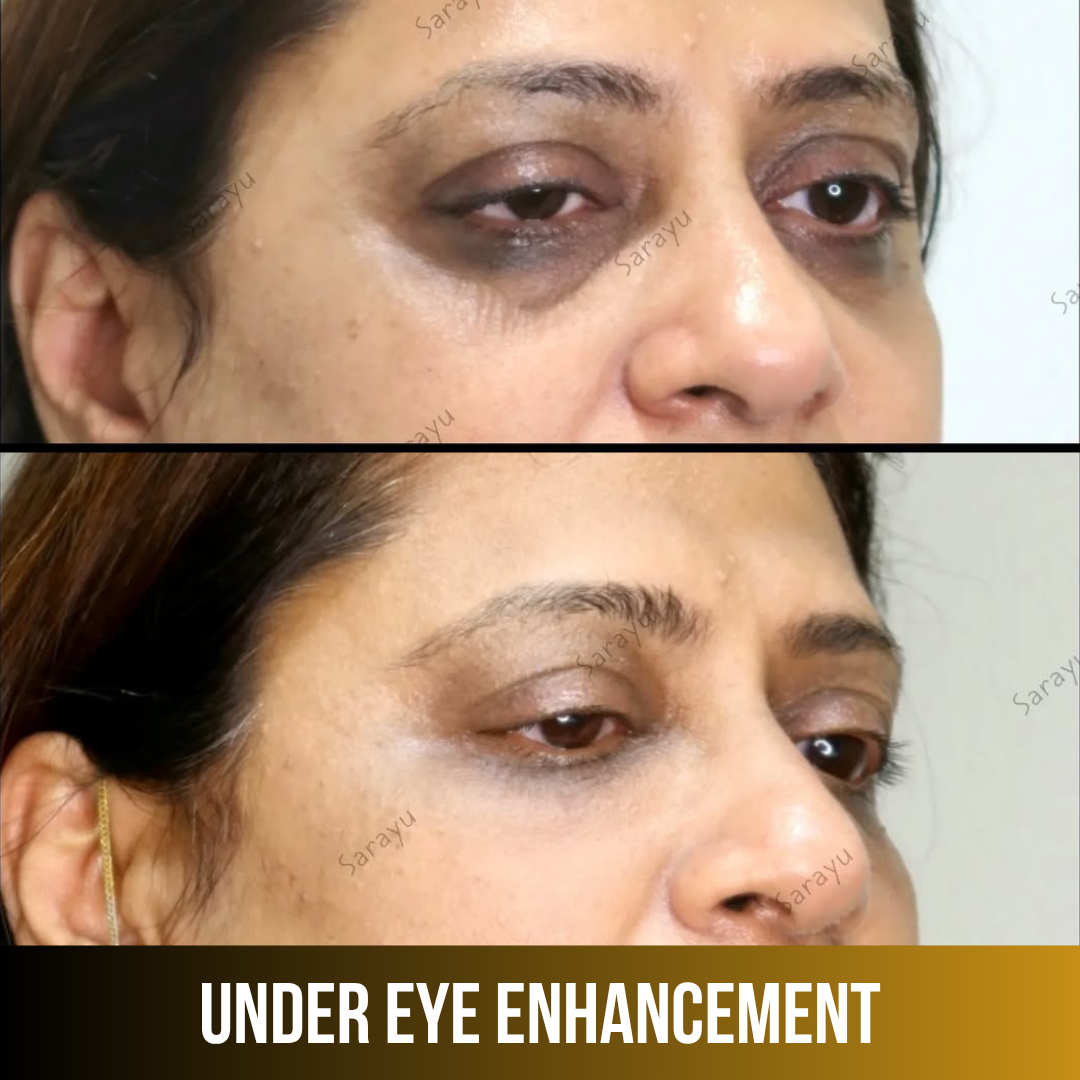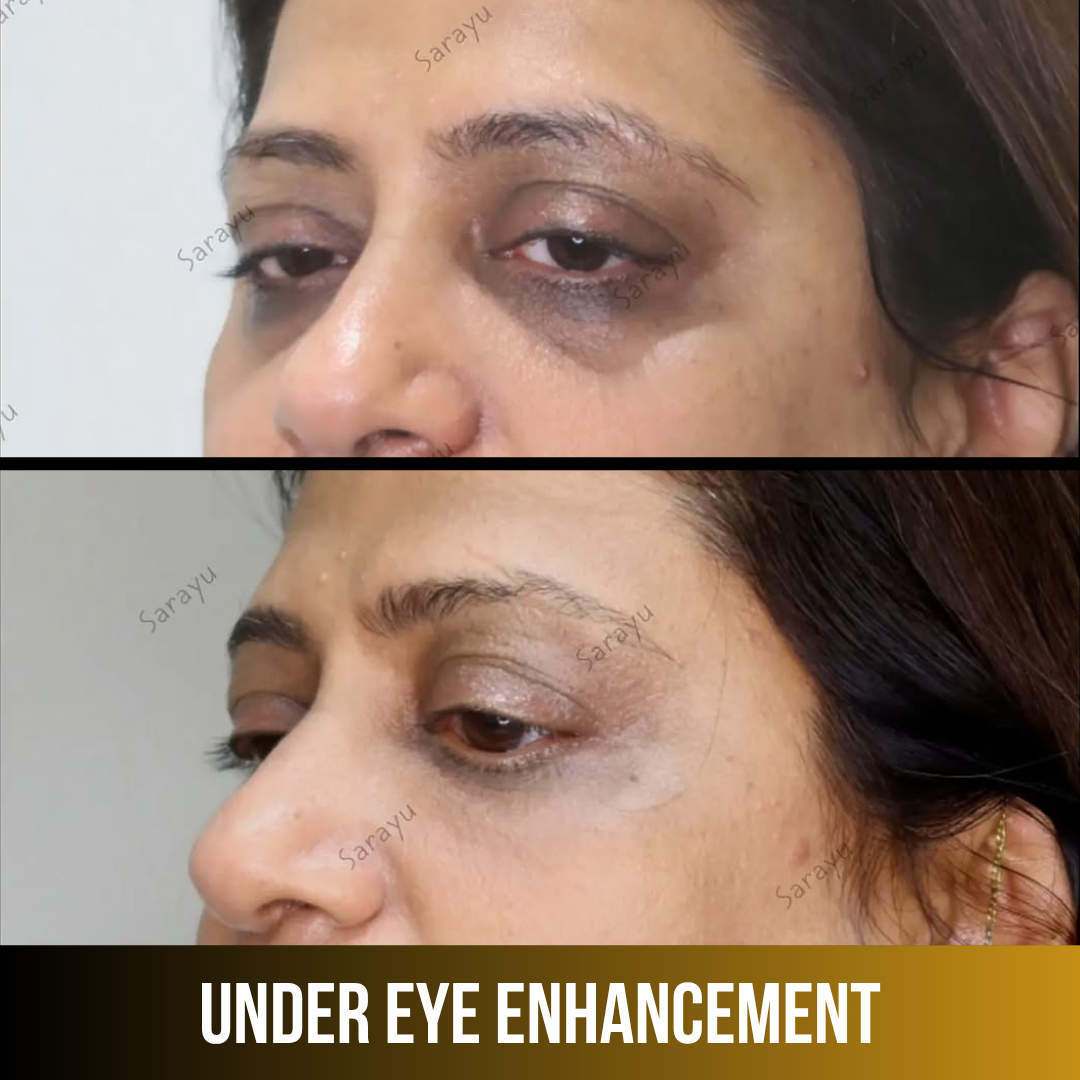
Dark Circle Removal Treatment in Delhi
- Home
- Dark Circle Removal Treatment in Delhi
Dark Circle Removal Treatment in Delhi
Here is something almost every patient tells us in the first five minutes of a consultation: “I sleep seven or eight hours, and I still look exhausted.” They are right to be frustrated — because in most cases, dark circles have very little to do with sleep at all.
At Sarayu Clinics in Greater Kailash, New Delhi, dark circles are among the most common concerns we treat, across every age group — from college students dealing with pigmentation to professionals in their thirties and forties dealing with hollowing and volume loss. The reason concealer, cold compresses and under-eye creams so rarely work is simple: dark circles are not one condition. They are at least four different problems that happen to look similar, and the treatment that fixes one does nothing for another.
This page explains why dark circles actually form, gives you three quick tests to work out which type is yours, and sets out which dark circle removal treatments in Delhi genuinely work for each — the way we would explain it in person. Every under-eye procedure here is performed under the supervision of facial plastic and maxillofacial surgeon Dr. Adarsh Tripathi and aesthetic physician Dr. Nidhi Bhatia. That matters more here than almost anywhere on the face, for one reason we will come to: the under-eye is the least forgiving area to treat.

The short answer : Dark circles come in four types, and the right treatment depends entirely on which you have. PIGMENTED (brown) — excess melanin, treated with topical brighteners, peels, mesotherapy and pigment lasers. VASCULAR (blue/purple) — vessels showing through thin skin, treated with skin-quality treatments, PRP and certain lasers. STRUCTURAL (a shadow) — a tear-trough hollow, the one type dermal filler is genuinely for. PUFFINESS (bags casting a shadow) — sometimes filler to blend, sometimes eyelid surgery. Most people have a mix. Three self-tests below tell you which is dominant. Filler is right for structural hollows only — on pigmented or vascular circles it does little and can cause a lasting bluish tinge (the Tyndall effect). The under-eye is the highest-risk filler site on the face, which is why it belongs with a surgeon. Delhi cost ranges from about Rs 1,500 per session for peels to Rs 18,000–45,000 for under-eye filler. No treatment removes dark circles permanently — the causes are ongoing — but the right one delivers a substantial, natural, lasting improvement.
Why Do Dark Circles Actually Form? The Four Types ?
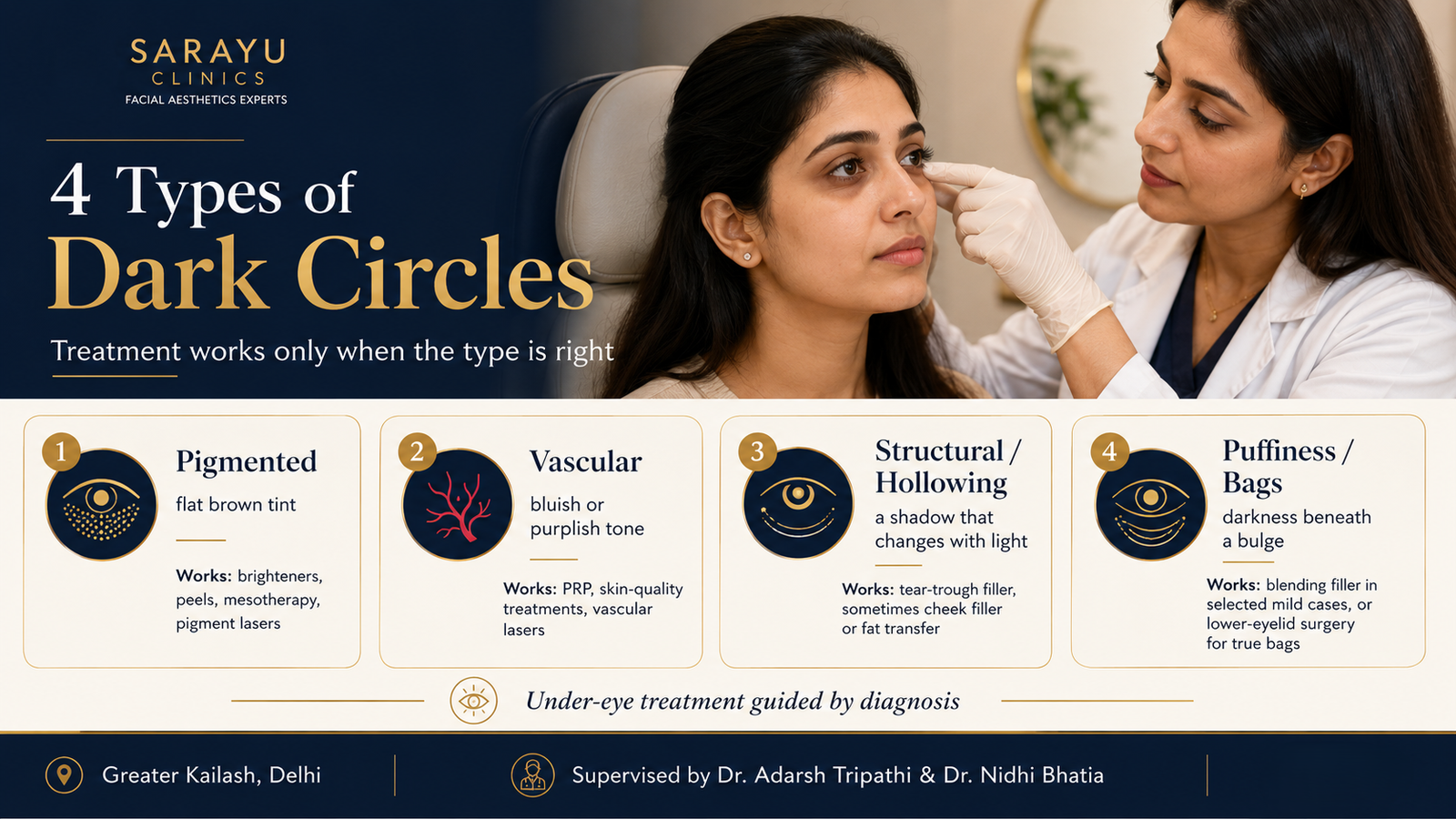
Before jumping to treatment, it helps to know what is happening under the skin. Under-eye darkness falls into four categories, and most people have some overlap of two or three.
Type | How it looks | What causes it | What actually works |
1. Pigmented | Flat brownish tint | Excess melanin — genetics, sun, allergies, eczema, eye-rubbing | Topical brighteners, peels, mesotherapy, pigment lasers |
2. Vascular | Bluish or purplish | Blood vessels showing through very thin skin; fatigue, screens, dehydration, genetics | Skin-quality treatments, PRP, vascular lasers |
3. Structural / hollowing | A shadow — dark in some light, fine in others | Tear-trough hollowing as the under-eye fat pad shrinks with age (common from late 20s) | Dermal filler in the tear trough; sometimes fat transfer |
4. Puffiness shadow | Darkness beneath a bulge | Under-eye bags casting their own downward shadow | Filler to blend, or lower-eyelid surgery for true bags |
This is exactly why a cream that targets pigmentation does nothing for hollowing, and why filler alone will not help someone whose real problem is brown pigment. The right treatment depends entirely on which type — or combination — you are dealing with, which is why an in-person evaluation matters far more than picking a treatment off the internet.
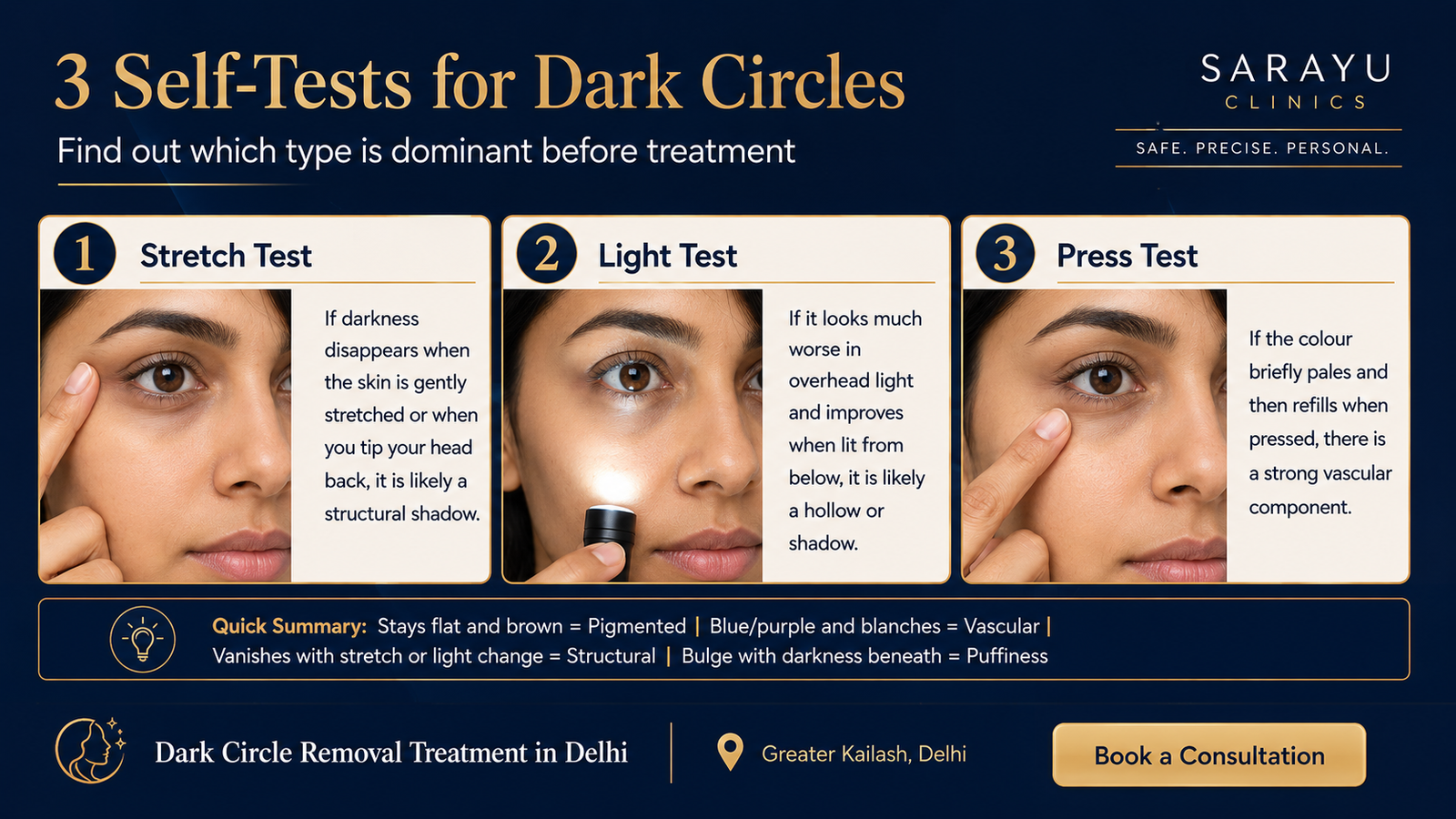
Which Type Do You Have? Three Self-Tests
Do these at a mirror before you spend a rupee. They will not replace a proper assessment, but they will tell you roughly which conversation you are in — and whether a clinic’s recommendation makes sense for you.
1. The stretch test — is it a shadow?
Gently stretch the under-eye skin sideways with two fingers, or tip your head back and look in the mirror. If the darkness largely disappears, it is a structural shadow — a hollow catching light — not pigment. Structural circles are cast, not coloured. If the colour stays put, it is pigment or vascular.
2. The light test — where does the shadow fall?
Look at your under-eyes in strong overhead light, then again with light from below (hold your phone torch under your chin). A structural shadow looks much worse from above and improves dramatically lit from below, because you are literally moving the shadow. Pigment looks the same in both.
3. The press test — does it blanch?
Press gently on the dark area for a second and watch as you release. If the colour briefly pales and then refills, there is a strong vascular component — you are seeing blood. If pressing makes no difference, it is pigment.
Putting the three together : Vanishes when stretched or head tipped back, worse in overhead light? STRUCTURAL — you need volume, and filler is genuinely for you. Stays flat and brown, same in all light, doesn’t blanch? PIGMENTED — you need brightening and pigment treatment, and filler will do almost nothing. Blue or purple, blanches when pressed? VASCULAR — you need skin-quality treatments and possibly laser; filler is a cover-up at best. A visible bulge with darkness beneath it? PUFFINESS — that is a bag, and it may need surgery, not filler. Most people are a blend, which is the whole point of a consultation: to work out the proportions.
The One Distinction Even Good Clinics Miss
There is a fifth thing worth knowing, missed constantly, because it changes where filler should go: the difference between a true tear-trough hollow and a pseudo-hollow caused by cheek descent. As the mid-face ages, the cheek fat pad slides downward, and the top of that descent sits right at the lower eye socket rim — creating a hollow that looks exactly like a tear-trough problem but is really a cheek problem. Fill the under-eye directly here and you chase a shadow that keeps reappearing, often ending up puffy and overfilled. Restore the cheek support first, and the under-eye hollow frequently improves on its own. Reading which of the two you have is exactly the whole-face structural judgement a facial plastic surgeon is trained for — and the reason the under-eye should never be assessed in isolation.

The Tyndall Effect: Why Under-Eye Filler Goes Wrong
If you take one warning from this page, take this one — it is the commonest thing that goes wrong with under-eye filler.
The lower eyelid has the thinnest skin on the body. When hyaluronic acid filler is placed too superficially beneath it, the gel scatters light and makes the area look bluish — the Tyndall effect, the same physics that makes veins and the sky look blue. A patient who came in for dark circles can leave with a faint blue-grey tinge that is, if anything, worse than before. And because filler here lasts a long time, that tinge can persist for years unless it is dissolved.
- It is a placement error, not bad luck. Filler placed deep, on the bone, in small amounts, by someone who knows the plane, does not do this.
- HA holds water. Too much product, or product in the wrong layer, draws fluid and can worsen under-eye puffiness rather than fix it.
- It is reversible, which is the saving grace. Hyaluronidase dissolves HA filler, so a Tyndall result or overcorrection can be corrected — a reason to choose your injector carefully, not a reason to be casual.
Is Dark Circle Removal Treatment Safe?
Yes — when performed by trained professionals using approved, medical-grade products. But the under-eye deserves a specific, honest word, because it is the single most dangerous site on the face to inject. The angular and ophthalmic vessels run through this region, and an accidental injection into a vessel can, very rarely, cause serious complications including visual loss. This is not a reason to fear the treatment. It is the reason it should never be done casually at a walk-in salon, and the reason technique, product choice and injection depth matter here more than anywhere. It is the part of the face where the difference between a surgeon who knows the periorbital anatomy and an inexperienced injector genuinely counts — and where reversal agents should always be on hand. At Sarayu, all under-eye procedures are supervised by Dr. Adarsh Tripathi and Dr. Nidhi Bhatia.

Treatments by Type
For pigmented circles
Prescription topical brighteners; a gentle course of chemical peels using mild agents suited to the delicate area; under-eye mesotherapy with brightening actives; and pigment-targeting laser toning such as Hollywood Spectra where appropriate. Above all, sun protection and stopping the eye-rubbing. This is slow, patient work — the under-eye is the last place to be aggressive with pigment, and it shares its biology with facial pigmentation.
For vascular circles
Treatments that thicken and improve the skin so vessels show less — PRP and microneedling among them — plus certain vascular lasers, and in selected cases a little deep filler to add a layer of cover. Cutting caffeine, treating nasal allergy and improving sleep genuinely help, because congestion worsens the vascular look.
For structural / hollowing circles
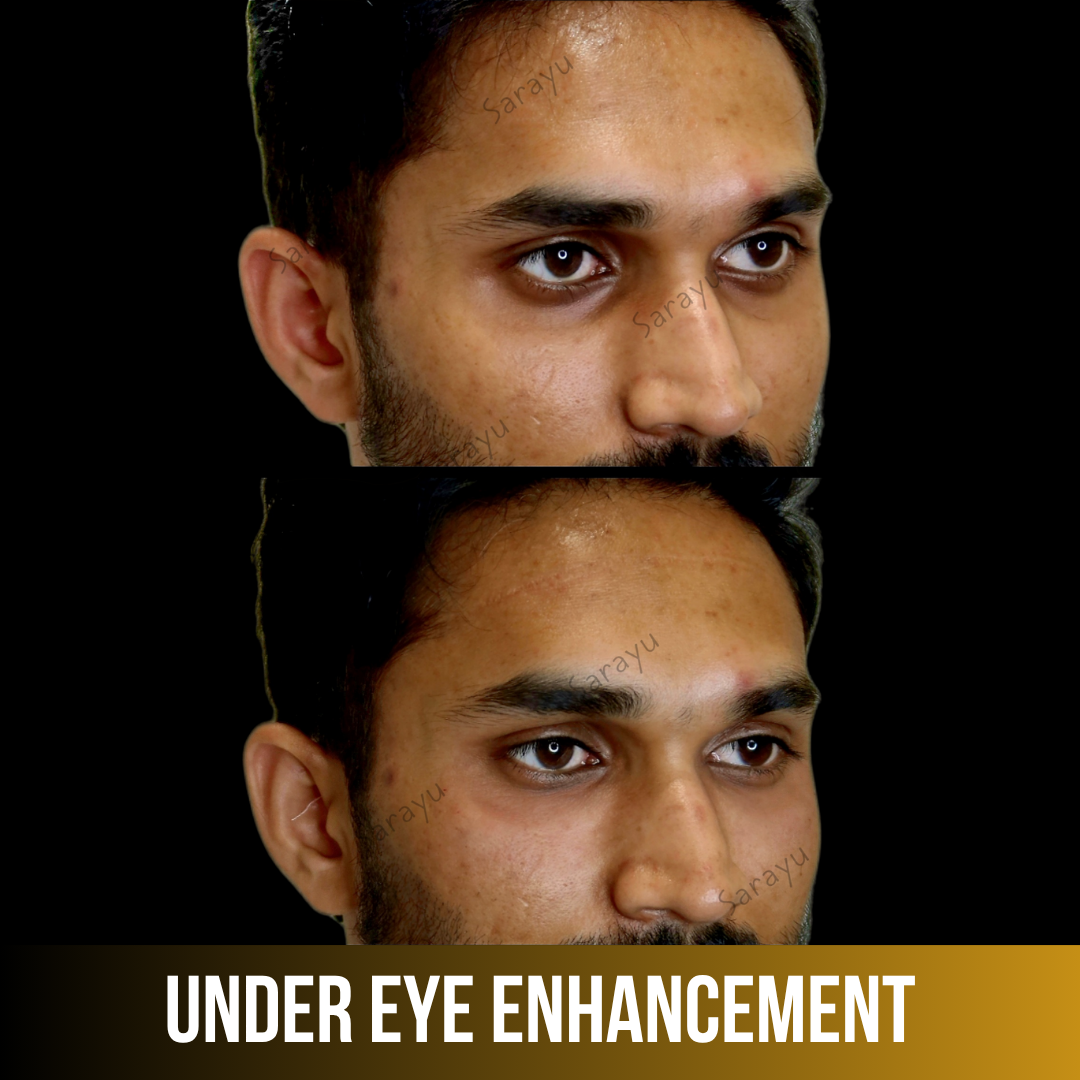
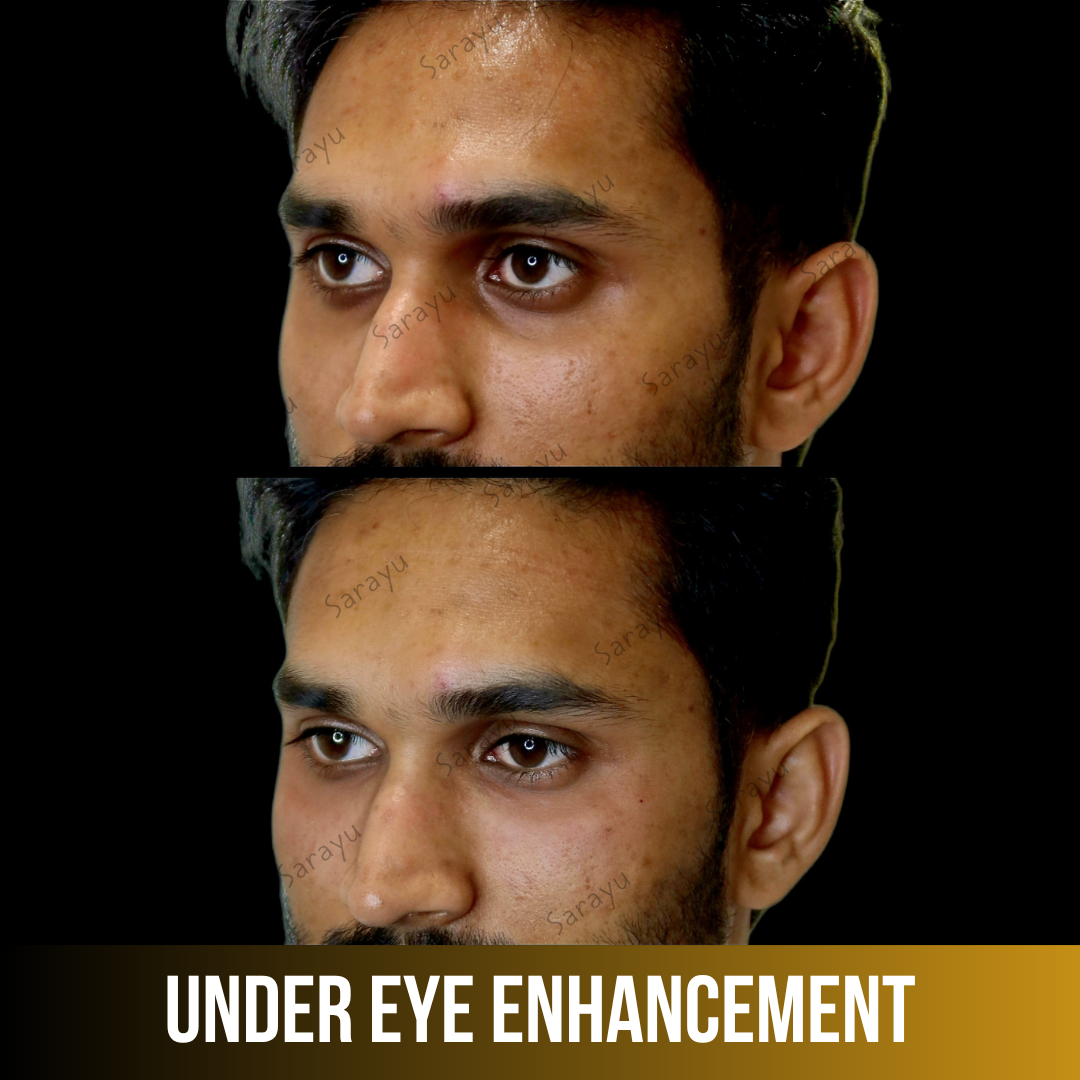
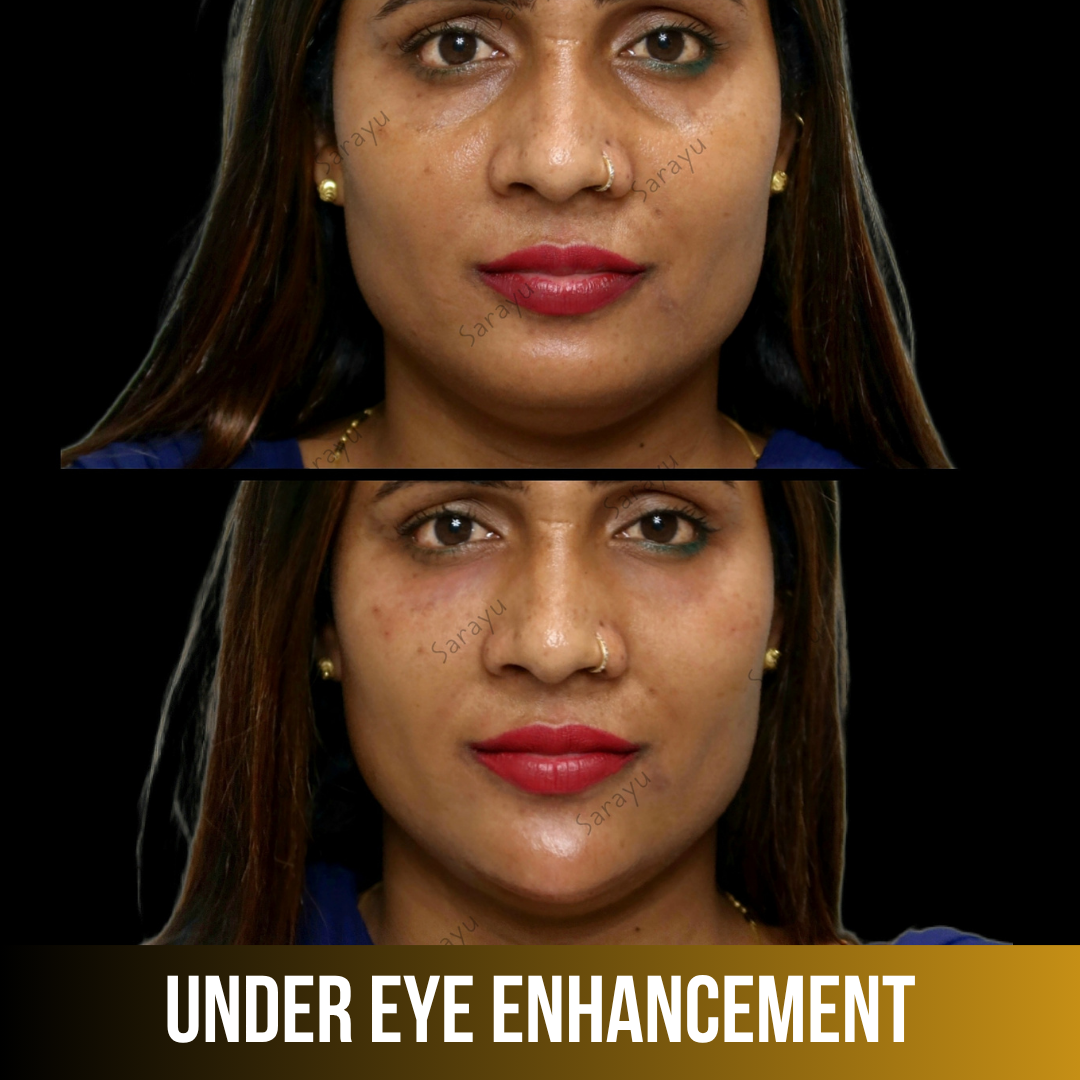
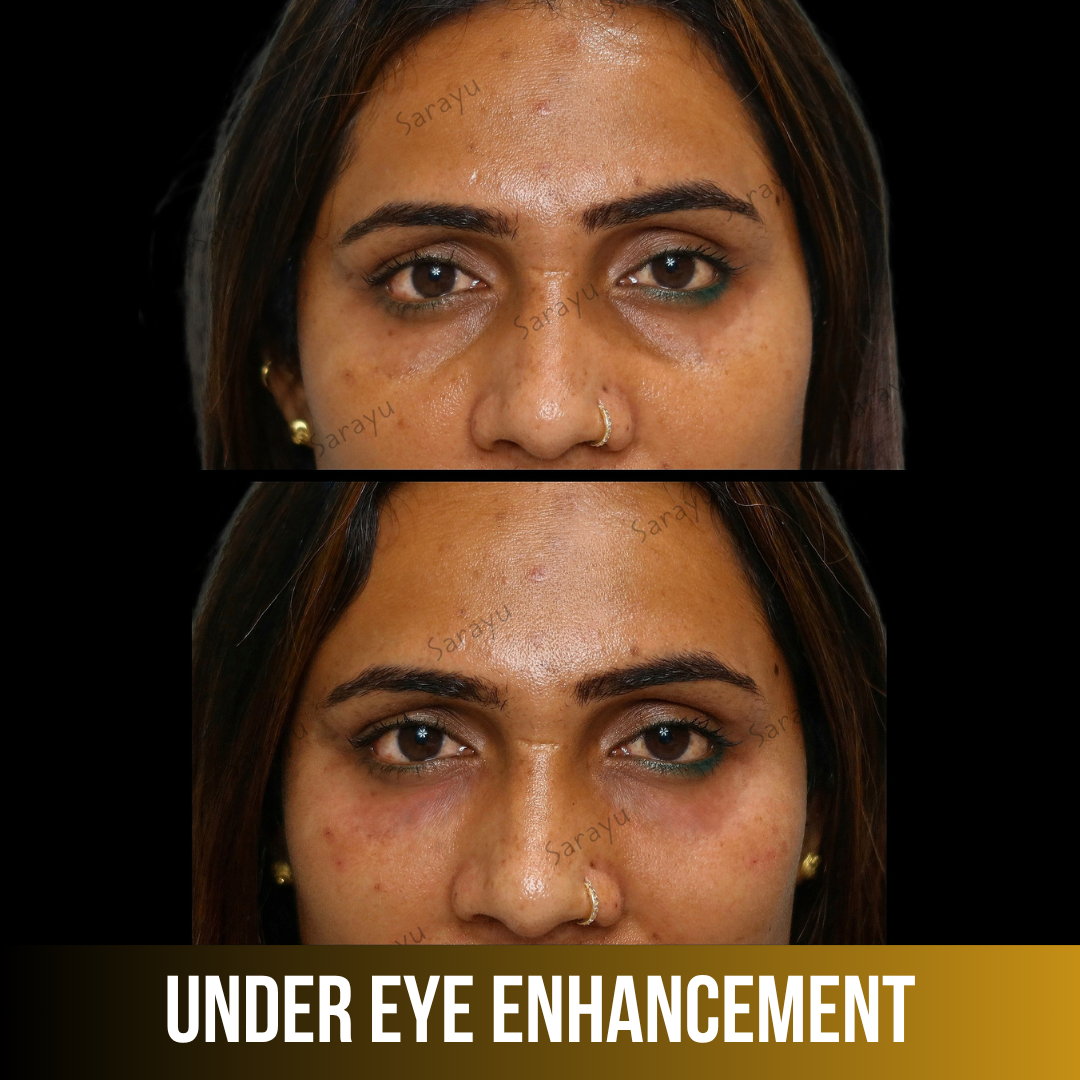
This is where carefully placed dermal filler — hyaluronic acid in the tear trough, deep and sparing — genuinely shines, because you remove the shadow by filling the hollow that casts it. Where cheek descent is the real cause, cheek filler goes first. Results typically last nine to twelve months.
For puffiness / bags
Mild puffiness can sometimes be blended with filler across the lid-cheek junction. But a true herniated fat pad — a genuine eye bag — is a structural problem that filler can actually worsen, and the durable answer is lower-eyelid surgery: blepharoplasty or oculoplasty. Telling a bag from a hollow is central to a proper assessment, because their treatments are opposite.
For mixed circles — the usual case
A sequenced combination: treat the pigment while restoring the structure while improving skin quality, in the right order, over a few sessions. This is why a single-session promise for dark circles is almost always a promise about one type, in a face that has three — and why combination plans give the most natural, durable result.
What to Expect During Your Consultation ?
A proper dark circle consultation at Sarayu Clinics typically involves:
- Visual and, where useful, photographic assessment of the under-eye in natural light
- The stretch, light and press tests, to separate pigment from vascular from hollowing
- A check of skin thickness, tear-trough depth, cheek support and any puffiness
- Review of lifestyle factors — sleep, screen time, allergies, iron status, sun exposure
- A medical history to rule out contraindications for injectables or lasers
- A tailored plan, often phased across a few sessions for gradual, natural-looking results
Benefits of Getting the Diagnosis Right
- Treatment that actually works — aimed at your real cause, not a guess.
- No money wasted on the wrong tool — no filler for pigment, no laser courses for a hollow.
- A brighter, more rested look — the tired appearance lifts when the right cause is addressed.
- Natural results — correcting the cause looks natural in a way that camouflaging the symptom never does.
- Safety in the most delicate zone on the face — periorbital anatomy respected by a surgeon trained in it.
- Honest expectations — what will improve a lot, what a little, and what maintenance looks like.
Areas We Treat
- The tear trough — the hollow between lower lid and cheek
- The lower eyelid and infraorbital skin
- The lid-cheek junction
- The mid-face and cheek, where under-eye shadows often originate
- Fine lines and crepiness of the lower lid
- Under-eye puffiness and mild bags, assessed for cause
Dark Circle Treatment Cost in Delhi
Because the four types need different treatments, cost varies widely — which is exactly why a single headline price for “dark circle removal” is meaningless until you know your type. Indicative Delhi ranges:
Treatment | Typical cost (INR)* |
Consultation & under-eye typing | Rs 2,500 – Rs 5,000 |
Topical pigment protocol (per month) | Rs 1,500 – Rs 5,000 |
Under-eye chemical peel (per session) | Rs 1,500 – Rs 5,000 |
Under-eye mesotherapy (per session) | Rs 3,000 – Rs 8,000 |
PRP for under-eyes (per session) | Rs 6,000 – Rs 15,000 |
Pigment / vascular laser (per session) | Rs 3,000 – Rs 12,000 |
Under-eye (tear trough) filler (per session) | Rs 18,000 – Rs 45,000 |
Cheek filler (where the cause is mid-face) | Rs 20,000 – Rs 50,000 |
Combination plan | Individualised after typing |
Lower-eyelid surgery (true bags) | Assessed and quoted individually |
*Indicative ranges only, confirmed at consultation. The cheapest option is poor value if it treats the wrong type — a Rs 3,000 peel does nothing for a hollow, and Rs 40,000 of filler does nothing for pigment. The single most valuable spend is the assessment that tells you which you have.
Prices shown are for guidance only. Your final treatment cost will be confirmed during the initial consultation, based on your individual needs, concerns, and personalised treatment plan.
How Long Do Results Last?
- Fillers: nine to twelve months on average, then a top-up.
- PRP & mesotherapy: gradual improvement over three to four sessions, lasting several months and improving with maintenance.
- Laser treatments: long-lasting with proper sun protection, though occasional touch-ups help.
- Combination plans: usually the most durable and natural outcome, because they address more than one cause.
An honest note: no treatment removes dark circles permanently, because the causes are ongoing — genetics do not change, skin keeps ageing, the tear trough keeps deepening. Any clinic promising permanent removal is overselling. The realistic and achievable promise is markedly better, looking rested rather than tired, sustained with sensible maintenance.
Results Timeline
Timeframe | Structural (filler) | Pigment / vascular / PRP / laser |
Day 0 | Immediate improvement; possible mild swelling or bruising. | Procedure done; no colour change yet. |
Week 1 | Swelling settles; the true filler result emerges. | Skin settling; pigment unchanged so far. |
Week 2-4 | Filler fully settled and natural. | First visible lightening; skin quality improving. |
Month 2-3 | Stable result. | Clear improvement over a 3-4 session course. |
Month 9-12 | Filler gradually reabsorbs; top-up as needed. | Sustained with maintenance and daily sun protection. |
Comparison: Which Treatment for Which Type
Your type | First-line treatment | What to avoid | Rough cost/session |
Pigmented (brown) | Brighteners, peels, mesotherapy, laser | Filler — does almost nothing | Rs 1,500-12,000 |
Vascular (blue) | PRP, microneedling, vascular laser | Superficial filler — Tyndall risk | Rs 3,000-15,000 |
Structural (shadow) | Tear-trough or cheek filler | Chasing it with laser or cream | Rs 18,000-50,000 |
Puffiness (bags) | Blending filler, or eyelid surgery | Over-filling — worsens the bag | Filler Rs 18,000+ / surgery quoted |
Precautions Before Your Treatment
- Avoid blood thinners: stop aspirin, ibuprofen, fish oil, vitamin E and similar supplements 5-7 days before injectables (filler, PRP, mesotherapy) to reduce bruising — only after checking with your physician if these are prescribed.
- Skip alcohol for 24-48 hours: it thins the blood and increases swelling and bruising.
- Pause active skincare: stop retinoids, AHAs/BHAs and vitamin C for 3-5 days before laser or peel sessions.
- Come with a clean face: no makeup, sunscreen or skincare on the day of treatment.
- Disclose your full history: cold sores/herpes (relevant for filler, which can trigger a flare), pregnancy or breastfeeding, autoimmune conditions, or recent facial procedures.
- Don’t book right before an event: mild swelling or bruising can last a day or two, so avoid the two weeks before a wedding, photoshoot or important occasion.
Aftercare
- Apply a cold compress (wrapped, never direct ice) for 10-15 minutes at a time to reduce swelling, especially after filler or PRP.
- Avoid touching, rubbing or massaging the area unless specifically instructed.
- Sleep with your head slightly elevated the first night.
- Skip makeup for at least 24 hours, to let injection points close.
- Wear SPF 50+ and good sunglasses daily — UV drives under-eye pigment, and the skin here is thin and vulnerable.
- If allergy is making you rub your eyes, treat the allergy — pigment will not settle while the rubbing continues.
Why Choose Sarayu Clinics for Dark Circle Treatment in Delhi ?
Sarayu Clinics, in Greater Kailash-1, combines advanced aesthetic technology with a genuinely personalised approach. Every under-eye plan is built around an accurate diagnosis of why your dark circles exist — not a generic protocol. With a team led by facial plastic and maxillofacial surgeon Dr. Adarsh Tripathi and aesthetic physician Dr. Nidhi Bhatia, patients get the full range of options — from non-invasive skin treatments to advanced injectables and laser — under one roof.
- We type your dark circles before we treat them. Four causes, four approaches, and most faces have more than one. Diagnosis is the treatment.
- Surgeon-level periorbital anatomy. The under-eye is the highest-risk filler site on the face. This is where anatomical training stops being a marketing line.
- We know how to avoid the Tyndall effect. Deep, sparing, correctly-planed placement — with reversal agent on hand if it is ever needed.
- We read the whole face. Cheek descent and mid-face volume feed the under-eye; we treat the cause, which is sometimes not where the shadow is.
- Filler only when filler is right. For pigment and vascular circles we will tell you filler is the wrong tool, rather than sell it anyway.
- Surgery when it is the honest answer. True eye bags need eyelid surgery, not filler — and we can perform it.
Medical Review & Sources
This page is for general information and is medically reviewed by the team at Sarayu Clinics under Dr. Adarsh Tripathi. It is not a substitute for an in-person clinical assessment. Under-eye filler is a high-risk procedure that should be performed only by a practitioner with detailed knowledge of periorbital vascular anatomy, with reversal agents available. Sources:
How to Reach Us:
Phone: +91 9289111081 , +91 9289111082
Email: sarayuinquiries@gmail.com
Sarayu Clinics website: www.sarayuclinics.com
Facebook: https://www.facebook.com/sarayuclinic
Instagram: https://www.instagram.com/sarayuclinics/
Dr. Adarsh Tripathi’s profile: https://dradarshtripathi.com/
Online Booking: Visit our website https://sarayuclinics.com/contact-us/ to schedule appointments conveniently.
What is the best treatment for dark circles?
There is no single “best” treatment — it depends entirely on whether your dark circles are pigmented (brown), vascular (blue), structural (a hollow shadow) or from puffiness. Filler is excellent for a hollow and nearly useless for brown pigment; brighteners and lasers do the opposite. A proper consultation identifies the cause and matches it to the right treatment or combination, which is why typing your dark circles is the single most important step.
How much does dark circle treatment cost in Delhi?
It depends on the type. Topical and peel protocols run Rs 1,500-5,000; mesotherapy Rs 3,000-8,000; PRP Rs 6,000-15,000; pigment or vascular laser Rs 3,000-12,000; and under-eye (tear trough) filler Rs 18,000-45,000. Because the four types need different treatments, a single headline price is meaningless until your type is diagnosed — and the cheapest option is poor value if it treats the wrong cause.
Is filler good for dark circles?
Only for one type. Under-eye filler is genuinely excellent for structural dark circles — a shadow cast by a tear-trough hollow — because it removes the shadow by filling the hollow. For pigmented or vascular circles it does little, and placed too superficially under thin lid skin it can cause a lasting bluish tinge called the Tyndall effect, and because it holds water it can worsen puffiness. Filler is the right answer for hollows, not for colour.
Are dark circle treatments painful?
Most involve minimal discomfort, usually managed with topical numbing cream beforehand. Sessions are quick, typically 20-40 minutes. Filler and PRP involve fine injections; the under-eye can bruise, which is why we ask you to avoid blood thinners beforehand and not to book right before an event.
How many sessions are needed to see results?
Fillers often show results in a single session. PRP, mesotherapy and peels usually need three to four sessions spaced a few weeks apart for gradual, natural improvement. Combination plans, which address more than one cause, are staged across visits and give the most durable result.
Can dark circles be removed permanently?
Not truly — the causes are ongoing (genetics, ageing, sun, the slowly deepening tear trough), so no treatment freezes them forever, and any clinic promising permanent removal is overselling. What is genuinely achievable is a substantial, durable improvement with occasional maintenance: filler lasts 9-12 months, pigment lightens and holds with sun protection, and combination plans last longest. The honest promise is looking rested rather than tired, sustained with upkeep.
Is under-eye filler safe?
In the right hands, yes — but the under-eye is the most dangerous site on the face for filler, because major vessels run through the area and an accidental intravascular injection can, very rarely, cause serious complications including visual loss. This is not a reason to fear the treatment; it is the reason to have it done by someone with detailed periorbital anatomical knowledge who injects deep, uses a cannula where appropriate, and keeps dissolving agent on hand. It is the part of the face where choosing a surgeon over an inexperienced injector matters most.

Why do I have dark circles even though I sleep well?
Because sleep is only one small factor, and rarely the main one. Genetics, skin pigmentation, thin skin showing blood vessels, a naturally deep tear trough, sun, allergies that make you rub your eyes, and mid-face volume loss all cause dark circles independent of sleep. Poor sleep can worsen the look by making you paler and puffier, but treating the underlying type is what actually helps.
Is there any downtime after treatment?
Most under-eye treatments have little to no downtime. Mild swelling or redness, if any, usually settles within a day or two. Filler and PRP can cause bruising for a few days, so avoid blood thinners beforehand where medically appropriate, and don’t schedule within two weeks of an important event.
Our Patients