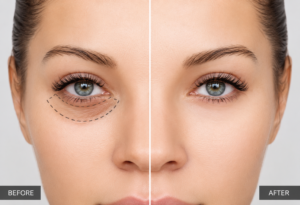
Patients ask for “scarless” eyelid surgery almost every week. It is a reasonable thing to want, and the term is now used widely enough online that most people assume it describes a specific modern operation — something newer and safer than what came before. When researching Blepharoplasty in Delhi, patients may come across this term and wonder whether it means that surgery can be performed without any visible scar at all.
It doesn’t, quite. What people are usually describing is a real and genuinely useful technique, but the word “scarless” is doing more work than it should. Understanding the difference is worth ten minutes of your time, because it determines whether the technique is appropriate for your eyelids at all.
So is there such a thing as scarless eyelid surgery?
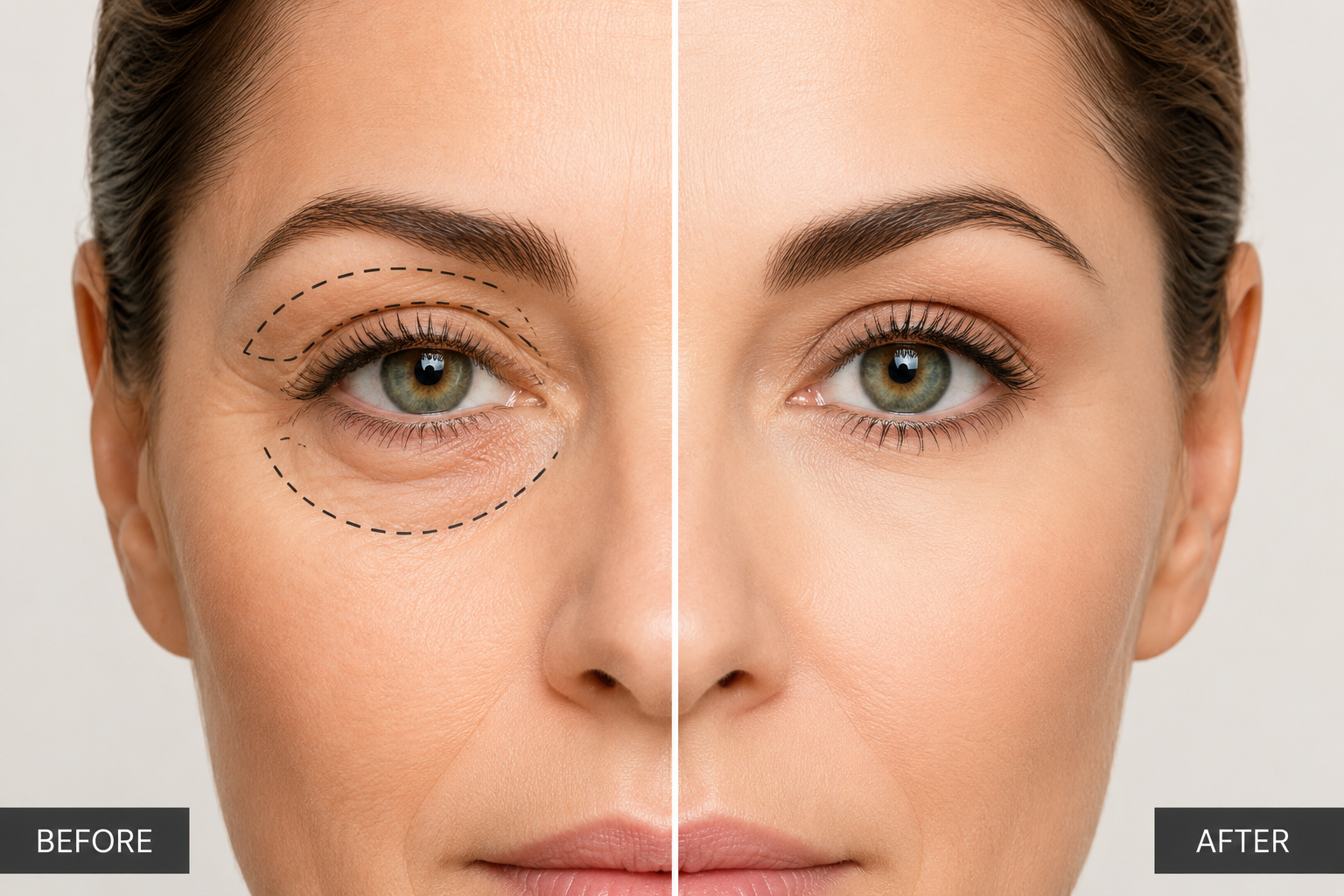
Not literally. Any surgery involves an incision, and any incision heals into a scar. What the term actually refers to is transconjunctival lower blepharoplasty — an approach where the incision is made inside the lower eyelid, through the conjunctiva, rather than on the outside skin.
Because the cut sits on the inner surface of the lid, there is no external skin scar. The conjunctiva heals quickly, usually with dissolving sutures or none at all, and nothing is visible from the outside. So “no visible external scar” is accurate. “No incision” is not. It is a distinction worth holding onto, because clinics that blur it tend to blur other things too.
What the technique is genuinely good at
The transconjunctival approach exists for a specific problem: puffiness under the eyes caused by orbital fat pushing forward — what most people call eye bags. Working from inside the lid, a surgeon can remove or, increasingly, reposition that fat to smooth the step between the lower lid and the cheek.
Current reviews of lower eyelid surgery describe two other practical advantages. Because the muscle and support structures of the lower lid are left undisturbed, rates of eyelid malposition — the lid pulling down or rounding outward — are low compared with external approaches. And recovery tends to be quicker, with less visible bruising, simply because the skin envelope has not been cut.
There is a third advantage that matters particularly in India, and it is discussed later in this article.
What “Scarless” Blepharoplasty Cannot Do
This is the section most clinic pages skip, and it is the one that decides whether the technique suits you.
Working from inside the eyelid gives excellent access to fat. It gives none at all to skin. So if your lower lids have genuine excess or crepey skin, a transconjunctival operation cannot remove it — the skin is simply not within reach of that incision. The same applies to thickening of the orbicularis oculi, the muscle ringing the eye: correcting that requires access from the outside.
Its effect on the tear trough — the hollow running from the inner corner down toward the cheek — is also limited, and it will not lift descended midface tissue.
- Suits the technique: prominent fat with good skin elasticity and little or no skin excess — often younger patients, and people with hereditary under-eye bags.
- Does not suit the technique: true vertical excess of lower lid skin, significant crepiness, or muscle hypertrophy — these usually need an external (transcutaneous) approach, sometimes combined with skin tightening.
This is why technique should follow anatomy rather than marketing. A patient who needs skin removed and is sold a “scarless” procedure will be disappointed — the bags improve, the loose skin stays, and the overall result looks unfinished.
And the Upper Eyelid? A Different Answer
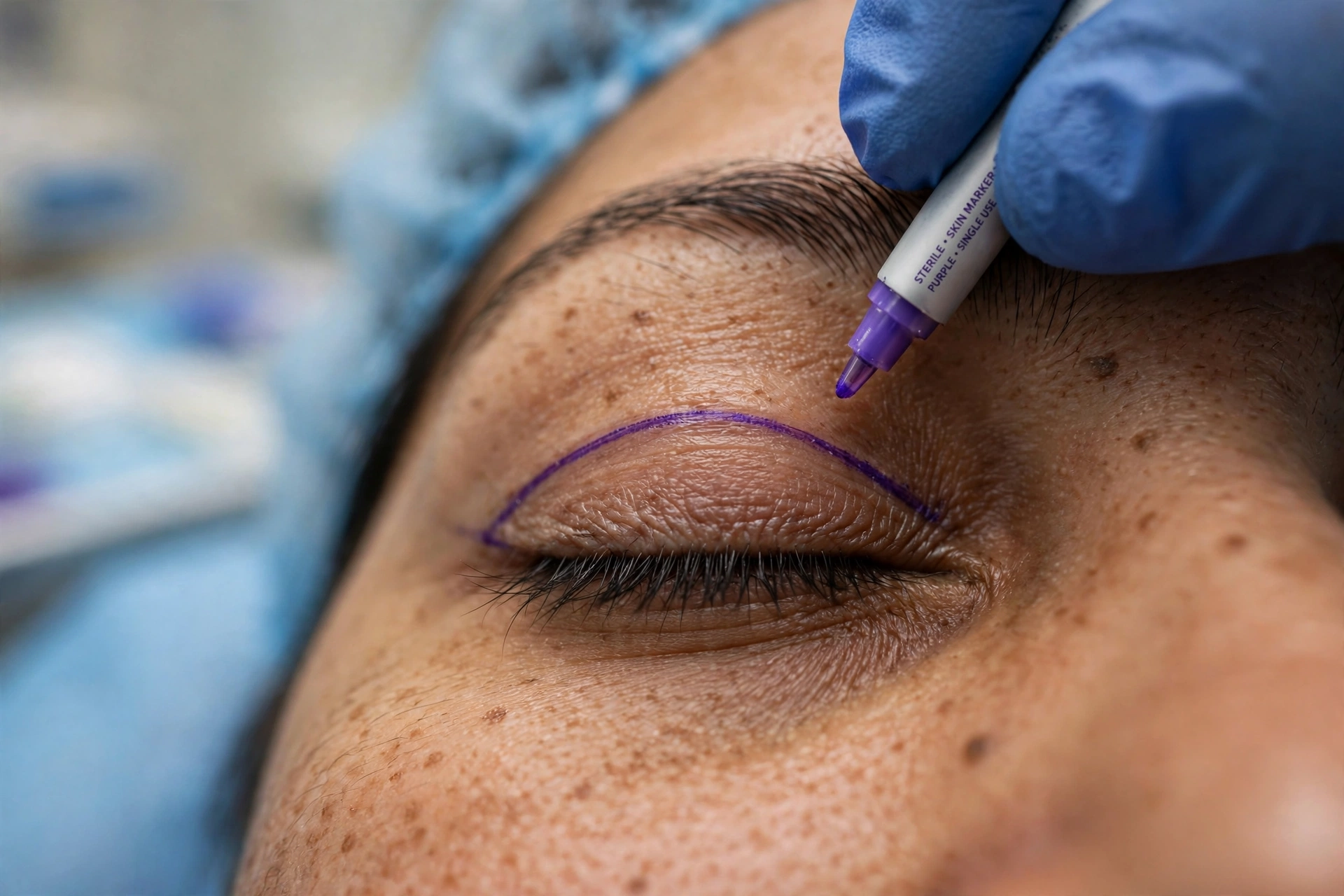
Upper eyelid surgery is where the term breaks down completely. If your concern is hooding — excess skin weighing down the upper lid — that skin has to be removed, and removing skin means an external incision. There is no internal route.
What makes upper blepharoplasty scars inconspicuous is not the absence of an incision but its placement: the cut is hidden in the natural crease of the upper eyelid, so once healed it sits inside a fold that is only visible when the eye is closed. In most patients it becomes very difficult to see. But it exists, and any surgeon telling you otherwise is overselling.
What a New 2026 Study Adds — and Why It Matters More in India
A study published in Aesthetic Plastic Surgery in August 2026 assessed scars after upper eyelid blepharoplasty using the Vancouver Scar Scale, a standard clinical scoring tool, and compared outcomes across Fitzpatrick skin types.
The finding, stated plainly
Scar scores increased significantly with darker Fitzpatrick skin types. The authors concluded that darker skin types carry an increased risk of more visible scar formation after blepharoplasty, driven largely by pigmentation changes rather than by the scar itself being thicker or wider — and that skin type should be factored into preoperative assessment and into an individualised scar-management plan.
Most Indian patients fall into Fitzpatrick types IV and V. So this is not an abstract research point; it is directly relevant to how eyelid surgery should be planned and aftercare managed in Delhi. It does not mean darker skin should avoid blepharoplasty — it means pigmentation deserves to be part of the conversation before surgery rather than a surprise afterwards.
It also sharpens the case for the transconjunctival approach in suitable patients. Surgical texts have noted for some years that people with Fitzpatrick V–VI may particularly benefit from the internal approach for lower lids, because an external lower-lid scar can depigment and remain visible. Where the anatomy genuinely allows it, avoiding an external lower-eyelid incision sidesteps that risk entirely.
Practical implications for patients with deeper skin tones
- Ask specifically whether your skin type has been considered in the surgical plan, not just your anatomy.
- Expect a scar-management protocol: sun protection is the big one. Large sunglasses and, once incisions are fully closed, sunscreen around the eyes — Delhi’s UV is high nearly year-round.
- Expect scars to look worse before they look better. Redness and early darkening at six weeks is not the final result.
- Silicone-based scar products and, where appropriate, pigment-directed treatment can be planned in advance rather than improvised.
What Patients Often Misunderstand About “Scarless” Surgery
Three misconceptions come up repeatedly in consultation.
The first is that scarless means newer, and therefore better. The transconjunctival approach is not new — it has been in routine use for decades. It is better for the right problem, which is a different claim.
The second is that it can do everything an external approach can, without the trade-off. It cannot. Every technique buys something and gives something up, and the honest version of this conversation is about which trade-off suits your face.
The third is that the incision is the main determinant of the result. It usually isn’t. Whether your eyes look rested afterwards depends far more on accurate diagnosis — is the problem fat, skin, muscle, brow position, or midface descent? — than on which side of the eyelid the cut was made. A heavy upper lid caused by a descended brow will not be fixed by removing eyelid skin, no matter how well the incision is placed.
Risks and Realistic Expectations
Eyelid surgery is well established and generally safe in trained hands, but it is still surgery. Reasonable things to discuss at consultation:
- Temporary swelling, bruising and dryness or grittiness of the eyes, usually settling over weeks
- Lower eyelid malposition — less common with the transconjunctival approach but not impossible
- Chemosis (conjunctival swelling), asymmetry, and the possibility of a small revision
- Pigmentary change at the incision, more relevant in deeper skin tones as above
- Under-correction or over-correction, both of which are matters of judgement rather than mishap
Results typically continue to refine for several months as swelling resolves and scars mature. Judging the outcome at three weeks is premature.
Questions Patients Ask
Is scarless blepharoplasty really scarless?
Not literally. The term describes transconjunctival lower eyelid surgery, where the incision is made inside the lower eyelid rather than on the outside skin. There is no visible external scar, which is where the name comes from, but an incision is still made — it simply sits on the inner surface of the lid and heals without leaving anything visible.
Can scarless blepharoplasty remove loose skin under my eyes?
No. Working from inside the eyelid gives access to fat, not to skin. If you have genuine excess or crepey lower lid skin, that requires an external approach, sometimes combined with skin-tightening treatment. This is the single most important limitation to understand before choosing the technique.
Is there a scarless option for upper eyelids?
No. Upper eyelid surgery usually involves removing excess skin, which requires an external incision. What makes the scar inconspicuous is its placement in the natural eyelid crease, where it sits inside a fold and becomes difficult to see once healed — not the absence of a cut.
Does darker skin scar worse after eyelid surgery?
Research published in 2026 found that scar scores after upper eyelid blepharoplasty increased significantly with darker Fitzpatrick skin types, largely because of pigmentation changes. This does not mean surgery should be avoided; it means skin type should be part of the preoperative assessment and of a planned scar-management strategy, including strict sun protection during healing.
How long before an eyelid scar becomes inconspicuous?
Scars mature over months rather than weeks. Early redness or darkening is normal and is not the final appearance. Most upper eyelid scars become difficult to notice over several months, though timelines vary between individuals and are influenced by skin type, sun exposure and aftercare.
Which approach is right for me?
It depends on whether your problem is fat, skin, muscle or a combination — and on brow position, which is often the overlooked factor. That can only be established by examining the eyelids in person. A surgeon who recommends a technique before examining you is recommending a product, not a plan.
If You Are Considering Eyelid Surgery
An in-person assessment is the only way to establish whether your concern is excess skin, fat prominence, brow position or something else entirely — and whether surgery is appropriate at all. If you would like that assessment, you can read more about eyelid surgery at Sarayu Clinics or book a consultation at our Greater Kailash-1 clinic.
If you are earlier in your thinking and still unsure whether you need surgery at all, our guide on whether you actually need eyelid surgery is a better starting point. And if cost is what you are trying to make sense of, see our article on how to compare blepharoplasty quotations sensibly.