
If you have ever looked at a photo of yourself and felt your nostrils were too wide, or that the base of your nose spreads too much when you smile, you have probably run into two words while searching for a fix: alarplasty and rhinoplasty. They are not the same thing, they do not cost the same, and — most importantly — one of them is almost certainly right for you and the other almost certainly is not. The trick is knowing which.
The good news is that the choice is usually simpler than the internet makes it sound. It comes down to one honest question about what actually bothers you, and once you answer it, the right procedure is obvious. This article walks you through that question, explains how each surgery works, what the scars and recovery really involve — including something specific to Indian skin that most guides skip — and how to avoid the one mistake that makes nostril surgery go wrong.
I perform both procedures, so I have no reason to steer you toward the bigger one or the smaller one — only toward the one your nose actually needs. If, by the end, standalone alarplasty in Delhi sounds like your answer, that page covers the procedure itself in full.

The One Question That Decides It
Strip away the jargon and the entire alarplasty-versus-rhinoplasty decision comes down to a single honest question:
Is the width or flare of your nostrils the ONLY thing that bothers you — and are you genuinely happy with your bridge, your tip, and your profile from the side?
- If YES — nostrils only, everything else fine — you are an alarplasty candidate. There is no reason to undergo a bigger, longer, costlier operation to change something that is not bothering you.
- If NO — your bridge has a bump, your tip is bulbous or drooping, your profile needs work, or the nose is crooked — then alarplasty alone will disappoint you, because it cannot touch any of those. You need rhinoplasty, and your surgeon will often perform alarplasty as one step within it.
That is genuinely most of the decision. The rest of this article helps you answer that question honestly — because the commonest reason nostril surgery disappoints is that the real problem was never the nostrils.
What Alarplasty Actually Does
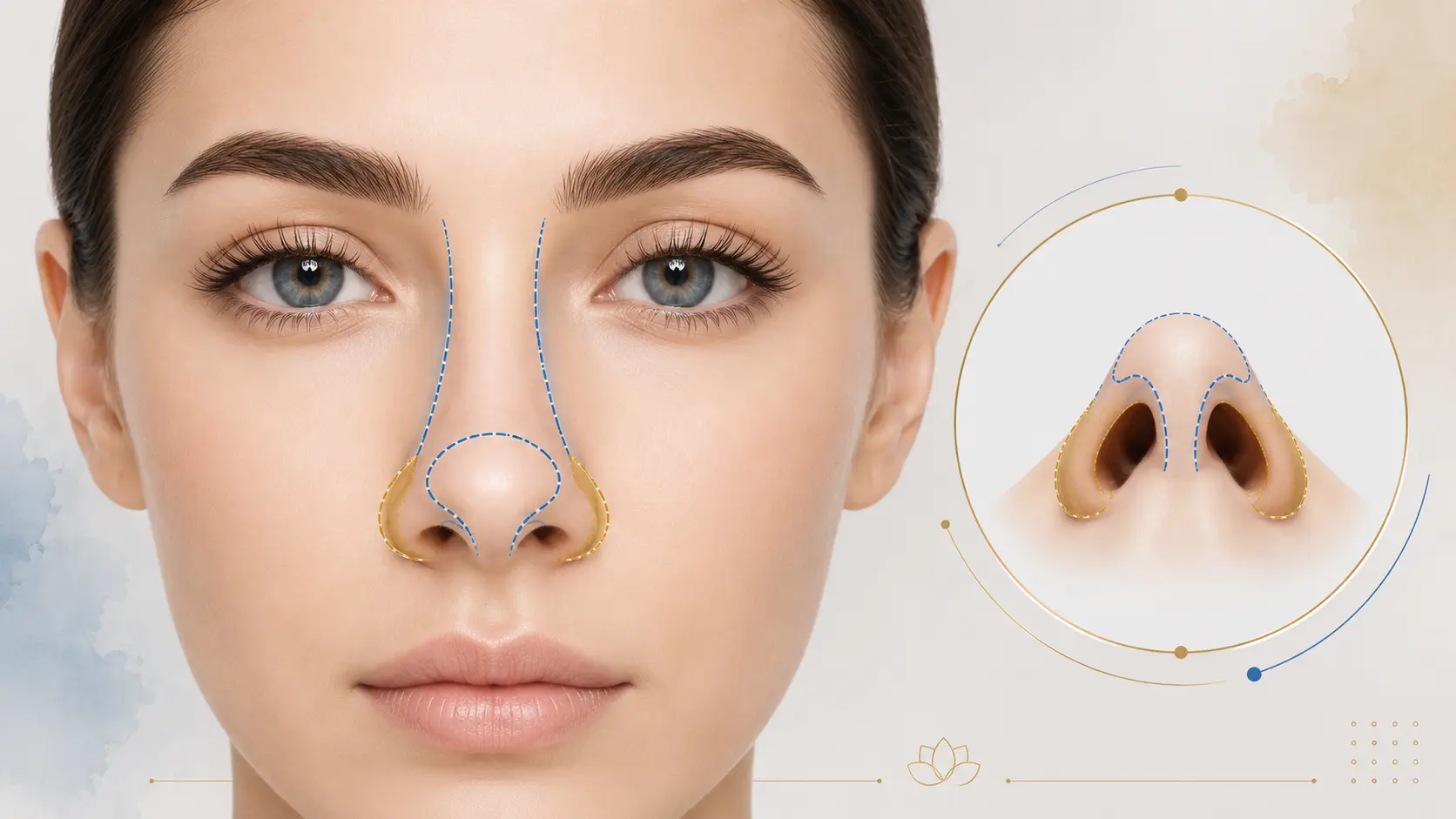
Alarplasty targets the alar base — the fleshy outer walls of the nostrils where they meet the cheek. By removing a small, precisely-measured wedge of tissue there and suturing it into a natural crease, the surgeon narrows a wide nasal base and reduces nostril flare. It does not touch the bridge, the tip or the internal structure. Because the alar base is soft tissue without cartilage, it is a comparatively quick procedure — usually under an hour, under local anaesthetic, done awake.
The techniques (in plain terms)
- Weir excision — the classic. A wedge is removed from the outer alar base to reduce flare (how much the nostrils spread outward). Named after the surgeon who described it in 1892.
- Sill excision — removes tissue from the nostril floor (the sill) to narrow the base width without changing flare.
- Combination — in many Indian noses, a mix of both gives the most balanced result, addressing width and flare together.
Which technique suits you depends entirely on whether your issue is flare, width, or both — one more reason measurement, not a menu, should drive the plan.
What Rhinoplasty Does That Alarplasty Cannot
Rhinoplasty is the comprehensive operation. It can lower a bridge bump, refine or lift the tip, straighten a crooked nose, change the profile, and alter the internal structure and sometimes breathing — usually under general anaesthesia, with a longer recovery measured in weeks to months for full settling. Alarplasty is, technically, one small part of the rhinoplasty toolkit. If your concerns go beyond the nostrils, rhinoplasty is the honest route, and the non-surgical nose refinement option may even address milder bridge or tip concerns without surgery at all. The point is: match the size of the operation to the size of the problem.
Alarplasty vs Rhinoplasty, Side by Side
| Alarplasty | Rhinoplasty | |
| What it changes | Nostril width & flare only | Whole nose — bridge, tip, profile, structure |
| How invasive | Minor, soft-tissue only | Major, involves bone/cartilage |
| Anaesthesia | Usually local | Usually general |
| Time | Under 1 hour | 2-4 hours |
| Recovery | 1-2 weeks | Weeks; full settling months |
| Scars | Tiny, in the alar crease | Hidden (closed) or small columella (open) |
| Cost | Lower | Higher |
| Best for | Nostril width/flare only | Multiple nasal concerns |
The Mistake That Makes Nostril Surgery Go Wrong
Almost every disappointing nostril-surgery result comes from one of two errors, and both are avoidable.
The first is treating the nostrils when the real problem is the tip. A wide-looking nose is often caused by a bulbous or under-projected tip, not by genuinely wide nostrils — and narrowing the nostrils in that case does little, or throws the nose further out of balance. This is why an honest surgeon assesses the whole nose before agreeing to touch the alar base, and will sometimes tell you that alarplasty is not the answer at all.
The second is over-resection — removing too much. Alarplasty is irreversible: tissue removed cannot be put back, and over-narrowed nostrils are very difficult to correct. Take away too much and you risk a pinched, unnatural look, a teardrop-shaped nostril, or asymmetry. This is why conservative planning is not timidity — it is the single most important safeguard in the procedure. A little goes a long way, and the goal is refinement, not a dramatic change that ages or distorts the nose.
Scars, Recovery, and Something Specific to Indian Skin
The incisions sit in the natural crease where the nostril meets the cheek, which is why alarplasty scars are usually subtle and well-hidden once healed — they fall in a natural shadow line of the face. In most people, scars soften significantly over six to twelve months. Recovery is quick: swelling and bruising for a few days, stitches out at about a week, back to work within a week, and strenuous activity avoided for two weeks.
But here is the part most guides — written for Western skin — leave out, and it matters if you are having this done in Delhi. Indian and South Asian skin has a higher tendency toward post-inflammatory hyperpigmentation at incision sites — the healing scar can darken rather than fade if it is not managed carefully. Combine that with Delhi-NCR’s high UV (even in winter) and heavy pollution, and scar aftercare here has to be more thorough than the textbooks assume.
- Strict sun protection of the area — SPF 50, reapplied — from the day the sutures come out, for several weeks. UV is the main driver of scar darkening.
- Silicone-based scar gels or sheets to help the scar mature flat and pale.
- Sun avoidance for about three weeks where possible, and diligent aftercare beyond that.
A surgeon who treats Indian skin regularly plans for this from the start. It is a small thing that makes a visible difference, and it is a fair question to ask any clinic you consult.
How to Decide: A Quick Checklist
Lean toward standalone ALARPLASTY if you:
- Are bothered only by nostril width or flare
- Are genuinely happy with your bridge, tip and side profile
- Want the quickest recovery and lowest cost option
- Have realistic, subtle goals — refinement, not transformation
- Are in good health with no active nasal or breathing problems
You likely need RHINOPLASTY (with alarplasty possibly part of it) if you:
- Dislike your bridge (a bump or width), tip, or profile
- Have a crooked nose or breathing difficulty
- Find your nose looks wide mainly because of the tip, not the nostrils
- Want a more comprehensive change to the nose’s shape
Not sure which describes you? That is exactly what a consultation settles — a few measurements and an honest look at the whole nose usually make it clear in minutes. See our alarplasty in Delhi page, or explore non-surgical rhinoplasty if your concern might be the bridge or tip.
Frequently Asked Questions
What’s the difference between alarplasty and rhinoplasty?
Alarplasty changes only the width and flare of your nostrils, by removing a small wedge of tissue at the alar base where the nostril meets the cheek. Rhinoplasty reshapes the whole nose — bridge, tip, profile and internal structure. Alarplasty is technically one small part of the rhinoplasty toolkit. The choice comes down to one question: if only your nostril width bothers you and your bridge and tip are fine, you want alarplasty; if the bridge, tip or profile also need work, you want rhinoplasty.
How do I reduce the size of my nostrils?
Permanently, the only reliable way is alarplasty (nostril reduction surgery), which removes a small wedge of tissue to narrow the nostril base and reduce flare. There are no effective non-surgical treatments that permanently narrow the nostrils — makeup can create a temporary illusion, and fillers can change the bridge or tip but cannot reduce nostril width. If your nose looks wide mainly because of the tip rather than the nostrils themselves, tip work (part of rhinoplasty) may be what you actually need.
Do I need a full nose job or just nostril reduction?
Ask yourself one question: is the width or flare of your nostrils the only thing that bothers you, and are you happy with your bridge, tip and profile? If yes, standalone alarplasty is likely enough and there’s no reason to undergo a bigger operation. If your bridge, tip or overall shape also bother you, alarplasty alone won’t satisfy you and you need rhinoplasty. A common trap is that a wide-looking nose is often caused by the tip, not the nostrils, so an in-person assessment matters.
Are alarplasty scars visible?
Usually not, once healed. The incisions are placed in the natural crease where the nostril meets the cheek, so they sit in a shadow line and become subtle to virtually invisible over six to twelve months when done well. That said, scars are real, and in Indian skin they need careful aftercare — strict sun protection and silicone scar gels — because Indian skin has a higher tendency to develop darkening (hyperpigmentation) at incision sites, especially with Delhi’s high UV and pollution.
How long is the recovery from alarplasty?
Quick, compared with full rhinoplasty. Expect swelling and mild bruising for a few days, stitches removed at about a week, and a return to work within a week. Strenuous activity, nose-blowing and sun exposure should be avoided for two to three weeks. The nostrils’ new shape is visible almost immediately, but the scar continues to mature and settle over one to three months, and fully over up to a year.
Is alarplasty permanent? Can it be reversed?
Alarplasty is permanent — once the tissue is removed and healed, the nostrils keep their new shape. It is also very difficult to reverse, because removed tissue cannot simply be put back, and over-narrowed nostrils are hard to correct. This irreversibility is exactly why conservative planning and an experienced surgeon matter so much: the safest results come from removing less rather than more, aiming for natural refinement rather than a dramatic change.
Is alarplasty cheaper than rhinoplasty?
Yes. Because alarplasty is a focused, soft-tissue procedure done under local anaesthesia in under an hour, it costs meaningfully less than a full rhinoplasty, which is a longer operation involving bone and cartilage under general anaesthesia. If you only need your nostrils narrowed, there is no financial or medical reason to pay for the bigger procedure. Exact pricing depends on the technique needed and whether it’s standalone or combined, and is confirmed at consultation.
Can alarplasty be done with rhinoplasty at the same time?
Yes, and it very often is. When the nose needs comprehensive reshaping, alarplasty is performed as one step of the rhinoplasty — always last, because changes to the tip and overall structure affect how the nostrils look, so the alar base is assessed only after the other work is done. Combining them means a single recovery period and a fully balanced result, which is why many rhinoplasty patients have alarplasty included.
Considering Nostril Reduction in Delhi?
The honest way to choose between alarplasty and rhinoplasty is to have your whole nose assessed and, if the nostrils are the issue, measured — it usually makes the decision clear in minutes. At Sarayu Clinics in Greater Kailash, facial plastic and maxillofacial surgeon Dr. Adarsh Tripathi performs both procedures and will tell you honestly whether you need standalone nostril reduction, a full rhinoplasty, or — if the nostrils aren’t really the problem — nothing at all. Alarplasty here is planned conservatively, with scar care tailored to Indian skin.
Learn more on our alarplasty in Delhi page, or explore non-surgical rhinoplasty if your concern is the bridge or tip.
📍 R-87, Greater Kailash-1, Block R, New Delhi 110048
📞 +91 9289111081, +91 9289111082
Medical Review & Sources
This article is for general information and is written and medically reviewed by Dr. Adarsh Tripathi (facial plastic & maxillofacial surgeon) at Sarayu Clinics. It is not a substitute for an in-person consultation. Alarplasty is a permanent, irreversible procedure and should be planned conservatively after assessment of the whole nose. Sources: